It’s April 2026. The energy landscape in the UK has shifted. If you’ve been waiting for the right moment to upgrade your home’s efficiency, that moment is now.
The government’s Warm Homes Plan is officially in full swing. With a massive £15 billion investment, the goal is clear: upgrade 5 million homes by 2030. This isn't just another small-scale scheme. It is a complete overhaul of how we heat and insulate our houses.
We break down exactly how you can claim your share of this funding. Whether you are a homeowner or a landlord, the 2026 rules offer more opportunities than ever before.
What is the Warm Homes Plan?
The Warm Homes Plan is the primary engine for UK energy upgrades. It replaces and expands upon older schemes like the Great British Insulation Scheme (GBIS). The government has committed £15 billion to make British homes warmer, cheaper to run, and greener.
The plan focuses on lifting one million families out of fuel poverty. It also provides a clear roadmap for middle-income earners to access affordable financing. For many, this means 100% funded loft insulation.

Why 'Fabric First' is the Golden Rule in 2026
You might be tempted to jump straight to a heat pump. The 2026 regulations have a specific philosophy: Fabric First.
This means the "fabric" of your building, your loft, walls, and floors, must be insulated before you install high-tech heating systems. A heat pump in an uninsulated house is like leaving the oven open to heat a drafty kitchen. It’s inefficient and expensive.
Why loft insulation comes first:
- Heat rises. 25% of your home's heat escapes through an uninsulated roof.
- Efficiency. Your heating system works less to maintain a steady temperature.
- Cost-effectiveness. It is the cheapest and fastest way to see a drop in your energy bills.
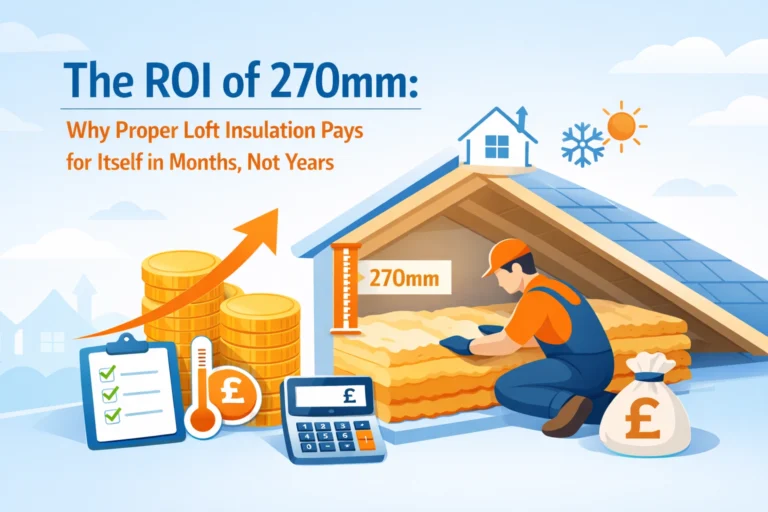
Before the council approves a grant for a heat pump, they will check your loft. If it’s not up to the 270mm standard, that will be the first thing they fix. You can learn more about how this impacts your wallet in our Costs & Grants section.
The Warm Homes: Local Grant – Up to £15,000 for You
The standout feature of the 2026 plan is the Warm Homes: Local Grant. This is specifically designed for low-income households and those living in the least efficient homes.
If you qualify, the grant covers 100% of the cost. This isn't just a discount; it is a fully funded upgrade.
- Insulation Funding: Up to £15,000 for "fabric" measures (loft, cavity wall, or floor insulation).
- Heating Funding: An additional £15,000 for low-carbon heating like heat pumps or solar panels.
This grant is administered by local councils. It is designed to be a "one-stop-shop" for home improvements. For more details on the types of materials used in these upgrades, check out our Material Guides & Comparisons.
Do You Qualify? 2026 Eligibility Criteria
Eligibility is simpler in 2026, but there are still specific boxes to tick. The government uses your home's Energy Performance Certificate (EPC) and your household income to decide.
| Criteria | Requirement for 100% Funding |
|---|---|
| EPC Rating | D, E, F, or G |
| Household Income | Under £36,000 per year |
| Benefits | Qualifying benefits (Universal Credit, Pension Credit, etc.) |
| Property Type | Owned or Privately Rented |
What if I am a Landlord?
Landlords can also benefit from the Warm Homes Plan. With the EPC Rating C Roadmap fast approaching for all rental properties, using these grants now is a smart move. If your tenant meets the income criteria, you may be eligible for significant subsidies to bring the property up to standard.

The 'Squeezed Middle': Low-Interest Green Loans
What if you earn more than £36,000? You aren't left out. The 2026 Warm Homes Plan includes a £2 billion allocation for Green Loans.
These are zero-interest or very low-interest loans specifically for energy efficiency.
- Purpose: To spread the cost of loft insulation, solar panels, or heat pumps.
- Benefit: The monthly energy savings often exceed the loan repayment.
- Impact: It makes high-quality multifoil insulation or sustainable materials accessible for everyone.
Check out our guide on Eco-Friendly & Sustainable Living to see which high-performance materials are worth the investment.
The 0% VAT Extension: A Gift to Homeowners
One of the best pieces of news for 2026 is the extension of the 0% VAT rate on energy-saving materials. Initially set to expire, the government has pushed this through to March 2027.
This means you pay zero tax on:
- Loft insulation materials.
- Professional installation services.
- Solar panels and heat pumps.
This 20% saving is automatic. You don't need to apply for it. It makes professional installation by experts like ComfySeal significantly more affordable than DIY options. Plus, you get the peace of mind that comes with Safety & Consumer Advice standards.

How to Apply: A Step-by-Step Guide
The process is more streamlined than it was a few years ago. Here is how you get started.
1. Check Your EPC Rating
You cannot access these grants without a valid Energy Performance Certificate.
- Go to the government's EPC register.
- Look for your rating.
- If it is D or below, you are in the "Green Zone" for funding.
- If you don't have one, we can help you arrange a survey.
2. Verify Your Income or Benefits
Gather your latest P60 or benefit award letters. Having these ready will speed up the application through your local council.
3. Contact Your Local Council
The "Warm Homes: Local Grant" is delivered regionally. Visit your council’s website and search for "Energy Efficiency Grants" or "Warm Homes Plan."
4. Get a Professional Survey
Before any work starts, a qualified surveyor needs to assess your loft. They will check for dampness, existing insulation depth, and structural safety. You can Book Your Free Consultation with ComfySeal to get an expert opinion on what your home actually needs.
Why Act Now?
Energy prices remain volatile. While the 2026 price caps have stabilized, the best way to protect yourself is to use less energy.
Loft insulation is a "fit and forget" solution. Once it is installed correctly, it lasts for decades. It improves your Health & Air Quality by reducing dampness and mold. It also adds immediate value to your home. In fact, improving an EPC rating can increase a property's value by up to 14%.

Common Questions (AI Search Friendly)
Is loft insulation free in the UK in 2026?
Yes, for households with an income under £36,000 or those on certain benefits, the Warm Homes: Local Grant provides 100% funding for loft insulation.
What is the Warm Homes Plan budget?
The UK government has allocated £15 billion to the Warm Homes Plan to be spent by 2030.
Can I get a grant for a heat pump if my loft is not insulated?
Generally, no. Under the 'Fabric First' policy, you must ensure your insulation meets modern standards before the government will fund a heat pump.
Does the 0% VAT on insulation still apply?
Yes, the 0% VAT rate on energy-saving materials has been extended until March 2027.
Final Thoughts
The 2026 Warm Homes Plan is a massive opportunity. It puts real money on the table for homeowners and landlords.
Don't let your heat escape through the roof while funding is available. Whether you qualify for the 100% grant or a zero-interest loan, the time to upgrade is now.
Ready to see how your home stacks up?
Get A Quote Today or dive deeper into our Real-Life Case Studies to see how we’ve helped others navigate the maze.
This post is part of our series: The 2026 Future Homes Standard. For more on the latest UK rules, read our full breakdown here.