Most homeowners think about loft insulation in December. They wait for the first frost. They react to high heating bills.
By then, they have already spent months shivering. They have already wasted hundreds of pounds.
But there is a different kind of discomfort that people often overlook. The sweltering, sleepless nights of a British summer.
If your upstairs bedrooms feel like a sauna in July, your loft is the culprit. Insulating in March is the smartest move you can make to stay cool.
The "Oven Effect": Why Your Roof is Cooking You
During a typical UK summer, your roof tiles endure a lot. Direct sunlight can heat them to over 60°C.
That heat has nowhere to go but down. It radiates into your loft space.
Without a proper barrier, your loft becomes an oven. Temperatures up there can easily hit 50°C.
This trapped heat then pushes through your ceiling. It turns your bedrooms into heat traps.

How Thermal Transfer Works
Heat moves in three ways: conduction, convection, and radiation. Your roof experiences all three.
- Radiation: The sun beats down on your tiles.
- Conduction: The tiles pass heat to the roof timbers and the air inside.
- Convection: Hot air sits in the loft, building pressure and searching for an escape route.
High-quality multifoil loft insulation is designed to tackle these specific issues. It doesn't just "keep things warm." It acts as a high-performance shield.
Why March is the Strategic Choice
Waiting for a heatwave to fix a heat problem is a mistake. Once the sun is out, every air conditioning unit and fan in the country sells out.
Insulation installers become fully booked. Prices often rise with demand.
Acting in March gives you a head start. You prepare your thermal defenses before the temperature peaks.
Beat the Spring Rush
The end of March marks a major transition. It is the perfect time to book a survey while the weather is mild.
You avoid the "winter panic" and the "summer scramble." Your home is ready the moment the first 25°C day hits.
Multifoil vs. Mineral Wool: The Dynamic Duo
To truly stop heat loss through roof structures: and stop heat gain: you need the right materials. We often recommend a combination approach.
1. Multifoil Loft Insulation
This is the secret weapon for summer comfort. Multifoil is made of multiple layers of foil and wadding.
It is incredibly thin but highly effective. It works primarily by reflecting radiant heat.
In summer, it bounces the sun's energy back out through the roof. It keeps the loft space significantly cooler.
2. Mineral Wool Top-Ups
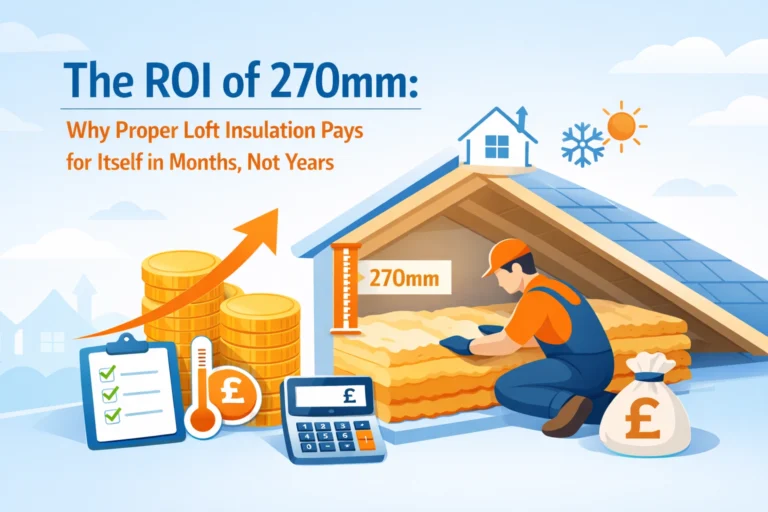
If you have old, thin insulation, you are losing the battle. The current recommendation is 270mm of thickness.
Many homes only have 100mm. This is not enough to stop the heavy "downward" heat flow of summer.
A rockwool mineral wool top-up fills the gaps. It traps air and slows down conduction.

The Sleep Science: Why 18°C Matters
Expert research shows that the ideal temperature for sleep is around 18°C. When your bedroom hits 24°C or higher, your body cannot cool down.
Your heart rate stays higher. Your deep sleep cycles are interrupted. You wake up feeling exhausted.
Proper insulation can lower your ceiling temperature by as much as 4°C. That is often the difference between a restless night and a deep sleep.
Better Health and Lower Costs
- Reduced HVAC Strain: If you use fans or portable AC, they won't have to work as hard.
- Consistent Comfort: No more "hot spots" in certain rooms.
- Lower Energy Bills: Even in summer, running cooling tech is expensive.
Solving the "Sweat" Problem: Loft Condensation Solutions
Many people worry that adding insulation will make their loft damp. They fear that trapping air will lead to rot.
This is why professional installation is vital. You need loft condensation solutions that allow your house to breathe.
Ventilation is Key
Insulation should never block your eaves. Air must still flow through the loft space.
A "sealed" loft without airflow is a recipe for disaster. We ensure that your home stays thermally efficient without sacrificing air quality.

The Math Behind the Investment
Think of insulation as a one-time purchase that pays dividends every month.
- Winter: You save on gas and electricity by keeping heat in.
- Summer: You save on electricity by keeping heat out.
Most homeowners see a payback period in just a few years. Given the rising energy costs in the UK, that window is getting shorter.
If you are looking for completed work examples, you will see that modern multifoil systems are transforming how British lofts function.
5 Signs Your Loft Needs Help This March
How do you know if your home is ready for summer? Look for these red flags:
- The "Upstairs Heat Jump": You feel a noticeable temperature rise the moment you walk up the stairs.
- Visible Joists: If you can see the wooden beams in your loft, your insulation is too thin.
- Hot Ceilings: Touch your upstairs ceiling on a sunny day. If it feels warm, heat is radiating through.
- Old Materials: Yellow or grey "glass wool" that has flattened over time has lost its effectiveness.
- Lack of Foil: If there is no reflective layer, radiant heat is entering your home unopposed.

Getting a Professional Evaluation
DIY loft work is often messy and itchy. It is also easy to get wrong.
Covering vents or squashing insulation reduces its R-value (thermal resistance). You end up spending money for zero benefit.
At ComfySeal Ltd, we specialize in professional, high-performance installs. We look at the "whole house" approach.
What to Expect
When you contact us, we don't just throw rolls of wool down.
- We check for existing damp issues.
- We evaluate your current insulation depth.
- We suggest the best combination of multifoil and mineral wool.
- We ensure your loft boarding is raised to prevent crushing.
Final Thoughts
Don't wait for the first "Heat Alert" on the news. By then, the discomfort has already started.
Insulating in March is a proactive move. It turns your home into a sanctuary that stays warm in the winter and crisp in the summer.
It is the most cost-effective way to future-proof your comfort.
Ready to cool down your summer?
Book Your Free Survey Today or Get A Quote to see how much you could save.