
Home » Loft Boarding
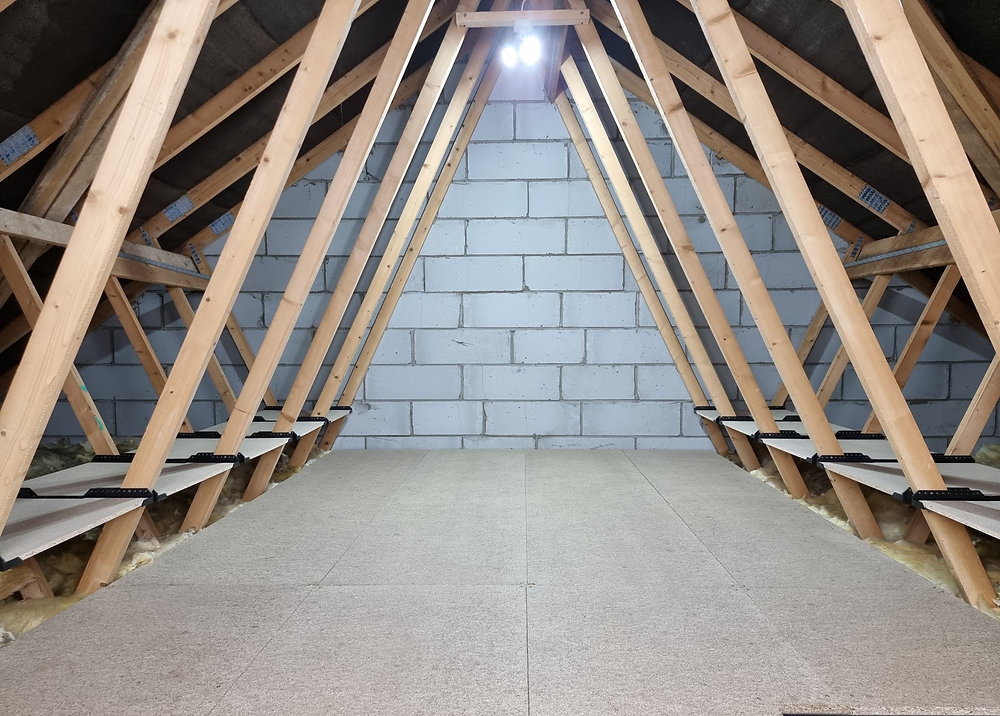
Loft boarding is the process of installing a solid wooden floor across the horizontal joists of an attic, transforming an unusable and dusty void into a stable platform for storage or access. In modern homes, this is usually achieved using a raised boarding system (such as Loft Legs), which lifts the boards approximately 175mm above the joists. This elevation is essential as it allows the government-recommended 270mm depth of mineral wool insulation to remain uncompressed, while also maintaining a crucial airflow gap to help prevent damp and condensation from damaging roof timbers.
In addition to creating valuable storage space for seasonal items, professionally installed loft boarding helps preserve your home’s thermal efficiency and structural integrity. Unlike a full loft conversion, which adds a liveable room and often requires planning permission, loft boarding is a cost-effective solution that evenly distributes weight across the existing ceiling structure. By protecting insulation depth and ensuring proper ventilation, loft boarding turns your roof space into a practical asset without increasing energy bills or affecting your New Build warranty.
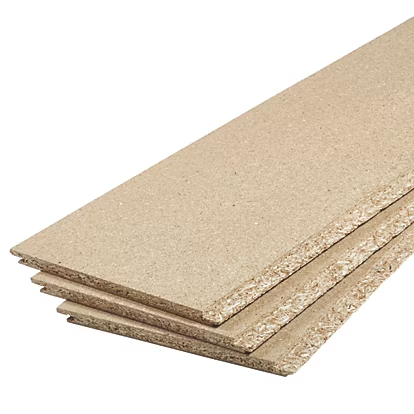
Traditionally, with a standard loft boarding installation, boards are fixed directly on top of the existing joists. This method allows for a quick installation, but it is not suitable for the majority of lofts. While many installers recommend standard loft boarding due to its lower cost and ease of installation, it can have negative effects on your property.
If insulation, wiring, or pipework is present, boarding directly onto the joists can make these areas difficult to access and can compress insulation, reducing its effectiveness. When insulation is crushed, condensation can build up, leading to damp issues within the loft. Damp insulation is far less effective and can eventually result in moisture damage to the ceiling below. More seriously, if wooden joists become damp, the resulting structural damage can be costly and may require thousands of pounds in repairs.
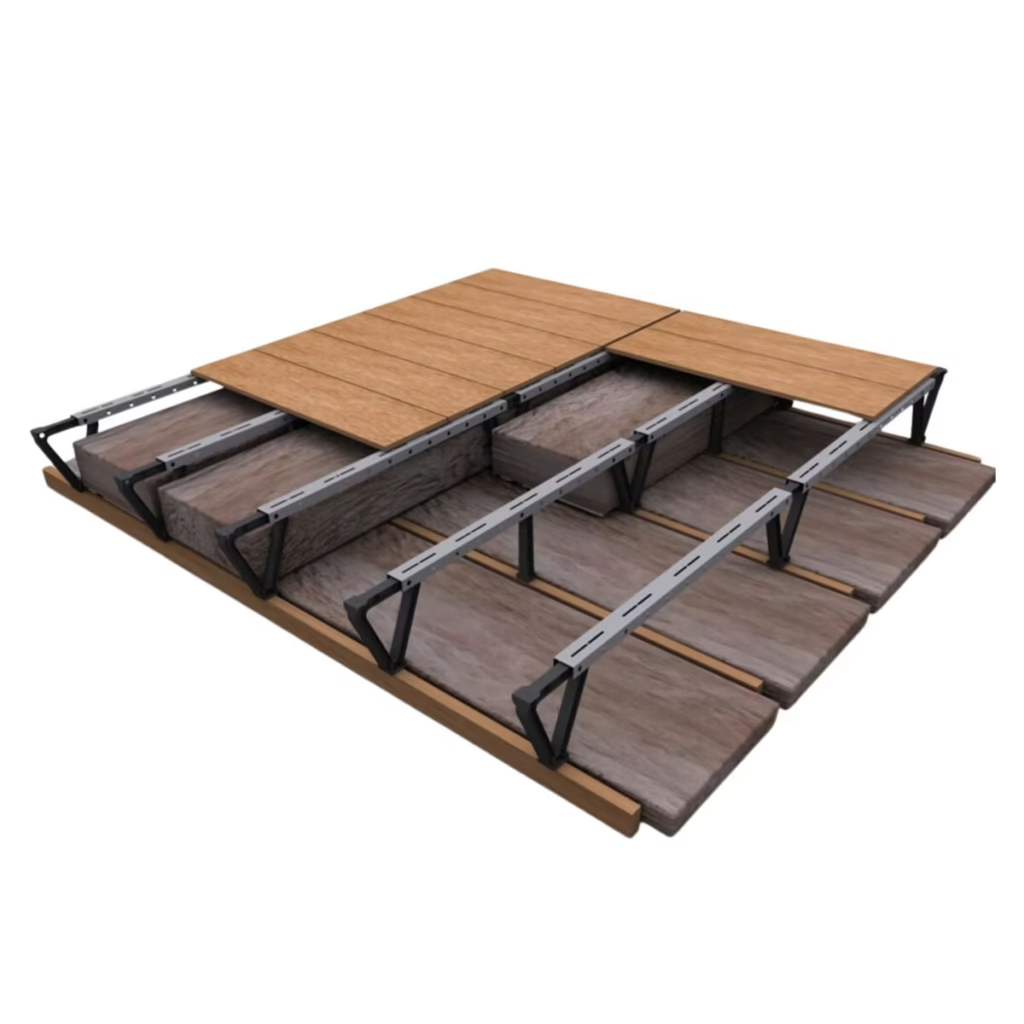
To prevent the issues associated with traditional loft boarding, a raised floor system was developed. This patented loft boarding solution lifts the boards above the insulation, allowing air to flow freely from the eaves and circulate throughout the loft space and beneath the flooring. This airflow eliminates the risk of damp and condensation while enabling your insulation to perform at its full potential, reducing heat loss through the roof.