Choosing the right loft insulation in 2026 isn't straightforward. Two options dominate the UK market: traditional mineral wool insulation and modern multifoil loft insulation. Both work. Both save energy. But they're designed for completely different purposes.
This guide breaks down everything you need to know. Cost, installation, space, and performance. By the end, you'll know exactly which option suits your home.
Understanding the Two Approaches
Before diving into comparisons, it helps to understand how each insulation type works.
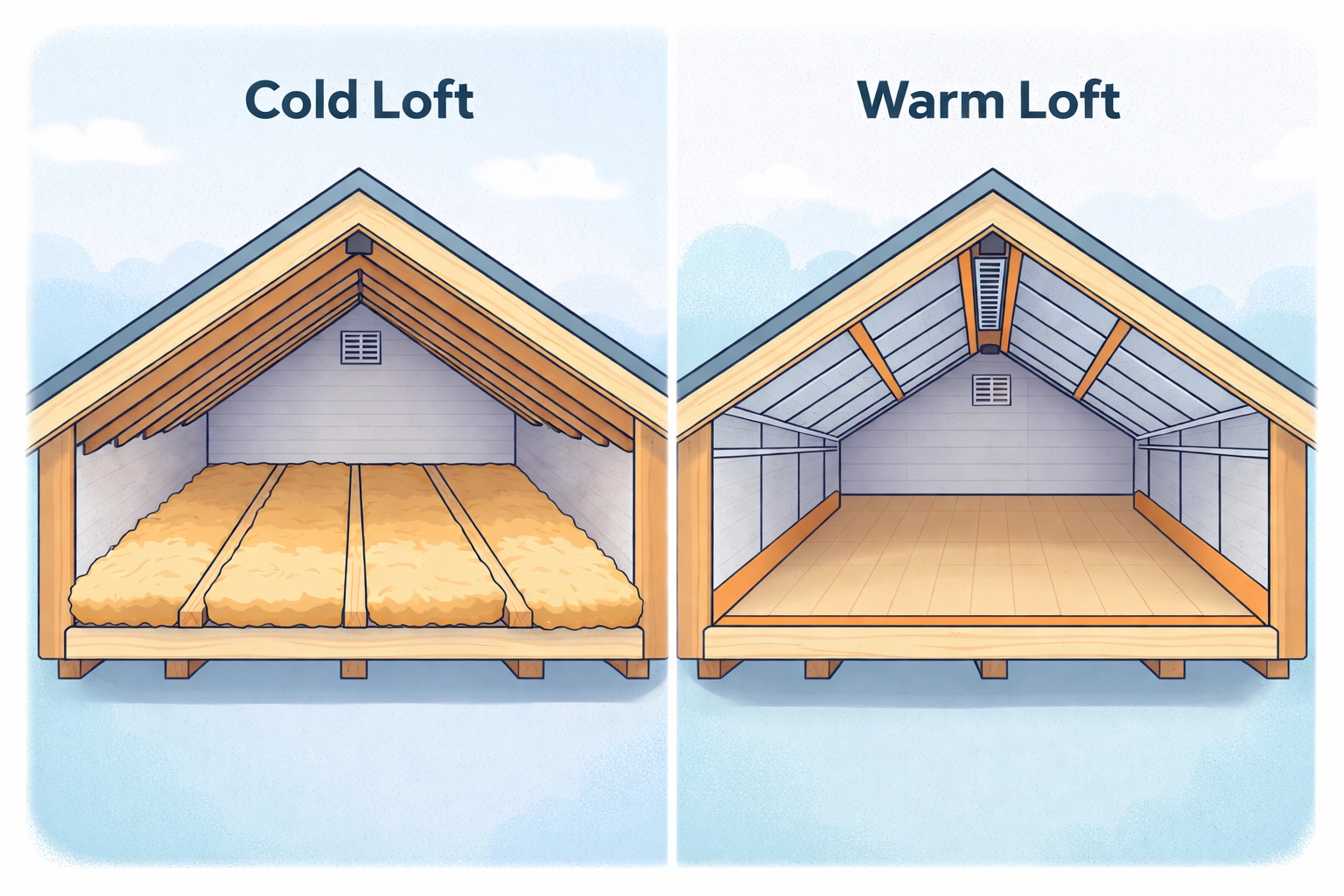
Mineral wool sits on your loft floor, between and over the joists. It traps heat by creating pockets of still air within its fibres. Your loft space stays cold, but your home stays warm.
Multifoil insulation attaches to your rafters. It reflects radiant heat back into the living space. Your entire loft becomes part of your home's thermal envelope.
Same goal. Different methods. Different results.
What Is Mineral Wool Insulation?
Mineral wool is the classic choice. It's been insulating UK homes for decades.
Made from rock or glass fibres, it comes in rolls or batts. You lay it across the loft floor to the recommended depth of 270mm. Simple, proven, affordable.
Key Benefits of Mineral Wool
- Budget-friendly – The most cost-effective insulation per square metre
- Fire resistant – Euro Class A rated and non-combustible
- Sound absorbing – Excellent acoustic properties reduce noise transfer
- Moisture permeable – Allows vapour to pass through, reducing condensation risk
- Easy to install – No specialist equipment needed for basic loft floor insulation
Mineral wool achieves an R-value of approximately R-3.0 to R-4.0 per inch. At 270mm depth, it meets current Building Regulations for loft insulation.
The downside? Your loft stays cold. You can't use it for storage without raised platforms. And pipes and tanks need separate lagging to prevent freezing.
What Is Multifoil Loft Insulation?
Multifoil takes a different approach entirely.
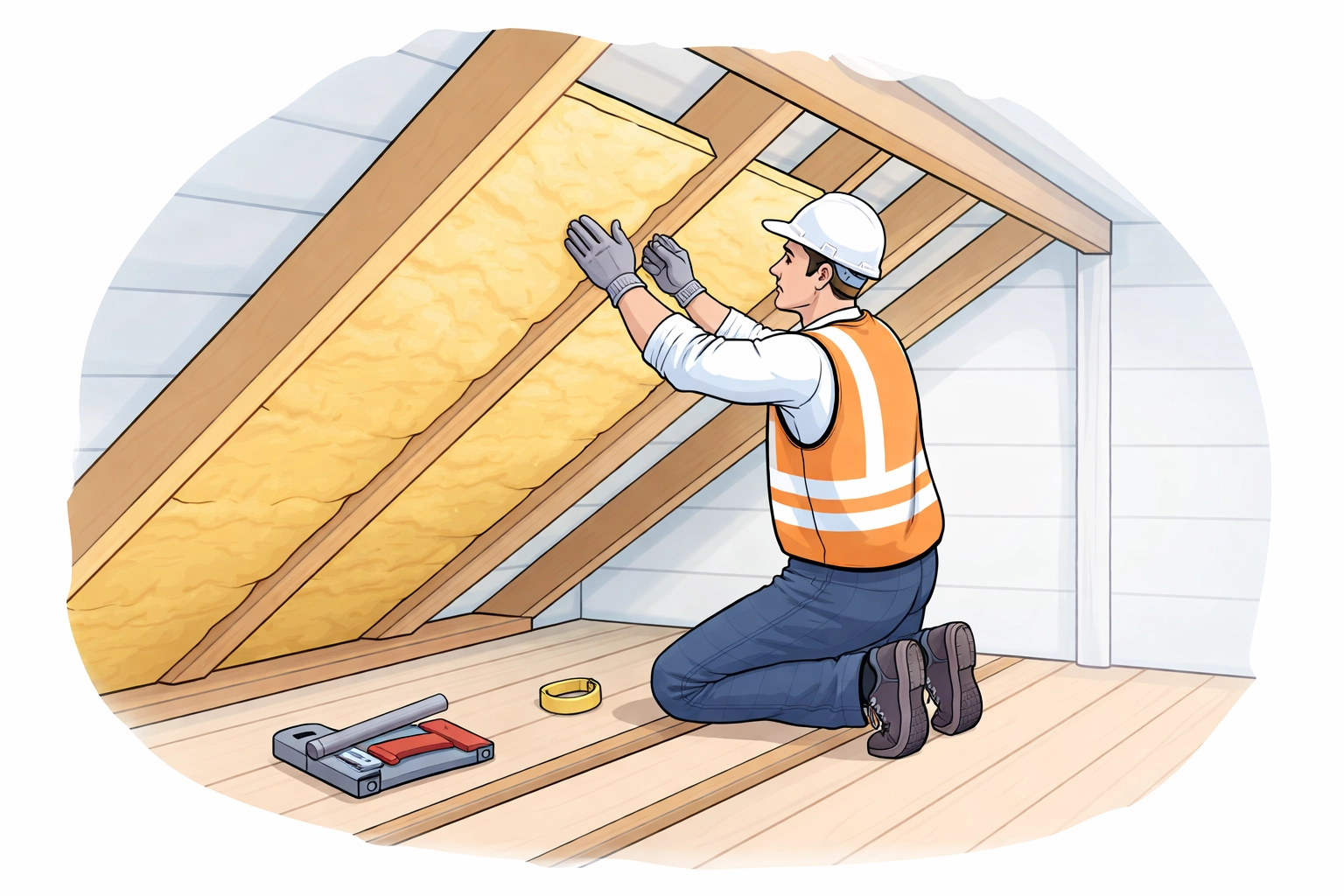
These thin, layered products combine reflective foil with foam or wadding layers. They're fitted between and under rafters, creating a warm roof system.
Lightweight, reflective, and extremely efficient.
Key Benefits of Multifoil
- Space-saving – Just 40-60mm thick compared to 270mm of mineral wool
- Creates usable loft space – The whole loft becomes a warm, dry room
- Built-in vapour barrier – No separate membrane needed
- Quick installation – Staples directly to rafters
- Clean and easy to handle – No itchy fibres or dust
Multifoil insulation reflects up to 97% of radiant heat. Combined with its insulating layers, it delivers impressive thermal performance in a fraction of the space.
Want to convert your loft? Planning a home office up there? Multifoil makes it possible. Learn more about multifoil solutions for low-space lofts.

Cost Comparison: What's the Real Difference?
Let's talk money. This is where the two options diverge significantly.
Mineral wool insulation costs approximately £5-£10 per square metre for materials. Professional loft insulation installation adds labour costs, but it remains the cheapest option overall.
Multifoil loft insulation costs roughly double. Expect £15-£25 per square metre for quality products. Installation takes longer on rafters, adding to the total.
Cost Breakdown for a Typical 50m² Loft
| Factor | Mineral Wool | Multifoil |
|---|---|---|
| Materials | £250-£500 | £750-£1,250 |
| Installation | £200-£400 | £400-£800 |
| Total | £450-£900 | £1,150-£2,050 |
Yes, multifoil costs more upfront. But consider what you're getting. A usable loft space. No need for separate vapour barriers. Potentially avoided loft conversion costs later.
The right choice depends on your goals, not just your budget.
Installation Speed and Complexity
How long does each take to install properly?
Mineral wool is straightforward. Unroll it between joists. Add a second layer perpendicular on top. Most lofts take 2-4 hours for professional loft insulation installers.
Multifoil requires more precision. Each sheet must be stapled to rafters with overlapping joints. Edges need taping for airtightness. A typical installation takes 4-8 hours.
Both benefit from professional installation. DIY is possible with mineral wool. Multifoil demands more skill to achieve proper thermal performance.
At ComfySeal, our installers handle both systems daily. We complete most jobs in a single day, regardless of which insulation you choose.
Space Savings: Why Multifoil Wins Here
This is multifoil's biggest advantage.
To meet Building Regulations, mineral wool needs 270mm depth. That's nearly a foot of material sitting on your loft floor. Storage becomes awkward. Walking around requires raised boarding.
Multifoil achieves equivalent thermal performance at just 40-60mm. Fitted to rafters, it leaves your loft floor completely clear.
What This Means for Your Loft
- Full headroom retained – No bulky insulation eating into space
- Easy storage – Entire floor available for boxes, cases, decorations
- Conversion-ready – Already warm enough for habitable use
- Clean finish – Professional appearance if you ever want to use the space
If you've got a small loft or grand plans for conversion, multifoil is the smart choice.
Thermal Efficiency: How Do They Actually Perform?
Both insulation types work. But they work differently.
Mineral wool primarily resists conductive heat loss. Heat tries to escape through the ceiling. The fibres slow it down. At 270mm, you're looking at excellent U-values that satisfy Building Regulations.
Multifoil tackles radiant heat. The reflective layers bounce heat back into your home. Combined with the foam layers, it addresses both radiant and conductive losses.
In practice, both achieve similar thermal performance when properly installed. The difference lies in where that performance happens.
Mineral wool keeps heat below your loft floor. Multifoil keeps heat within the entire loft space.
The Vapour Barrier Question
Condensation causes problems in lofts. Warm, moist air from below meets cold surfaces. Water forms. Timber rots over time.
Mineral wool is vapour permeable. Moisture passes through it. This is actually beneficial in cold loft designs. The loft ventilates naturally, carrying moisture away.
Multifoil acts as a complete vapour barrier. No moisture passes through. This works perfectly in warm roof designs because there's no cold surface for condensation to form on.
Important point: each system manages moisture correctly for its application. Problems only arise when products are misused or combined incorrectly.
This is exactly why professional installation matters. Our team ensures your chosen system works as designed.
Which One Should You Choose?
The answer depends on how you use your loft.
Choose Mineral Wool If:
- You want the most affordable solution
- Your loft is purely for storage (or not used at all)
- You don't mind a cold loft space
- Budget is your primary concern
Choose Multifoil If:
- You want to use your loft as living space
- Headroom is limited
- You're planning a future loft conversion
- You want a clean, professional finish
Neither choice is wrong. They're simply designed for different situations.

Why Professional Installation Matters
Both insulation types perform best when installed correctly.
Gaps in mineral wool create cold spots. Poorly sealed multifoil joints leak air. Both problems slash thermal performance and waste your investment.
Professional loft insulation installers eliminate these issues. Proper technique. Right materials. Guaranteed results.
At ComfySeal, every installation comes with our 10-year guarantee. We offer free surveys to assess your loft and recommend the best solution. Our team operates UK-wide, bringing consistent quality wherever you are.
Final Thoughts
Mineral wool and multifoil both insulate effectively. The choice comes down to your priorities.
Want affordable warmth with minimal fuss? Mineral wool delivers.
Want a usable loft space with modern performance? Multifoil is your answer.
Either way, professional installation ensures you get the full benefit. No cold spots. No moisture problems. Just a warmer, more efficient home.
Ready to decide? Get a free quote from ComfySeal today. We'll survey your loft, discuss your options, and install the perfect solution( backed by our 10-year guarantee.)