Category: Spray Foam & Mortgage Issues
Your home is likely your most valuable asset. For years, spray foam insulation was marketed as the ultimate energy-saving solution. It promised a warmer home and lower bills.
In 2026, the reality has changed. What was once a "miracle" product is now a major financial red flag. UK lenders have tightened their belts. They are now forcing homeowners to make a difficult choice: remove the foam or lose the ability to sell or remortgage.
If you have spray foam in your loft, you are standing at a crossroads. Leaving it in place might save you money today. However, it could cost you your entire property value tomorrow.
The 2026 Lender Lockdown
The mortgage market has reached a breaking point. Recent data shows that 67% of UK properties with spray foam were flagged as "unmortgageable" in 2025. This trend has only accelerated into 2026.
Major banks like Barclays, Nationwide, and Halifax have updated their playbooks. They no longer view spray foam as a simple home improvement. They see it as a high-risk modification.
Why the sudden shift? It comes down to risk. Lenders want to ensure their collateral, your house, isn't rotting from the inside out. Spray foam hides the very things surveyors need to see.

The Landmark Legal Precedent
A major shift occurred following a July 2025 ruling at Liverpool County Court. A buyer successfully sued after discovering undisclosed spray foam. The foam led to £18,000 in remedial costs and a revoked mortgage offer.
This case changed everything. It established a legal precedent. Lenders now have the backing to treat spray foam as a structural defect. If you plan to sell, you cannot simply hope the surveyor misses it. They are looking for it.
The Structural Risks of Leaving It
Leaving spray foam in place is a gamble with your roof's lifespan. The primary issue is moisture management. Your roof needs to breathe.
1. Entrapped Moisture
Spray foam creates a tight seal against your roof timbers. This traps condensation between the foam and the wood. You cannot see the moisture. You cannot see the damage.
2. Rotting Timbers
Over time, trapped moisture leads to wet rot. By the time you notice a soft spot in your roof, the structural integrity may be gone. Replacing a few beams is expensive. Replacing a whole roof is a catastrophe.
3. Inspection Obstacles
Surveyors cannot inspect what they cannot see. If the rafters are covered in foam, they cannot guarantee the roof is safe. For a lender, "unknown" is the same as "broken."
Property Value and the "Cash Buyer" Trap
If you choose to leave the foam, you are shrinking your pool of potential buyers. Most people need a mortgage to buy a home. If the bank says no, the sale falls through.
This leaves you with "cash-only" buyers. These buyers know you are in a difficult position. They will often demand a massive discount to cover the risk and the eventual removal costs.
In 2025 alone, over 12,000 UK property sales collapsed due to insulation issues. Leaving the foam effectively devalues your home by tens of thousands of pounds.

Professional Removal: The Only Path Forward
If you decide to remove the foam, it must be done correctly. Lenders will not accept a "hack job." They require a specific, certified process to reinstate the property's value.
1. 100% Manual Removal
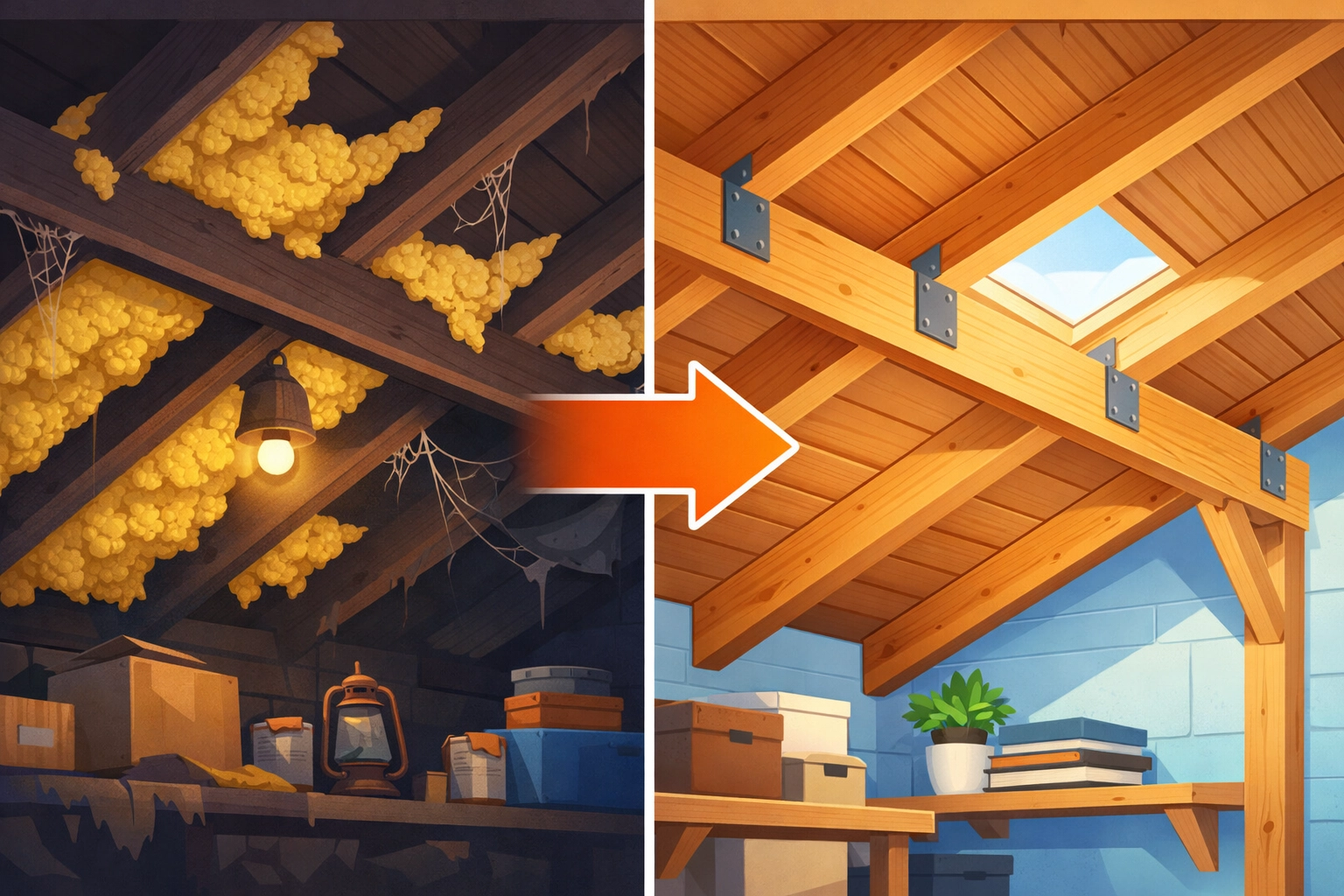
You cannot use heat guns or chemicals. These can damage the timber further. Professional teams use hand tools to carefully scrape every inch of foam away.
2. Timber Exposure
Every surface of the roof timber must be clean and visible. This allows for a full structural assessment.
3. Certification
Once removed, you need a certificate from a RICS or PCA-qualified surveyor. This document proves the timber is sound. It is the "golden ticket" for mortgage approval.
The Cost of Action vs. Inaction
Removal is an investment. It is not cheap, but neither is losing your home's equity.
| Component | Estimated Cost | Estimated Timeline |
|---|---|---|
| Professional Foam Removal | £3,000 – £12,000 | 3 – 7 days |
| Timber Repairs (if rot is found) | £0 – £15,000 | 1 – 3 weeks |
| Professional Certification | £300 – £800 | 1 – 5 days |
| Total Investment | £5,000 – £20,000 | 4 – 8 weeks |
While these numbers look high, compare them to a 10% or 20% drop in your property's market value. Removal is the only way to protect your equity.
Why DIY Removal Is a Disaster
You might be tempted to grab a scraper and do it yourself. Don't.
Lenders will reject any removal that isn't professionally certified and backed by indemnity insurance. DIY removal often results in "over-scraping," which thins the timbers and creates new structural concerns. If you do it yourself, you will still end up hiring a professional to fix your mistakes before a bank will look at the property.
What Should You Replace It With?
Once the foam is gone, your home still needs insulation. The goal is to return to traditional, breathable methods that lenders love.
- Rockwool Mineral Wool: This is a favorite among surveyors. It is fire-resistant, breathable, and provides excellent thermal performance.
- Multifoil Insulation: Modern multifoil is thin, highly reflective, and easy to inspect. It provides high R-values without the bulk.
These materials satisfy building regulations and keep your roof healthy. You can explore our loft insulation services to see which fits your home best.
The Role of Insurance
Check your home insurance policy today. Many insurers are now including clauses that exclude damage caused by spray foam. If your roof starts leaking or a timber snaps because of rot, you might find your claim denied. Professional removal restores your ability to get comprehensive coverage.
Preparing for a Sale or Remortgage
If your fixed-rate mortgage is ending in the next 12 months, act now. Do not wait until the valuation surveyor arrives.
- Book a survey: Get a professional to assess the state of the foam and the timbers underneath.
- Get a quote: Understand the costs involved for your specific roof type. Get a quote here.
- Execute removal: Complete the work before the house goes on the market.
- Secure paperwork: Keep every receipt and certification in a safe place.
Taking these steps ensures your remortgage or sale goes through without a hitch.
Final Thoughts
The era of spray foam in residential lofts is effectively over. The risk to timbers and the refusal of lenders to provide finance have made it a liability. Leaving it in place is no longer an option for those who want to maintain their property's value.
Professional removal is the only way to satisfy the banks and protect your roof. It restores breathability, allows for proper inspection, and guarantees your home remains a sellable asset.
Don't let your insulation dictate your financial future. Restore your home's integrity today.
Ready to clear the way for a successful sale?
Book Your Free Consultation/Survey with ComfySeal Ltd today. We specialize in helping homeowners navigate the complexities of loft restoration and mortgage compliance.