Why Loft Insulation Depth Matters
Heat rises. Without strong insulation, around 25% of that heat escapes straight through your roof. Insulation acts as a shield, trap the warmth inside, shrink your bills, boost comfort.
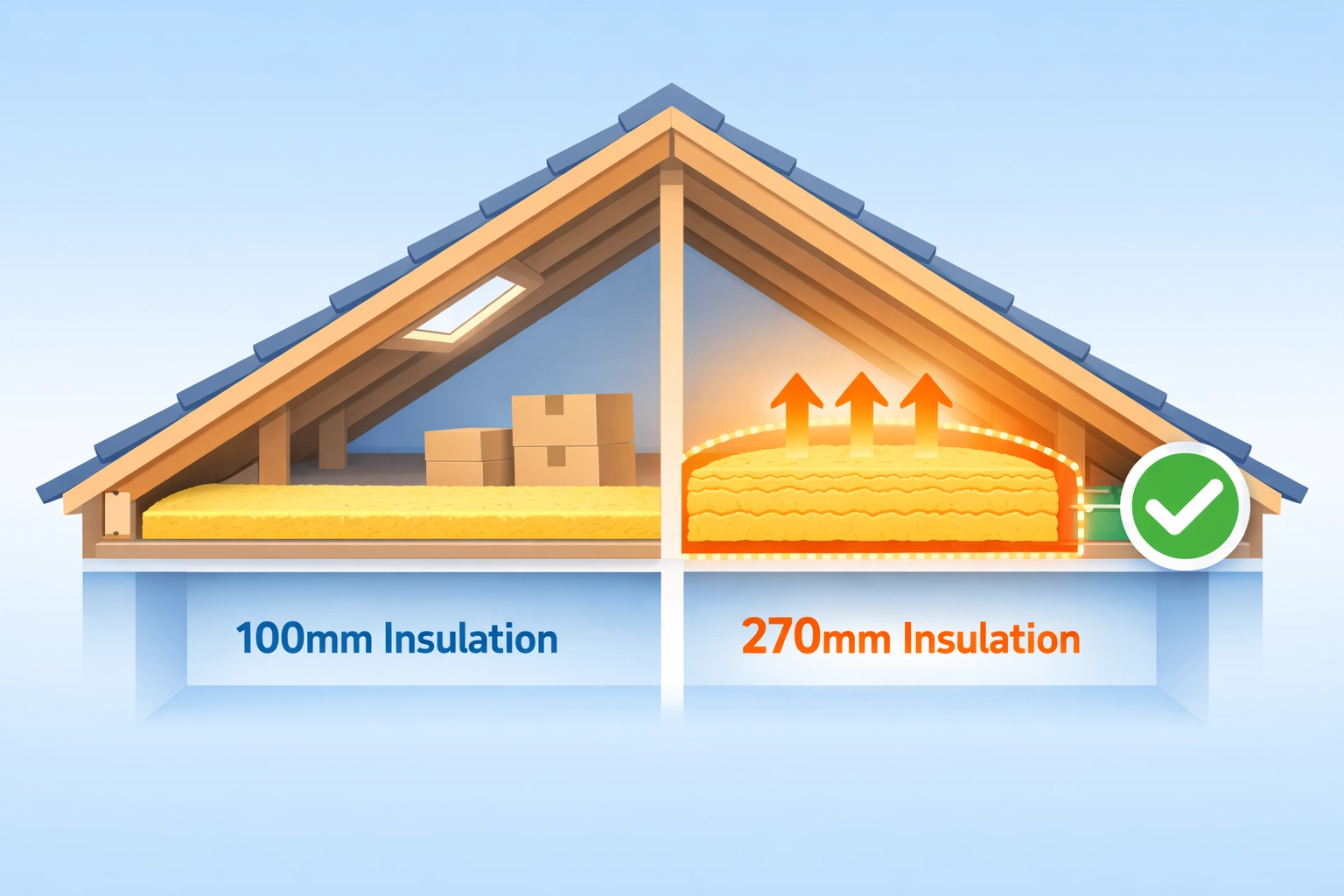
But what’s the right amount? In the UK, you’ll often find older homes with 100mm (about 4 inches) of mineral wool. Today’s standards demand far more, 270mm (over 10 inches). The difference isn’t just numbers on a tape measure. It directly affects your wallet and your home’s energy performance.
Loft Insulation Depth Standards: The 2026 View
Current UK regulations set the minimum at 270mm of mineral wool to reach a U-value of 0.16 W/m²K. That’s the benchmark for modern energy efficiency.
Older 100mm layers fall well short. They made sense decades ago. Today, they’re a red flag for heat loss, wasted money, and missed compliance.
Quick reference:
- 100mm: Below current standards, does not qualify for most energy-saving grant schemes.
- 270mm: Fully compliant, meets or exceeds 2026 targets and keeps surveyors happy.
Energy Savings: Show Me the Numbers
What difference does “topping up” make? Here’s the real bottom line.
1. Starting from Bare Boards (0mm to 270mm)
- Annual bill savings: £200–£300 per year
- Energy saved: ~250–300kWh annually
This upgrade is a no-brainer, with fast payback and a huge comfort boost.
2. Upgrading from 100mm to 270mm
- Annual bill savings: £10–£15 per year
- Energy saved: A fraction of the above
Subtle, not sensational. You’ll still feel warmer, and you’ll hit compliance, but don’t expect miracles in your bills.
3. Environmental Impact
Less energy wasted means lower carbon footprint. Every millimetre matters.
Why 270mm Loft Insulation Wins
1. Meets Building Regulations
Falling short on insulation depth means missing out on the basics of the latest building code. When you sell, remortgage, or rent, this could raise issues on your EPC report.
2. Maximal Heat Retention
Thicker layers cut winter heat loss to almost zero. That means less demand on your boiler or heat pump.
- 270mm = Maximum energy saving upgrades for lofts
- 100mm = Struggling to match today’s efficiency standards
3. Long-Term Investment
The extra 170mm isn’t just for your comfort. It’s future-proofing your property for the long haul. As standards tighten, 270mm keeps you ahead.
Is Upgrading from 100mm to 270mm Worth It?
Honest answer: It depends.
- Existing 100mm is “something”, but it’s still not enough.
- Payback time is longer if you already have some insulation. Annual savings are modest.
- For homeowners with old, compacted, or poorly laid insulation, topping up provides a refresh, brings insulation up to standard, and can improve comfort and soundproofing.
Other reasons to top up:
- DIY insulation compresses over time, yours might be closer to 80mm now.
- You’ll need to hit 270mm if you want to access most government grants (like GBIS and ECO4).
- Mortgage surveyors will tick the right box for full-depth insulation.
- It’s a cost-effective upgrade compared to other home improvements.
Material Choices: Does Type Matter at 270mm?
Most homes use mineral wool (glass fibre or Rockwool). At 270mm, you hit regulatory targets and solid all-round performance.
Other options:
- Multifoil Insulation: Slimmer, reflects radiant heat. Great where space is tight. Compare options here: Rockwool vs Multifoil vs Spray Foam Guide
- PIR Boards: Higher performance per mm, used for roof slopes. Not usually for ‘laid flat’ on loft floors.
You want 270mm total thickness, but layers can be mixed for practical solutions.
What If You Need Loft Storage?
The myth: “You can’t board over 270mm of loft insulation.”
The reality: You can, but you need loft legs or a raised platform to avoid compressing the mineral wool.
Compressed insulation loses its thermal power. Loft legs allow full-depth insulation under a stable storage deck.
See details in our guide: Practical Loft Solutions & Maintenance

Building Regulations & Why Compliance Matters
House sales and rentals now rely on achieving an energy efficiency rating of at least EPC ‘C’. Sub-270mm loft insulation almost always drags your rating down.
Key risks of non-compliance:
- Lower property value
- Issues with mortgage approvals
- Missed grant opportunities
Check out more on the 2026 standards:
Is 270mm Really Necessary? Understanding Part L Regulations in 2026
At A Glance: 270mm vs 100mm Loft Insulation
| Feature | 100mm | 270mm |
|---|---|---|
| Meets 2026 Regulations? | No | Yes |
| Energy Bill Savings | Low (£10–£15/year) | High (£200–£300/year*) |
| Environmental Impact | Moderate | Optimised |
| Available for Grants? | No | Yes |
| Impact on EPC Rating | Minimal | Significant |
*Savings are highest for previously uninsulated lofts.

How Long Does 270mm Loft Insulation Last?
Decades. Mineral wool, properly installed, won’t degrade quickly. It’ll outlive most boilers and many roofs.
For best results:
- Check your loft every few years for signs of compression or moisture.
- Topping up or replacing insulation is a one-off investment with years of rewards.
Cost vs. Benefit: Is Topping Up Right For You?
- If you have little to no insulation: Go straight to 270mm. The savings will add up, year-on-year.
- If you’re already at 100mm: Think in terms of compliance, grants, and peace of mind: not just immediate payback.
- For landlords and sellers: Upgrading helps hit mandatory standards quickly, boosting your property’s appeal.
For up-to-date pricing, request a tailored quote here.
Final Thoughts
Don’t let your heat slip through the cracks. In 2026, 270mm loft insulation is essential; for energy savings, for comfort, for property value, and for staying ahead of new regulations. 100mm just doesn’t cut it anymore.
Need help assessing your loft? Book a free survey with ComfySeal: Book Here
Looking for more guides on regulations, insulation types, or practical solutions? Visit the ComfySeal Blog for detailed help on every aspect of your home’s energy performance.