
Imagine this. You've been a loyal mortgage customer for over a decade. Your payment history is spotless. You spot a better interest rate and decide to remortgage.
Then everything falls apart because of some foam in your loft.
This is exactly what happened to one homeowner we worked with. And it's a story worth sharing, because it could easily happen to you.
The Background: A Routine Remortgage That Wasn't
Our client had been with their lender for 12 years. Not a single missed payment. An excellent credit score. The kind of borrower any bank would want to keep.
They were on a fixed rate of 4.8% and spotted an opportunity to switch to a much better deal at around 2.9%. A no-brainer, right?
The remortgage process started smoothly. Application submitted. Valuation booked. Everything looked straightforward.
Then the surveyor went into the loft.

The Problem: Spray Foam Discovered
The surveyor found spray foam insulation covering the underside of the roof. It had been installed by a previous owner years ago, our client didn't even know it was there.
Within days, the lender declined the remortgage application.
No negotiation. No exceptions. Just a flat rejection.
Here's the thing most homeowners don't realise. Major UK lenders, including Nationwide, Halifax, Santander, and many others, have a near-zero tolerance policy for spray foam insulation. It doesn't matter how good your credit is. It doesn't matter how long you've been a customer.
If spray foam is present, you're usually out of luck.
Why Do Lenders Reject Spray Foam?
It comes down to risk. Spray foam can:
- Mask roof defects – Surveyors can't inspect timbers properly
- Trap moisture – Leading to hidden rot and structural damage
- Affect ventilation – Causing condensation problems over time
- Reduce property value – Many buyers won't touch it
For lenders, a property with spray foam is simply too risky to secure a mortgage against.
The Impact: What Was at Stake
Without the remortgage going through, our client faced a grim reality.
Their fixed-rate deal was ending. Without a new product, they'd automatically roll onto the lender's Standard Variable Rate (SVR) at 6.2%.
That's a massive jump from their current 4.8%, and miles away from the 2.9% they'd been hoping for.
We're talking about hundreds of pounds extra every single month. For a family already budgeting carefully, this wasn't just an inconvenience. It was a potential financial disaster.
And here's the kicker. Even if they tried to sell the property instead, they'd face the same problem. No buyer could get a mortgage on it either.
The spray foam had effectively trapped them.

The Solution: Professional Spray Foam Removal
That's when our client found us.
At ComfySeal Ltd, we specialise in spray foam removal that meets lender requirements. This isn't a DIY job. It's not something you can scrape off yourself and hope for the best.
Lenders require specific documentation before they'll reconsider an application:
- Removal certificate – Proof the foam has been professionally removed
- Before and after photographs – Documented evidence of the work
- Timber condition report – Confirming the roof structure is sound
- Ventilation compliance certification – Showing airflow has been restored
Without this paperwork, most lenders won't even look at you again.
How We Approached the Job
Our team conducted a full survey of the loft space first. We needed to assess:
- The type of spray foam (open-cell vs closed-cell)
- The extent of coverage
- The condition of the timbers underneath
- Any existing damage or moisture issues
Once we had the full picture, we got to work.
The removal process is careful and methodical. We strip the foam back completely, inspect every timber, and ensure proper ventilation is restored to the roof space.
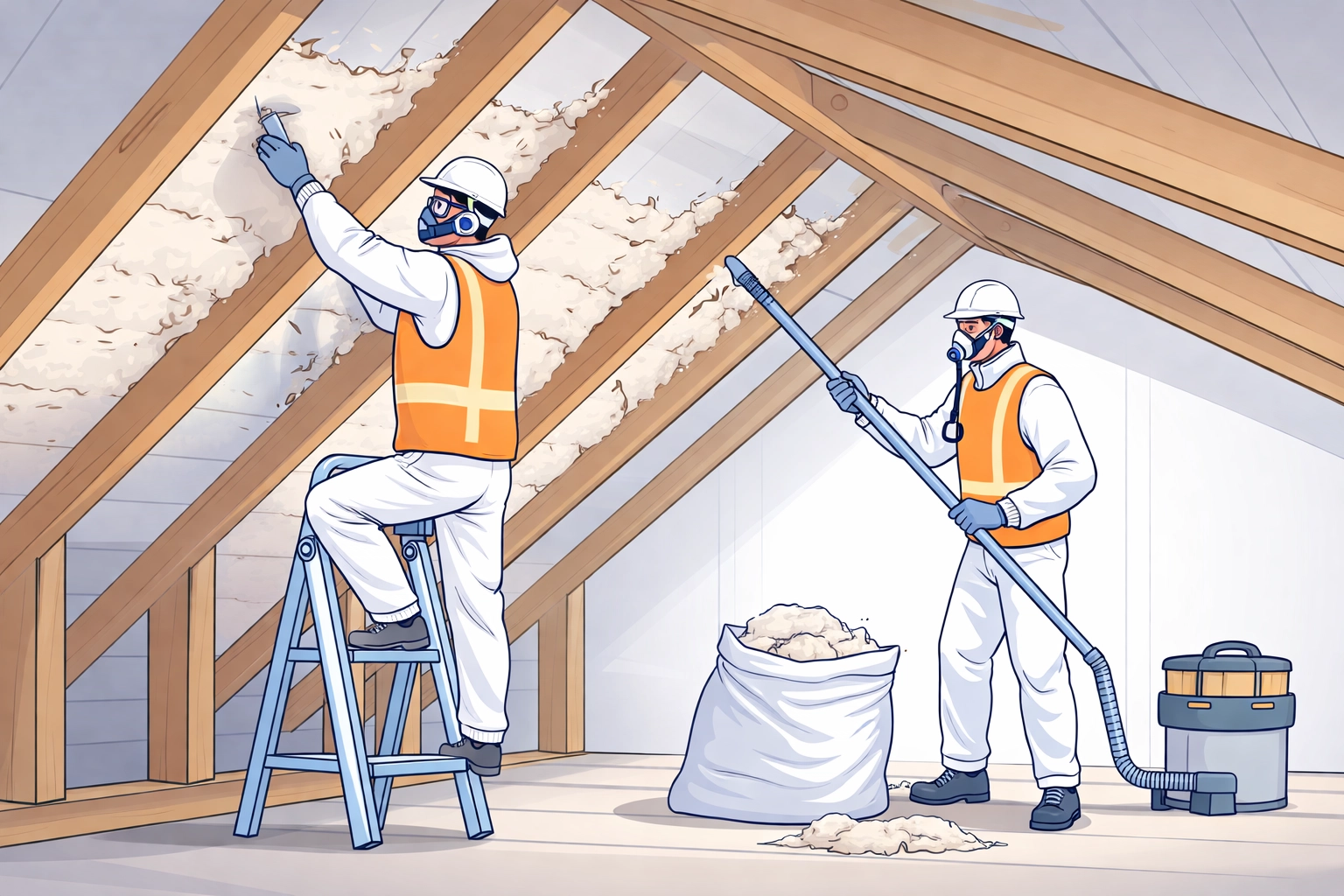
It's not glamorous work. But it's essential.
After removal, we provided our client with the full documentation package their lender required. Every certificate. Every photo. Every report.
The Outcome: Mortgage Approved
Seven weeks after we completed the spray foam removal, our client resubmitted their remortgage application.
This time, it sailed through.
They secured a new rate of 3.1%, not quite the original 2.9% they'd spotted (rates had shifted slightly), but still a fantastic deal compared to where they'd been heading.
The monthly savings? Around £620 compared to the SVR they would have been stuck on.
Let that sink in. An investment of a few thousand pounds in professional removal generated savings of over £7,000 a year.
More importantly, they had their options back. They could remortgage. They could sell in the future. The property was no longer a liability.
Key Takeaways from This Case Study
If there's one thing this story shows, it's that spray foam problems are solvable, but only if you approach them the right way.
Here's what we learned:
1. Don't Assume You're Safe
Our client didn't even know spray foam was in their loft. If you're buying a property or haven't checked your roof space in years, it's worth a look.
2. Lenders Won't Make Exceptions
A perfect payment history doesn't matter. Twelve years of loyalty doesn't matter. If spray foam is present, most lenders will decline. Period.
3. Professional Removal Works
The right documentation from a certified removal specialist can turn a "no" into a "yes." This isn't about cutting corners, it's about doing it properly.
4. The Maths Usually Makes Sense
Yes, removal costs money. But compare that to years of higher mortgage payments, or a property you can't sell. The numbers speak for themselves.
Could This Happen to You?
If you've got spray foam in your loft: or you're not sure: it's worth finding out before you need to remortgage or sell.
A quick survey can tell you exactly where you stand. And if removal is needed, getting it done on your own timeline is always better than scrambling when a deal falls through.
We've helped dozens of homeowners in similar situations. Some were remortgaging like our client here. Others were trying to sell and kept having sales collapse. A few discovered the problem during home improvements.
The common thread? Professional spray foam removal got them back on track.

Final Thoughts
Spray foam insulation seemed like a good idea at the time. It was marketed as a wonder solution. Easy to install. Great thermal performance.
But for many homeowners, it's become a trap.
The good news? It doesn't have to stay that way.
If you're facing a similar situation: or you just want to check whether your loft could cause problems down the line: we're here to help.
Book a free survey and let's take a look. No pressure. No sales pitch. Just honest advice about your options.
Because nobody should lose their dream mortgage rate over some foam they didn't even know was there.