You watched a YouTube tutorial. You bought the materials. You spent a weekend cramming insulation into every gap.
Now your roof timbers are rotting.
It happens more often than you’d think. DIY insulation mistakes cause thousands of pounds in structural damage every year. The culprit? Blocked ventilation and trapped moisture.
Let’s explore why this happens. And how you can avoid it.
The DIY Insulation Appeal
Insulation seems straightforward. Roll it out. Stuff it in. Job done.
The logic makes sense. You save money on installation costs. You feel accomplished. Your home feels warmer.
But here’s the problem. Insulation isn’t just about adding material. It’s about understanding airflow, moisture dynamics, and building science.
Most DIY videos skip the complicated bits. They don’t explain what happens when you block roof vents. They don’t mention condensation risks.
That missing information costs homeowners dearly.
What Actually Happens in Your Loft
Your loft needs to breathe. It’s designed that way.
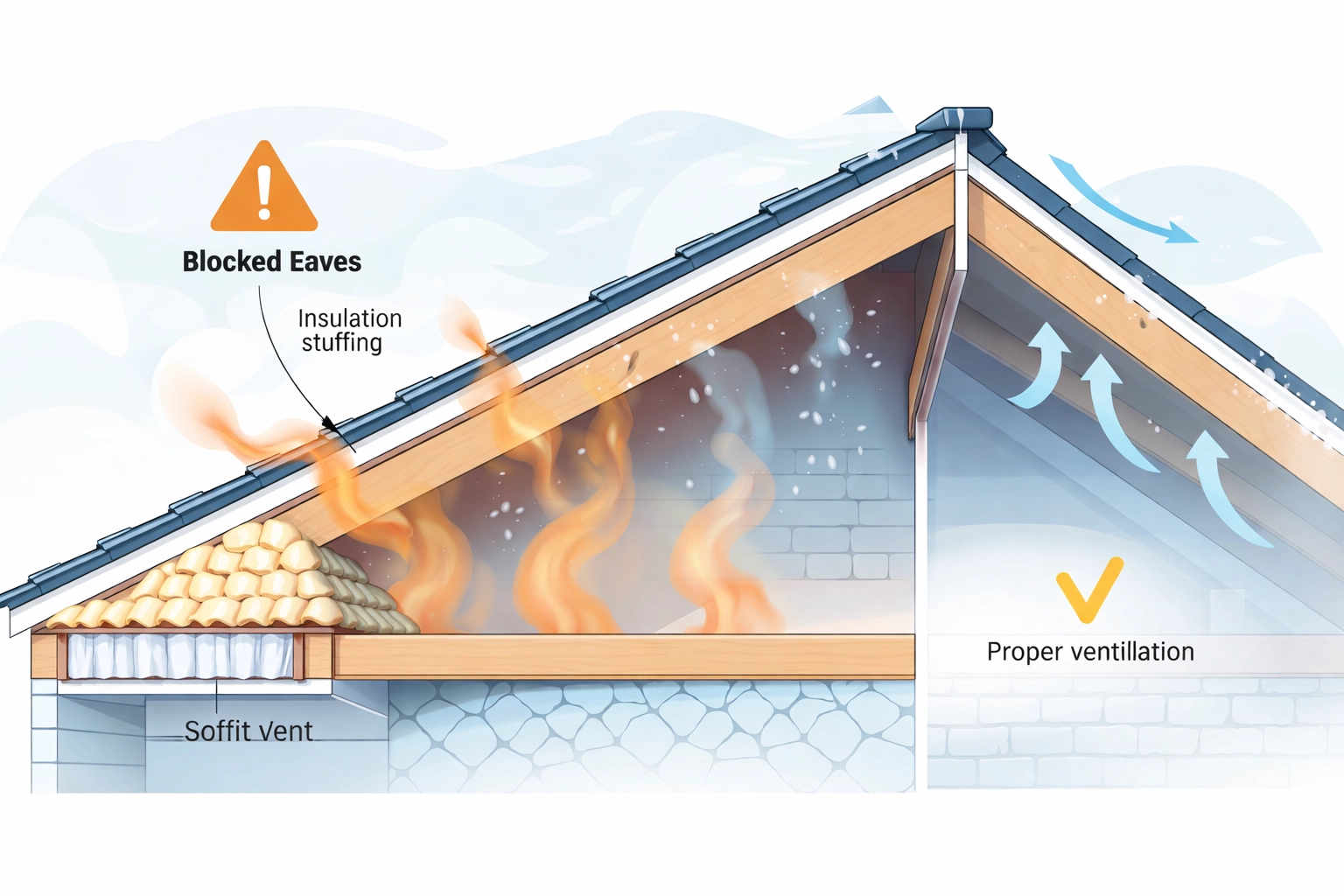
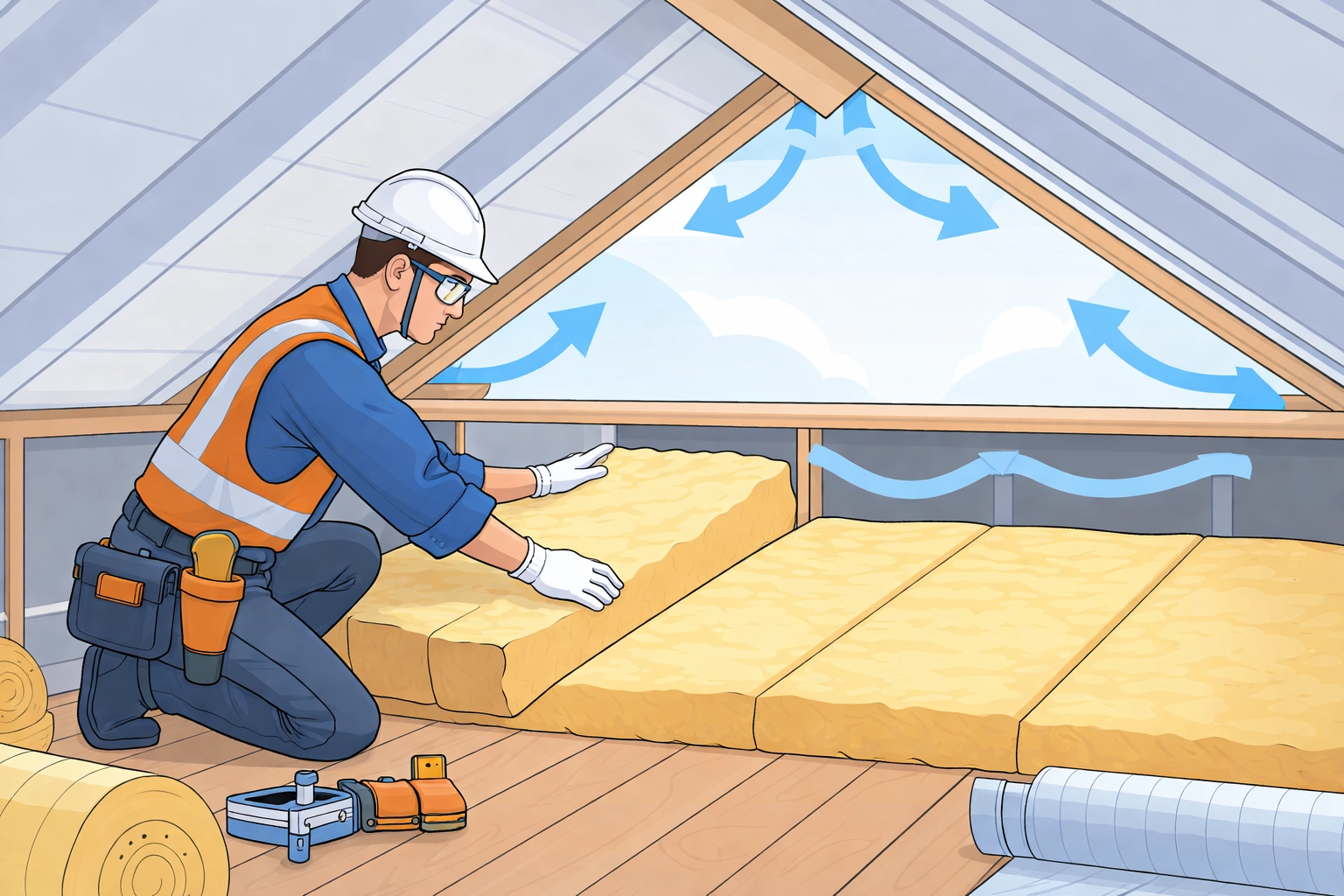
Warm, moist air rises from your living spaces. It enters the loft through gaps around pipes, lights, and hatches. In a properly ventilated loft, this moisture escapes through eaves vents and ridge vents.
Now imagine you’ve stuffed insulation right up to the roof edges. You’ve blocked those vents. The moisture has nowhere to go.
It condenses on cold surfaces. Your roof timbers, rafters, and decking become wet. They stay wet for months.
Wood plus moisture equals rot. It’s that simple.
The Condensation Problem Explained
Condensation forms when warm air meets cold surfaces. Your loft experiences this constantly during winter.
Without proper ventilation, moisture levels climb. The relative humidity in a poorly ventilated loft can exceed 80%. That’s perfect conditions for timber decay.
Here’s what happens next:
- Wet rot develops in timber with moisture content above 20%
- Dry rot spreads through your roof structure
- Mould colonies form on rafters and insulation
- Metal fixings rust and weaken
The damage is silent. You won’t notice it for months or years. By then, repair costs have multiplied.
Common DIY Mistakes That Cause Rot
Not all DIY insulation causes problems. But certain mistakes almost guarantee trouble.
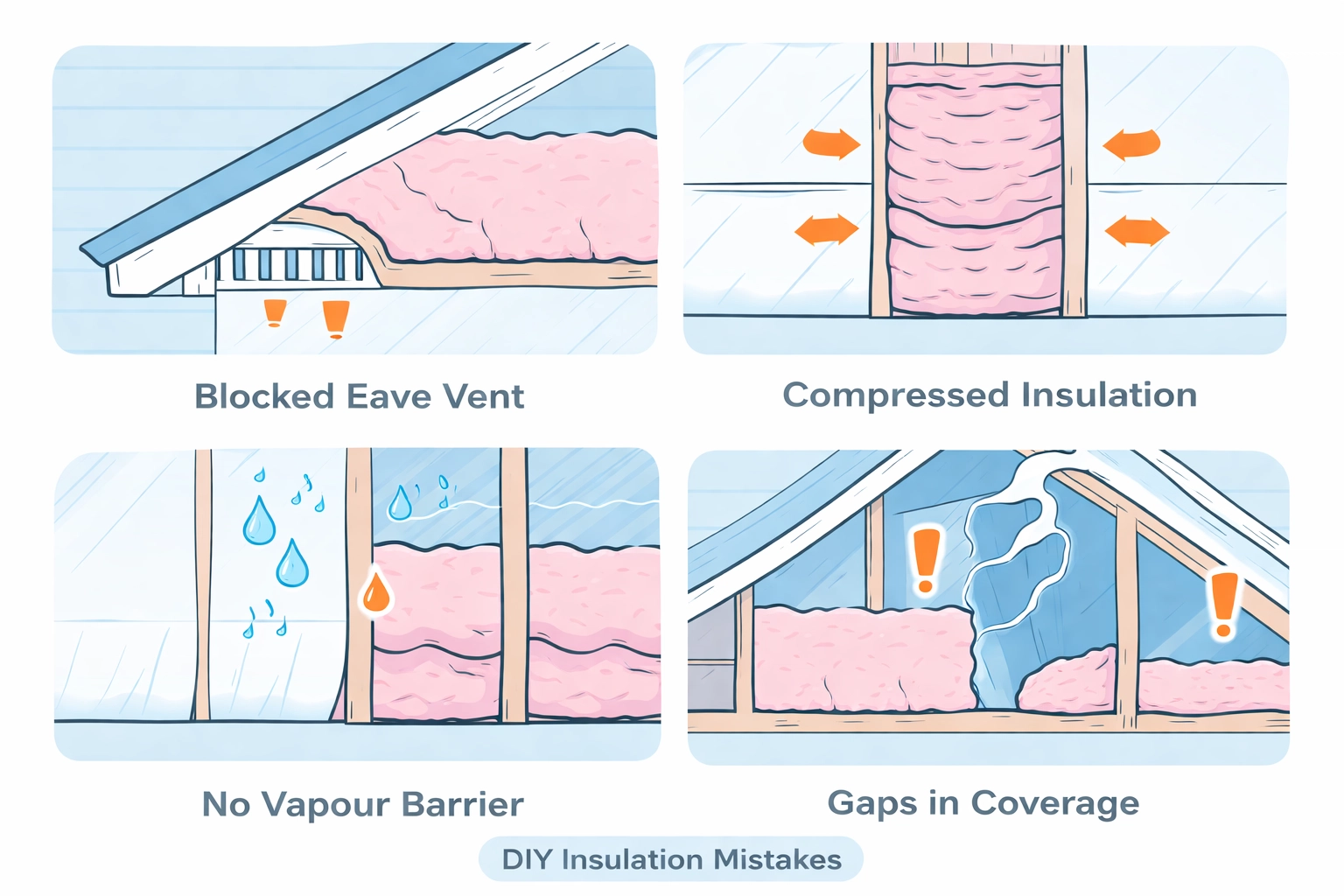
1. Blocking Eaves Ventilation
This is the biggest error. DIY installers push insulation right into the eaves. They want maximum coverage.
Instead, they create a moisture trap. The 50mm ventilation gap required by building regulations disappears.
2. Compressing Insulation
Squashing insulation reduces its effectiveness. It also creates cold spots where condensation forms.
Properly installed insulation maintains its loft. Compressed insulation fails on both counts.
3. Ignoring Vapour Barriers
Professional installations include vapour control layers. These prevent warm, moist air from reaching cold loft spaces.
Most DIY projects skip this step entirely. The result? Moisture moves freely into your loft.
4. Creating Thermal Bridges
Gaps in insulation coverage create cold spots. Moisture condenses at these points. Localised rot begins.
Even small gaps matter. A 5% gap in coverage can reduce insulation performance by 25%.
Warning Signs of Roof Rot
Caught early, rot damage is manageable. Left unchecked, it becomes catastrophic.
Watch for these warning signs:
- Musty smells in your loft space
- Dark staining on timber surfaces
- Soft or spongy wood when pressed
- Visible mould growth on rafters
- Peeling paint on upstairs ceilings
- Damp patches appearing after rain
If you spot any of these, act quickly. The damage spreads faster than you’d expect.
Dry rot is particularly aggressive. It can spread through masonry to reach new timber. One contaminated rafter can infect your entire roof structure.
The True Cost of DIY Mistakes
That weekend project suddenly looks expensive.
Roof timber replacement costs between £1,500 and £5,000. Full roof structure repairs can exceed £15,000. Add scaffolding, skip hire, and reinsulation costs.
Compare that to professional insulation installation. The price difference is significant.
But cost isn’t the only concern. Structural rot affects your home’s value. Mortgage lenders and surveyors flag these issues. Sales fall through. Buyers walk away.
You can read more about how insulation problems affect mortgages on our blog.
Why Professional Installation Works
Professional installers understand building science. They’ve trained in moisture management and ventilation principles.
Here’s what they do differently:
Proper Ventilation Assessment
Before adding insulation, professionals check existing ventilation. They calculate whether current airflow meets requirements. They install additional vents if needed.
Correct Material Selection
Different lofts need different solutions. A professional assesses your specific situation. They recommend materials that suit your roof type and usage.
For low-clearance spaces, multifoil insulation offers excellent performance without blocking ventilation.
Building Regulations Compliance
UK building regulations specify minimum ventilation requirements. Professional installers know these rules. They ensure your installation complies.
DIY installations often violate these codes. That creates problems during property sales.
Warranty Protection
Professional installations come with guarantees. If problems develop, you’re covered.
DIY work offers no such protection. You bear all repair costs yourself.
Fixing Existing DIY Problems
Already installed insulation yourself? Don’t panic.
First, inspect your loft carefully. Check for signs of moisture or rot. Look at ventilation paths.
If vents are blocked, clear them immediately. Install eaves ventilation trays to maintain airflow. These plastic or cardboard channels create a gap between insulation and roof.
For serious condensation issues, consider these solutions:
- Add mechanical ventilation with a humidistat-controlled fan
- Install a vapour barrier on the warm side of insulation
- Increase roof ventilation with additional vents or tile vents
Better yet, get a professional assessment. Many problems aren’t visible to untrained eyes.
Book a free consultation to have an expert check your loft. Early intervention prevents expensive repairs.
The Smart Approach to Loft Insulation
Want to improve your home’s energy efficiency? Great idea.
Just do it properly.
Start with a professional survey. Understand your loft’s ventilation requirements. Identify any existing moisture issues.
Choose the right insulation type for your situation. Not every material suits every roof.
Ensure proper installation. Maintain ventilation gaps. Install vapour barriers where needed.
The small extra investment protects your roof structure. It safeguards your home’s value. It gives you peace of mind.
Loft insulation remains one of the most cost-effective energy upgrades available. Done correctly, it pays for itself within years.
Done incorrectly, it costs you thousands.
Ready to Insulate Properly?
Your home deserves better than a botched DIY job. Your roof structure certainly does.
Professional installation isn’t about luxury. It’s about protection.
At ComfySeal, we assess every loft individually. We ensure proper ventilation. We use appropriate materials. We comply with all building regulations.
No blocked vents. No moisture traps. No rotting timbers.
Get a quote for professional loft insulation. Or book a free survey to assess your current situation.
Final Thoughts
DIY insulation seems simple. The reality is more complex.
Blocked ventilation causes condensation. Condensation causes rot. Rot causes expensive structural repairs.
Professional installers understand these risks. They know how to avoid them. Their expertise protects your home for decades.
The choice is clear. Pay a little more now for proper installation. Or pay a lot more later for roof repairs.
Your roof timbers will thank you.