Your loft might be making you ill.
That's not scaremongering. It's just physics. When warm, moisture-laden air from your home meets a cold loft space, condensation forms. And where there's condensation, mold isn't far behind.
The good news? Correct loft insulation and ventilation work together to stop this problem before it starts. Get the balance right, and you protect both your home's structure and your family's health.
Let's break down exactly how it works.
The Hidden Moisture Problem in UK Lofts
Every UK home generates moisture. Cooking, showering, drying clothes, even breathing, it all adds water vapour to the air inside your home.
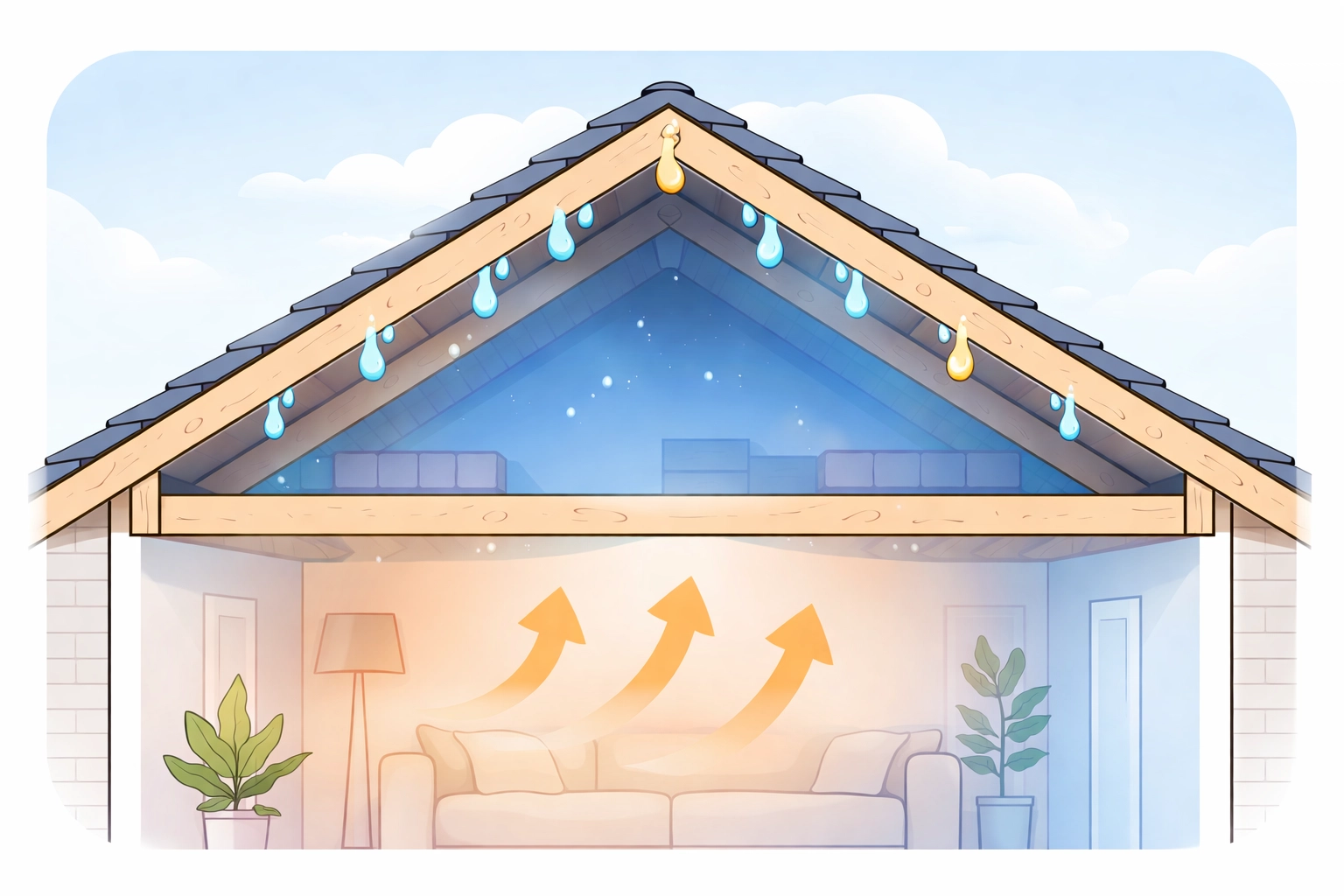
Warm air rises. That's basic science. And when it rises into a poorly ventilated loft, trouble begins.
Here's what happens:
- Warm, moist air escapes through gaps in your ceiling
- It enters the cold loft space
- The moisture condenses on cold surfaces like roof timbers and rafters
- Stagnant, damp conditions become the perfect breeding ground for mold
This isn't a rare problem. Thousands of UK homes suffer from loft condensation without the homeowners even knowing. The mold grows quietly in the darkness above your head.
Why Ventilation and Insulation Must Work Together
Think of your loft as a system. Insulation and ventilation aren't separate solutions. They're two halves of the same puzzle.
Insulation keeps warm air where it belongs, inside your living space. It creates a thermal barrier that stops heat escaping through your ceiling.
Ventilation ensures any moisture that does reach the loft gets carried away before it can condense.
Remove one, and the other fails.
What Happens Without Proper Ventilation
Install insulation without adequate ventilation, and you trap moisture in the loft. The air becomes stagnant. Humidity builds. Condensation forms on every cold surface.
The result? Rotting timbers. Black mold. Damaged belongings. A musty smell that seeps into your living space.
What Happens Without Proper Insulation
Skip the insulation, and warm air floods into your loft constantly. Your ventilation system can't keep up with the moisture load. Plus, you're throwing money away on heating bills.
The solution is balance. Professional loft insulation installers understand this. They ensure your loft has the right insulation depth while maintaining clear airflow paths.
The Health Risks of Loft Mold
Mold isn't just unsightly. It's a genuine health hazard.
When mold grows in your loft, it releases spores into the air. These spores don't stay put. They circulate through your home, entering the air you breathe every day.
Common health effects include:
- Allergic reactions and skin irritation
- Asthma flare-ups and breathing difficulties
- Persistent sinus problems and headaches
- Eye irritation and watering
- Fatigue and general unwellness
Children, elderly family members, and anyone with respiratory conditions face the highest risk. But even healthy adults can develop sensitivity to mold over time.
The frustrating part? Many people don't connect their symptoms to their loft. They blame hay fever, dust, or "just a cold that won't shift."
If you've noticed unexplained respiratory issues in your household, your loft could be the culprit.

How Correct Loft Insulation Prevents Condensation
The right loft insulation creates a barrier between your warm home and the cold loft space. This dramatically reduces the amount of moisture-laden air that reaches the loft in the first place.
But material choice matters enormously.
Why Rockwool is the Smart Choice
At ComfySeal, we recommend Rockwool mineral wool insulation for most UK lofts. Here's why it excels at preventing condensation and mold:
- Breathable structure , Rockwool allows moisture vapour to pass through rather than trapping it
- Non-combustible , A1 fire rating means maximum safety for your home
- Rot-resistant , Unlike some materials, Rockwool doesn't absorb water or degrade when exposed to moisture
- Long-lasting performance , Maintains its thermal properties for decades
Compare this to spray foam, which can trap moisture against roof timbers and create the exact conditions mold loves. That's why so many homeowners are now seeking spray foam removal after discovering problems.
The current UK building regulations recommend 270mm of mineral wool insulation for optimal thermal performance. This depth provides excellent heat retention while working harmoniously with your ventilation system.
Want to understand more about insulation depths? Check out our guide on Part L regulations for 2026.
The Ventilation System Your Loft Needs
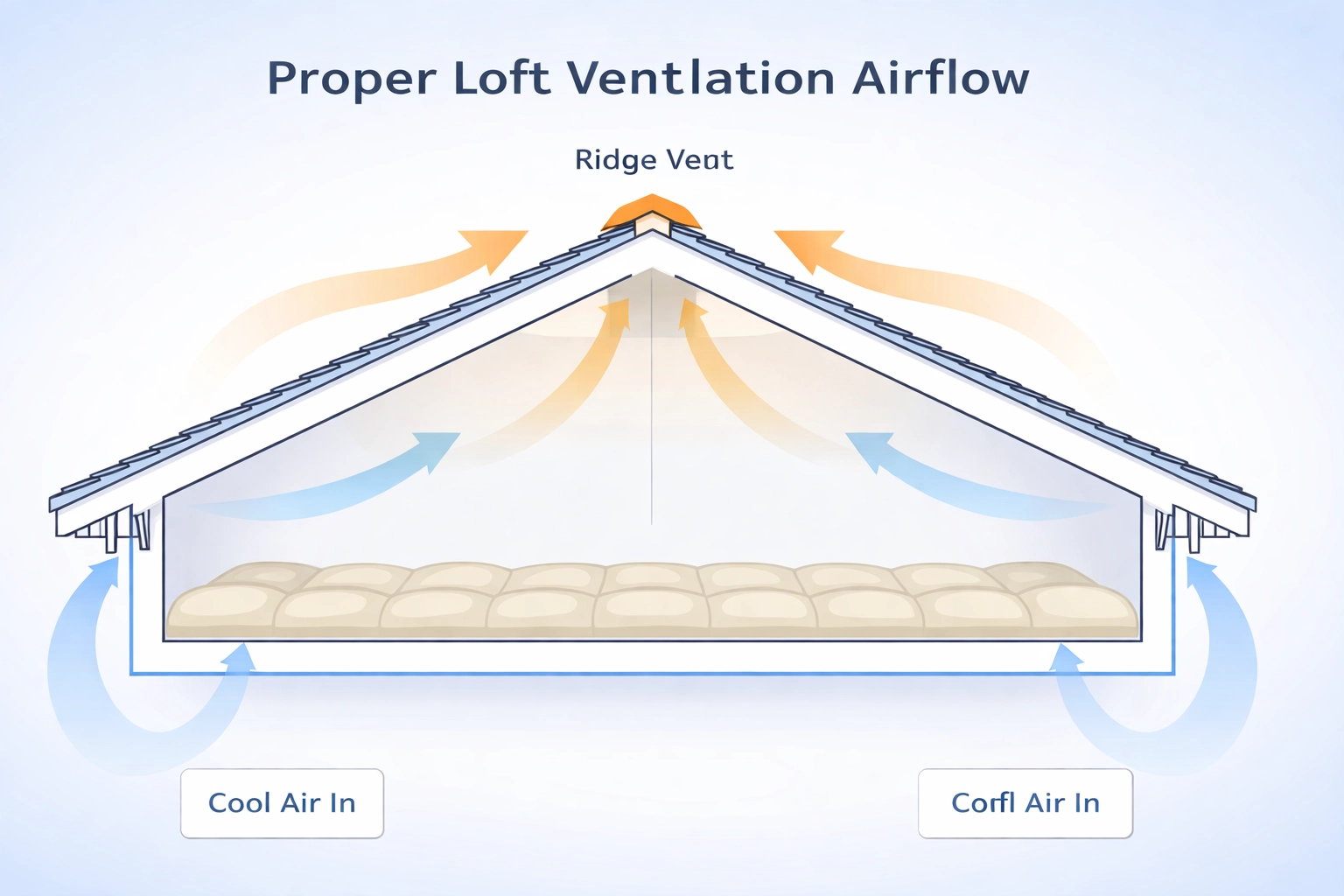
Effective loft ventilation follows a simple principle. Cool, dry air enters low. Warm, moist air exits high.
A balanced system includes:
- Soffit vents at the eaves to allow fresh air intake
- Ridge vents or tile vents at the roof peak for exhaust
- Clear airflow paths between intake and exhaust points
The Building Regulations suggest approximately 1 square foot of ventilation for every 300 square feet of loft floor. This should be split evenly between intake and exhaust vents.
Common Ventilation Failures
Many lofts have ventilation on paper but not in practice. Watch out for these issues:
- Blocked soffit vents : Insulation pushed into the eaves cuts off air intake entirely
- Unbalanced systems : Too many exhaust vents without sufficient intake creates negative pressure
- Debris accumulation : Dust, leaves, and bird nests block vents over time
- Missing ventilation : Some older properties lack adequate venting altogether
When intake vents are blocked or insufficient, exhaust systems can actually pull warm, moist air from inside your home. This makes condensation worse, not better.
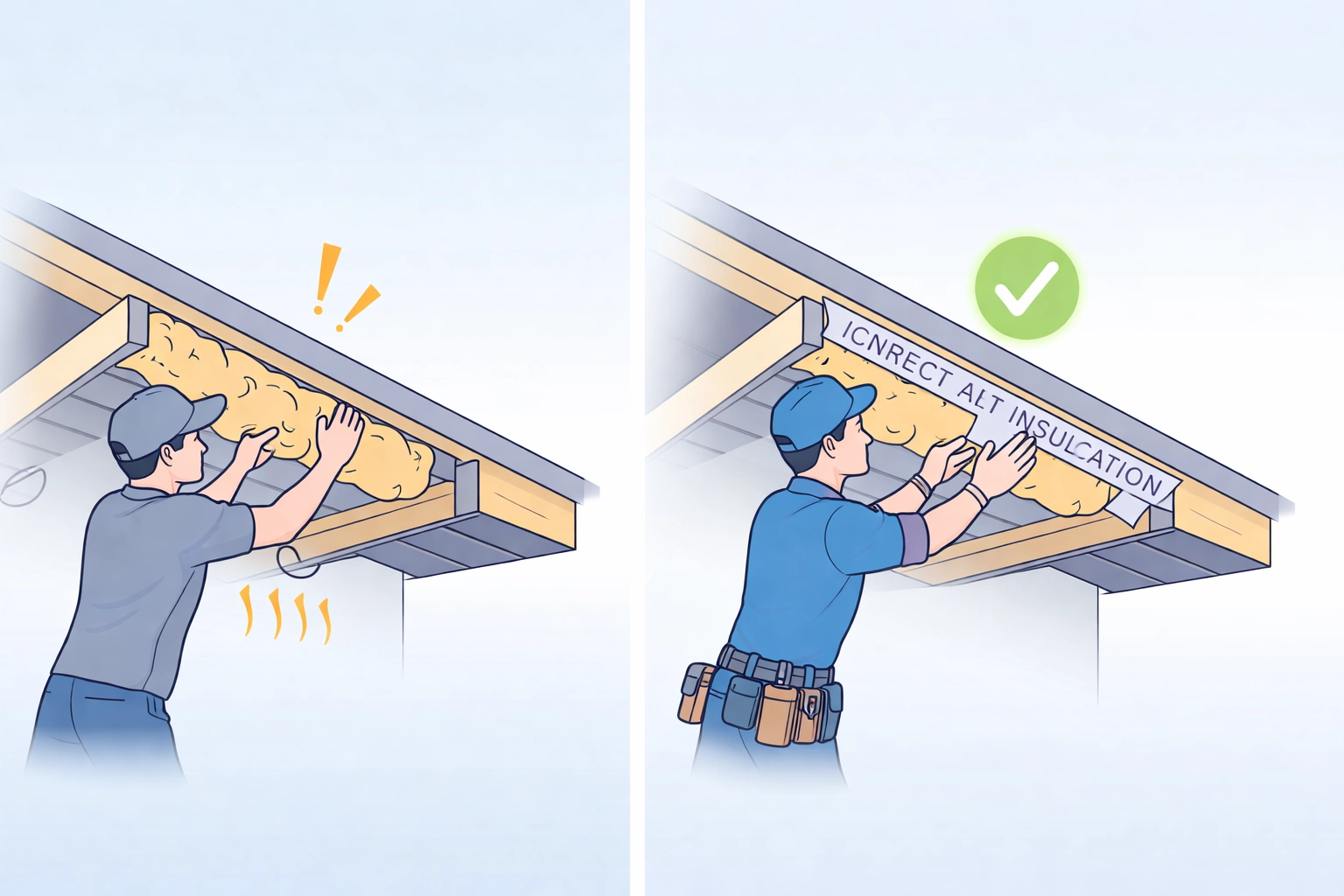
Professional loft insulation installers know to install eaves baffles that maintain a clear air gap even with full-depth insulation. It's a small detail that makes an enormous difference.
Loft Condensation Solutions That Actually Work
If you're dealing with existing condensation or mold, here's your action plan.
1. Get a Professional Assessment
A proper survey identifies exactly what's causing your moisture problem. Is it inadequate ventilation? Poor insulation? Air leaks from below? Often it's a combination.
Book your free consultation and we'll assess your specific situation.
2. Address Air Leaks First
Before adding insulation, seal the gaps where warm air escapes into your loft. Common culprits include:
- Around loft hatches
- Gaps around pipes and cables
- Poorly sealed downlights
- Cracks around partition walls
3. Install Proper Insulation
Upgrade to 270mm of quality mineral wool insulation like Rockwool. Ensure it's installed correctly: laid evenly, not compressed, and with clear pathways around eaves.
4. Verify Ventilation is Working
Check that soffit vents are clear. Confirm you have adequate exhaust ventilation. Consider adding tile vents if your roof lacks sufficient airflow.
5. Monitor and Maintain
Inspect your loft annually. Look for signs of condensation, check vents remain clear, and address any issues promptly.
Why DIY Often Goes Wrong
Loft insulation seems straightforward. Roll out some material, job done.
But the details matter. Blocking ventilation paths. Compressing insulation. Missing air leaks. These mistakes turn a home improvement project into a mold factory.
Professional loft insulation installers bring expertise that prevents these problems. They understand the ventilation-insulation balance. They know which materials perform best in UK conditions. They spot potential issues before they become expensive repairs.
For something as important as your family's air quality, professional installation is the smart investment.
Final Thoughts
Your loft should keep you warm, not make you ill.
Correct loft insulation combined with proper ventilation prevents the condensation that leads to toxic mold growth. It's not complicated science. It's just about getting the balance right.
Breathable insulation like Rockwool. Clear airflow from eaves to ridge. No blocked vents. No trapped moisture.
Get these elements working together, and your loft becomes an asset: lowering your energy bills while protecting your family's health.
Ready to sort your loft properly? Get a quote from ComfySeal today, or book a free survey to find out exactly what your home needs.