Energy bills in 2026 are still a sore spot for UK households. Prices have settled since the chaos of recent years. But they're nowhere near what we used to pay.
So where do you start when you want to cut costs?
The answer is simpler than you might think. Loft insulation remains the single most cost-effective home improvement you can make. It beats new windows. It beats solar panels. And it pays for itself faster than almost anything else.
Let's break down exactly why.
A Quarter of Your Heat Disappears Through the Roof
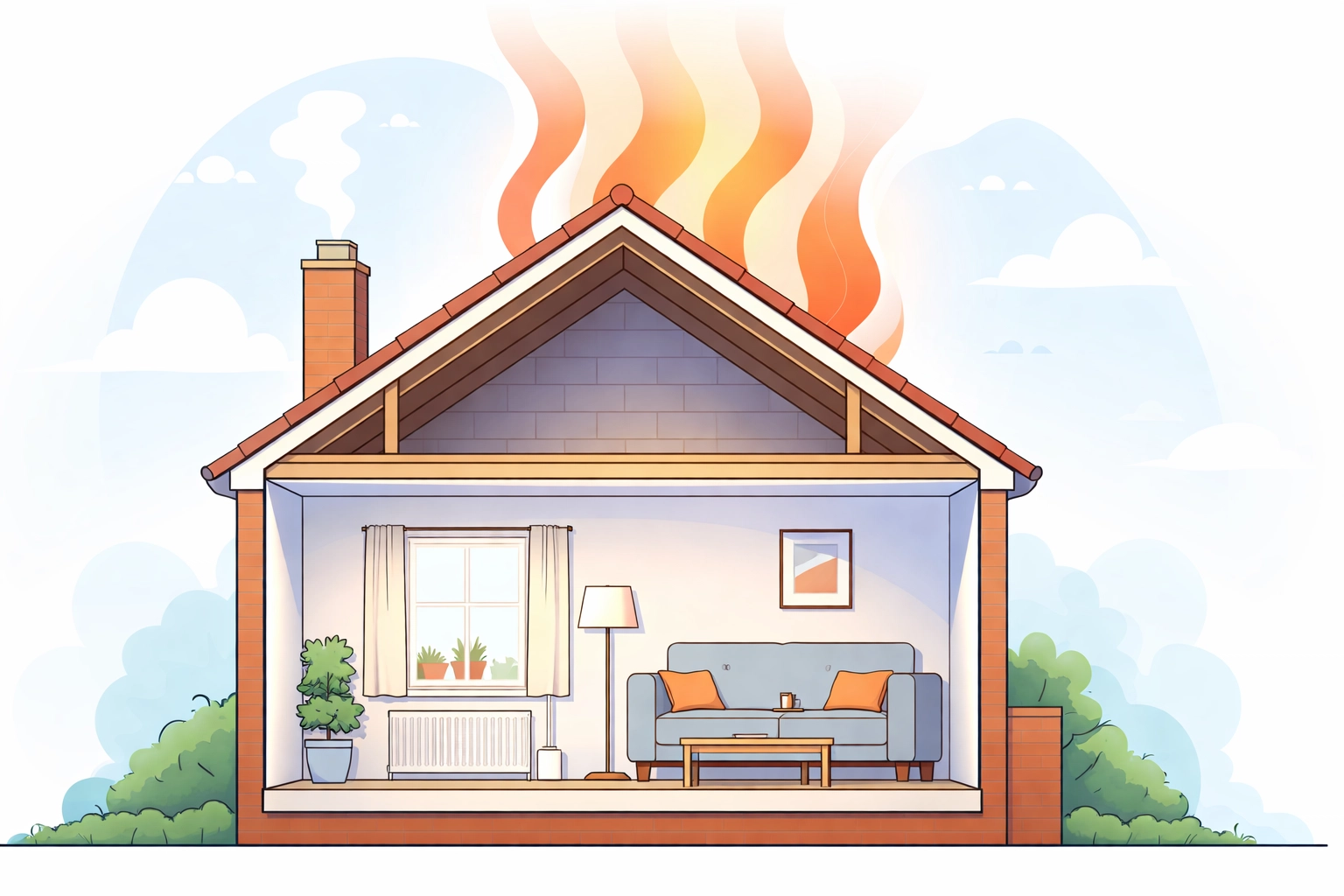
Here's a fact that surprises most homeowners. Approximately 25% of your home's heat escapes through an uninsulated roof.
That's not a small leak. That's a quarter of the money you spend on heating floating up and out of your house.
Heat rises. It's basic physics. Without proper insulation in your loft, that expensive warmth you're generating just drifts away. Your boiler works harder. Your bills climb higher. And you're left wondering why the house still feels cold.
The good news? This is one of the easiest problems to fix.
The Numbers Don't Lie: 2-4 Year Payback
Let's talk money. Because that's what really matters here.
Loft insulation typically costs between £300 and £1,100 depending on your property type. Compare that to other energy-saving measures, and it's remarkably affordable.
Here's what you can expect to save annually:
| House Type | Typical Cost | Annual Savings | Payback Period |
|---|---|---|---|
| Detached | £1,100 | £380 | 2 years 11 months |
| Semi-detached | £900 | £230 | 3 years 11 months |
| Mid-terrace | £850 | £200 | 4 years 3 months |
A payback period of 2-4 years is exceptional for any home improvement. After that? Pure savings. Every single year. For decades.
Quality loft insulation lasts over 40 years. That's potentially 35+ years of reduced bills after you've recouped your investment.
How Does It Compare to Other Upgrades?
This is where loft insulation really shines.
1. New Double or Triple Glazing
Replacing all your windows costs thousands. We're talking £5,000 to £15,000 for a typical home. Annual savings? Around £100-£200.
The payback period? Often 25 years or more.
Windows improve comfort and aesthetics. But they're not a quick financial win.
2. Solar Panels
Solar installations have dropped in price. But you're still looking at £5,000 to £8,000 for a decent system. Returns depend heavily on your roof orientation and local weather.
Payback periods typically run 10-15 years. That's solid. But it's not 2-4 years.
3. Cavity Wall Insulation
This one's closer to loft insulation in value. Costs range from £700 to £4,300 depending on your property. Annual savings are similar at £120-£420.
The catch? Not every home has cavity walls. And the installation is more invasive.
4. Solid Wall Insulation
Older properties with solid walls can save up to £550 annually. But installation costs can exceed £10,000.
That's a 15-20 year payback. Not ideal.
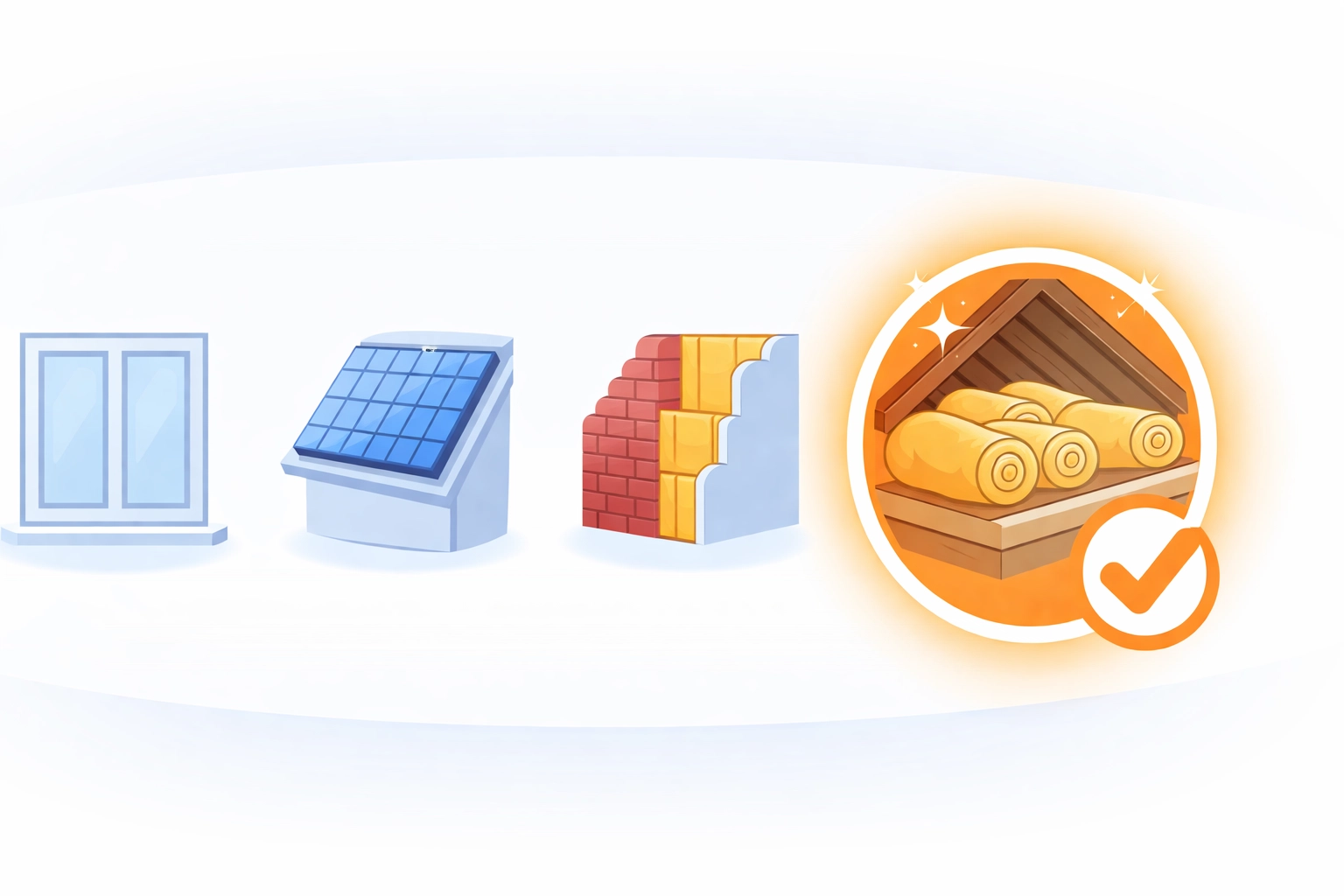
Loft insulation wins on pure return on investment. It's the logical starting point for any energy efficiency journey.
270mm Mineral Wool vs Space-Saving Multifoil
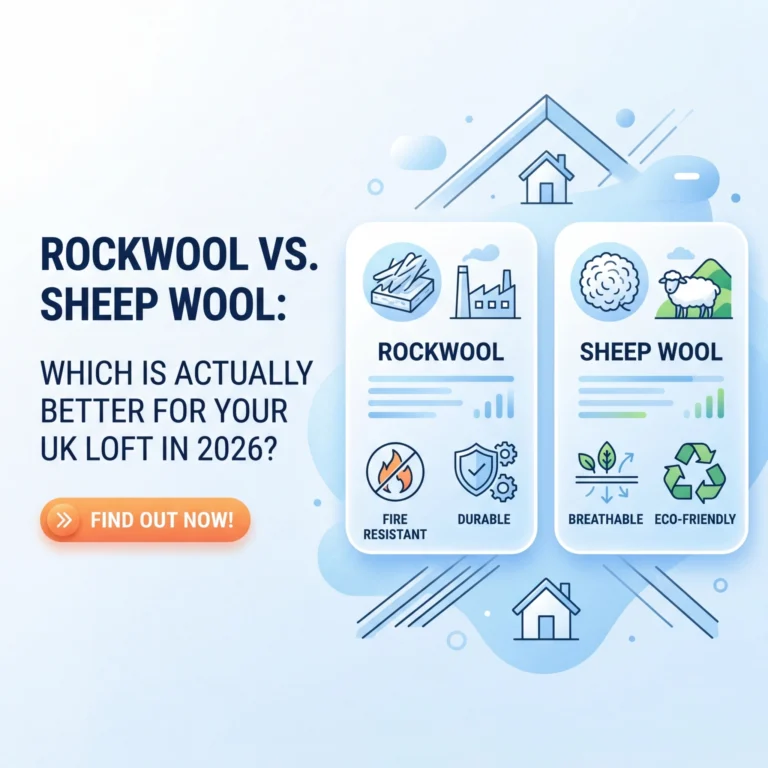
You've got options when it comes to materials. The two most popular choices are mineral wool and multifoil.
Mineral Wool (Rockwool or Glass Wool)
The government recommends 270mm thickness for optimal thermal performance. This is the gold standard for loft insulation across England, Wales, and Scotland.
Benefits:
- Excellent thermal performance
- Fire resistant
- Affordable
- Easy to install between joists
The trade-off? It takes up space. A lot of space. If you want to use your loft for storage, 270mm of fluffy insulation creates challenges.
For a deeper dive into material options, check out our complete comparison guide.
Multifoil Insulation
Multifoil is the clever alternative. It's thin, reflective, and incredibly efficient for its thickness.
Benefits:
- Takes up minimal space
- Perfect for loft conversions or storage areas
- Lightweight and easy to handle
- Reflects radiant heat back into the home
If you're keen on keeping your loft usable, multifoil might be your answer.
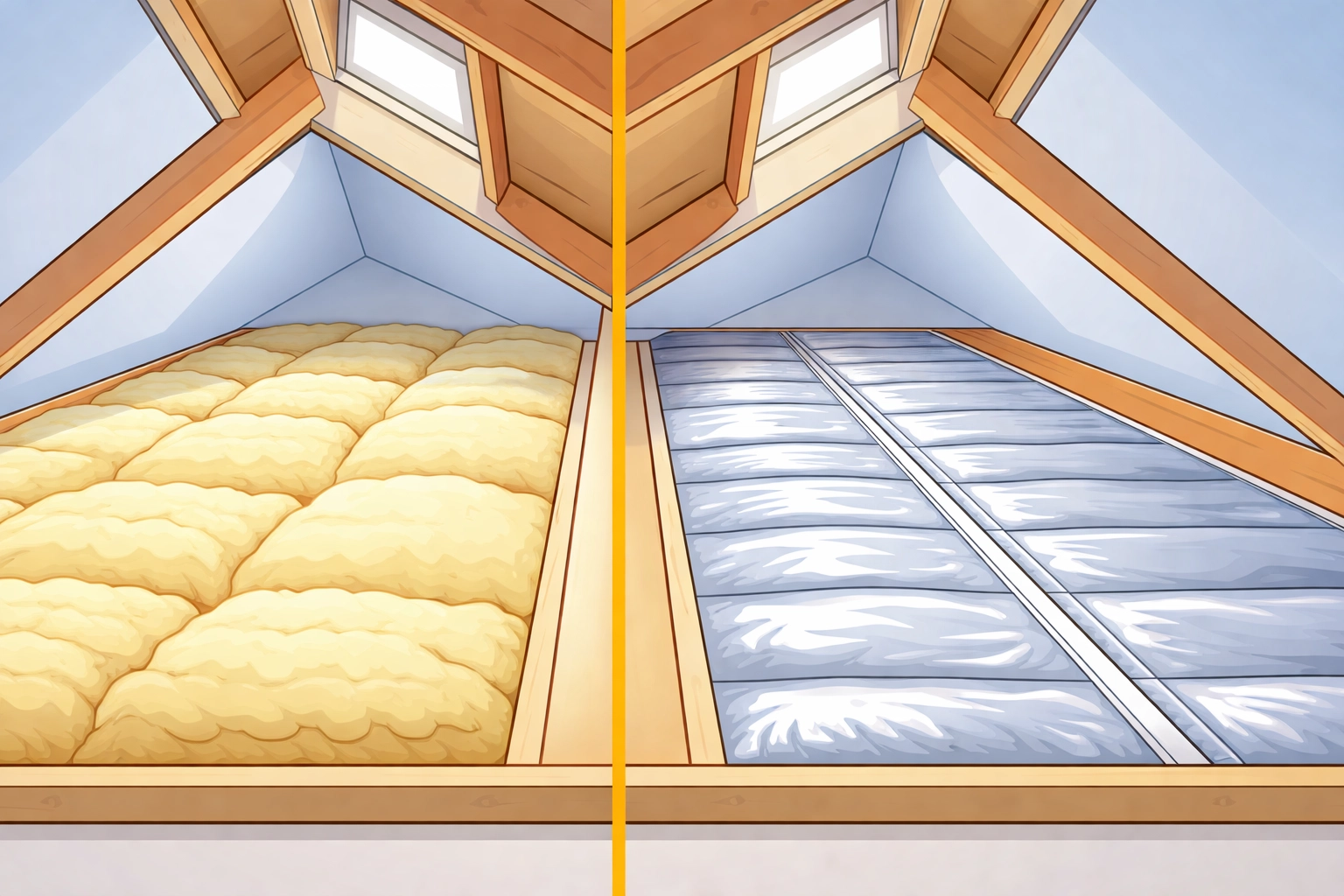
Which should you choose? It depends on your priorities. Pure thermal performance on a budget? Go mineral wool. Need to preserve headroom and storage? Multifoil is the smart pick.
The EPC Rating Boost
Energy Performance Certificates matter more than ever in 2026.
Selling your home? Renting it out? Your EPC rating affects everything from buyer interest to legal compliance.
Loft insulation can push your rating up by 1-2 bands. A property sitting at D or E could jump to C. That's significant.
For landlords, this is especially critical. Minimum EPC requirements keep tightening. Getting your rental properties to Band C is no longer optional.
And here's the kicker. Better EPC ratings increase property values. Buyers and tenants actively look for energy-efficient homes. They know it means lower running costs.
One relatively small investment. Multiple financial benefits.
The Quick Win: Minimal Disruption
Some home improvements turn your life upside down. New windows mean strangers in every room. Extensions take months. Solar panels require scaffolding and roof work.
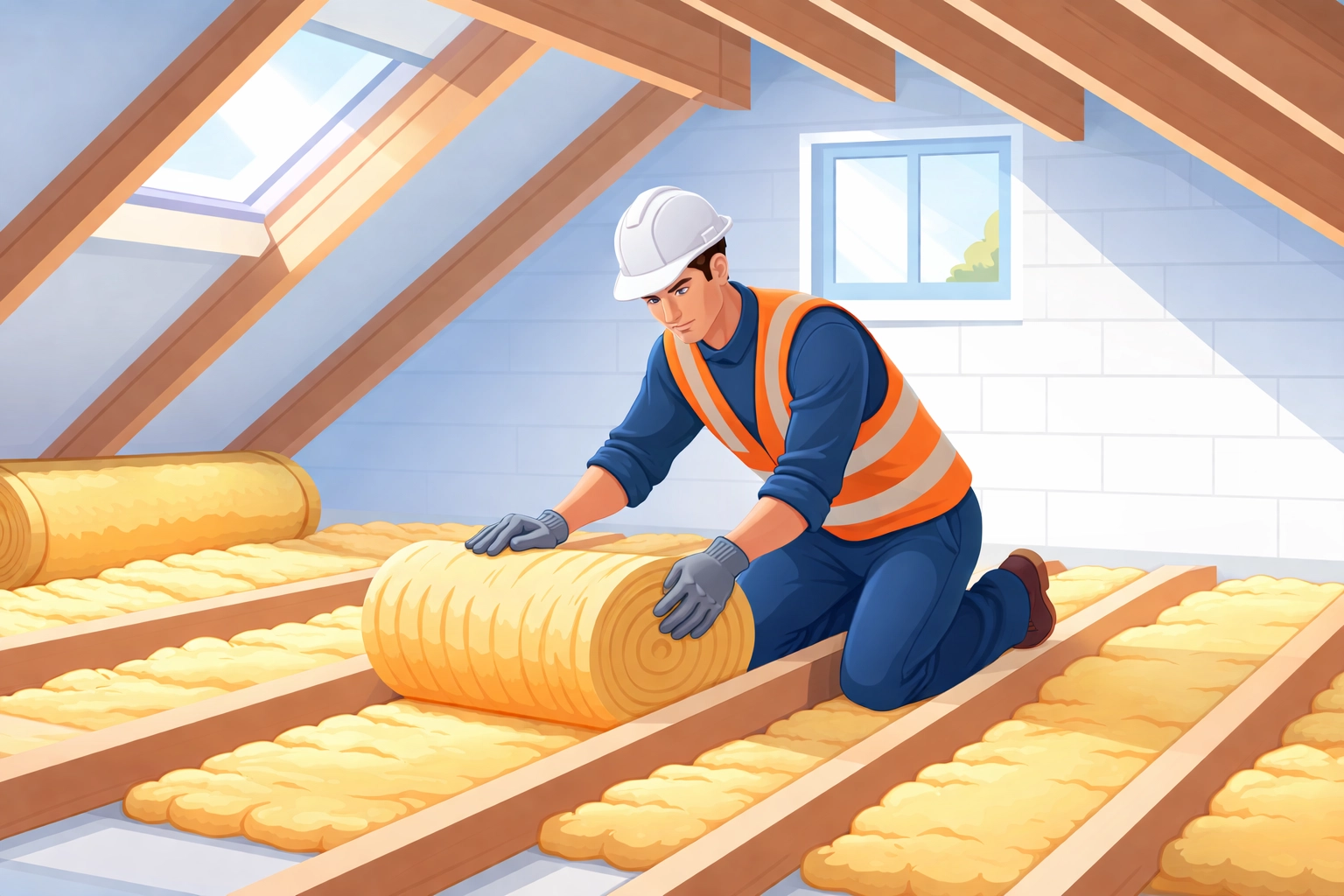
Loft insulation? Most jobs complete in a single day.
The work happens in your loft space. No mess in your living areas. No need to move out. No weeks of chaos.
You wake up with high energy bills. By evening, your home is insulated and ready to start saving.
That's the beauty of this upgrade. It's fast, clean, and effective.
For homeowners who want practical solutions without the hassle, loft insulation delivers.
2026 Energy Prices: Why Acting Now Makes Sense
Let's be honest. Nobody knows exactly where energy prices will go next.
But the pattern is clear. Prices aren't returning to pre-2020 levels. The days of cheap gas and electricity are behind us.
Every month you wait is another month of higher bills than necessary. The savings from loft insulation start immediately after installation.
With a 2-4 year payback period, acting in 2026 means you're in profit by 2028-2030. From there, it's pure gain.
Waiting doesn't make financial sense. The sooner you insulate, the sooner you benefit.
Environmental Impact: Feel Good While Saving
This isn't just about your wallet. It's about your footprint too.
A detached house with proper loft insulation reduces carbon emissions by approximately 1,000kg annually. That's a meaningful contribution to the UK's net-zero goals.
Smaller homes see proportionally smaller reductions. But every bit counts.
You get to save money AND help the environment. That's a rare combination.
Final Thoughts
Loft insulation is the smart first step for UK homeowners serious about cutting energy bills.
The maths is straightforward. Low cost. High savings. Fast payback. Minimal hassle.
No other home improvement offers the same combination of benefits. Not windows. Not solar. Not wall insulation.
Start with your loft. Everything else can follow later.
ComfySeal Ltd covers properties across England, Wales, and Scotland. We assess your loft, recommend the right materials, and handle the installation professionally.
Wondering what your home needs? Book your free professional loft survey today and find out exactly how much you could save.