
Living in the North West means dealing with rain. Lots of it.
Manchester and Liverpool sit among the UK's wettest cities. Your loft feels every drop.
Damp and humidity are constant battles for homeowners here. But with the right approach, you can win.
This guide covers everything you need to know. From spotting early warning signs to choosing the right insulation.
Why North West Lofts Face Unique Challenges
The North West has a reputation. Grey skies and drizzle define the region.
Manchester averages around 140 rainy days per year. Liverpool isn't far behind.
This constant moisture creates the perfect conditions for damp. Your loft absorbs it all.
Victorian and Edwardian terraces dominate both cities. These older homes weren't built with modern insulation in mind.
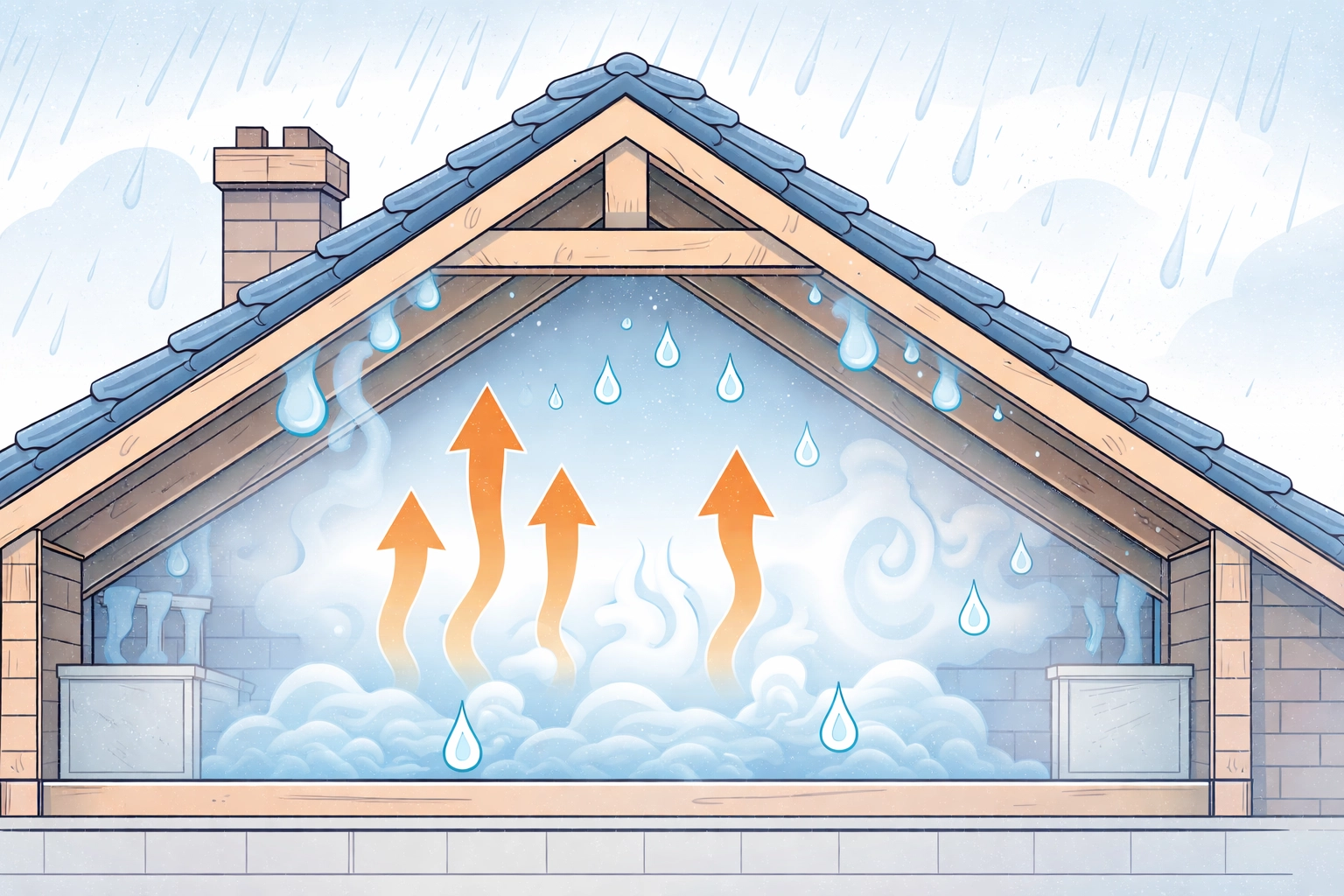
Cold loft spaces meet warm, moist air from below. The result? Condensation everywhere.
The Humidity Factor
Humidity levels in the North West regularly exceed 80%. Sometimes they climb higher.
That moisture has to go somewhere. It rises through your home and settles in the loft.
Without proper ventilation, water droplets form on cold surfaces. Roof timbers, rafters, and stored belongings all suffer.
This isn't just uncomfortable. It's damaging.
Over time, persistent damp leads to mould growth. It weakens structural timbers. It ruins anything you store up there.
The Three Types of Damp Affecting Your Loft
Not all damp problems are the same. Understanding the type helps you find the right solution.
1. Condensation Damp
This is the most common culprit in North West lofts.
Warm air from your living spaces rises. It meets the cold loft environment. Moisture condenses on every cold surface.
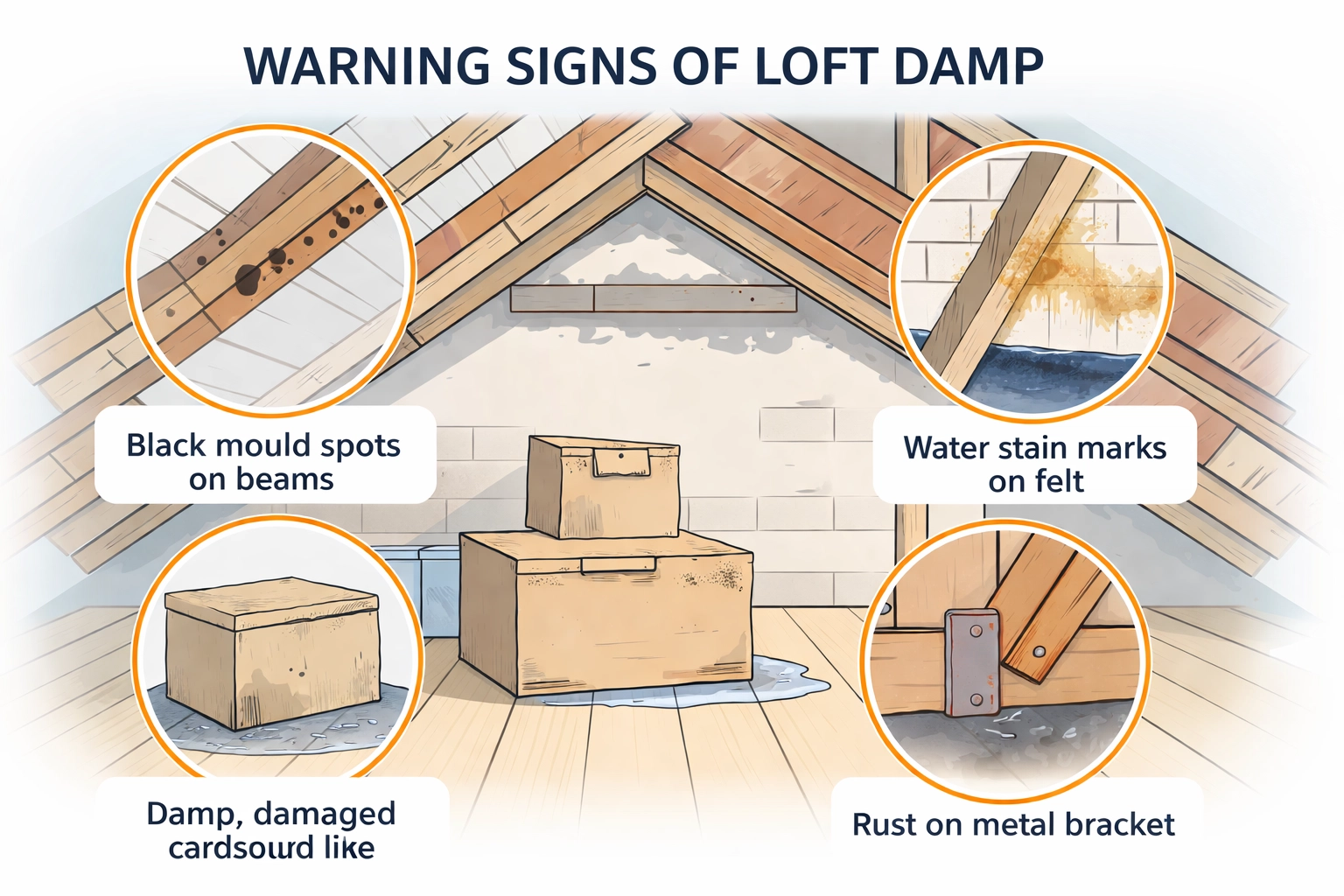
You'll notice water droplets on roof felt. Black mould patches appear in corners. A musty smell lingers.
Condensation damp is preventable. Proper insulation and ventilation solve it.
2. Penetrating Damp
Water enters from outside. Damaged roof tiles, cracked flashing, or blocked gutters are usually to blame.
Penetrating damp creates wet patches that worsen during rainfall. The location often tracks back to a specific entry point.
This type needs repair work first. Then proper insulation prevents future problems.
3. Rising Damp
Less common in lofts, but worth knowing. Moisture travels up through masonry from ground level.
In some properties, it reaches surprising heights. Especially in homes without effective damp proof courses.
How Proper Insulation Fights Damp
Here's the good news. The right insulation tackles damp at its source.
It works by controlling temperature. When your loft stays warmer, condensation can't form as easily.
Modern insulation materials also manage moisture better than old-fashioned options.

Temperature Regulation
Cold surfaces attract condensation. Warm surfaces repel it.
Effective loft insulation keeps temperatures stable. The difference between your living space and loft shrinks.
Less temperature variation means less condensation. It's simple physics working in your favour.
Moisture Management
Some insulation materials handle moisture better than others.
Multifoil insulation reflects heat while allowing moisture to escape. It's ideal for the North West climate.
Traditional fibreglass can absorb moisture over time. This reduces its effectiveness and creates new problems.
Choosing the right material matters. Especially in high-humidity areas like Manchester and Liverpool.
Want to explore your options? Multifoil loft insulation is a smart place to start.
Warning Signs Your Loft Has a Damp Problem
Catching damp early saves money. It prevents structural damage. It protects your health.
Here's what to look for:
Visual Signs
- Black or green mould spots on timbers
- Water stains on roof felt or boards
- Peeling paint or bubbling surfaces
- Rust on metal fixtures
Smell
- Musty, earthy odours
- The scent gets stronger in warm weather
Touch
- Damp or soft roof timbers
- Wet patches on stored items
- Cold spots on walls
Structural Clues
- Warped or rotting wood
- Crumbling plaster below the loft hatch
- Wallpaper peeling in upstairs rooms
If you spot any of these, act quickly. Small problems become expensive ones.
Solutions for North West Homeowners
Beating damp requires a layered approach. No single fix works alone.
Step 1: Assess the Current Situation
Start with a proper survey. Identify exactly what type of damp you're dealing with.
Check for external damage first. Roof tiles, flashing, and gutters need inspection.
Look for obvious water entry points. Fix these before anything else.
Step 2: Improve Ventilation
Your loft needs to breathe. Trapped moisture causes problems.
Roof vents and soffit vents allow air circulation. They let humid air escape naturally.
Avoid blocking existing vents with insulation. This common mistake makes damp worse.
Step 3: Install Quality Insulation
This is where real improvement happens.
The right insulation creates a thermal barrier. It prevents the temperature differences that cause condensation.
For North West homes, we recommend materials that handle moisture well. Multifoil options work brilliantly in our climate.
Professional installation ensures no gaps. Gaps create cold spots. Cold spots attract damp.
Step 4: Consider Loft Lining
A loft lining adds extra protection. It creates a barrier between your belongings and potential moisture.
This is especially valuable if you use your loft for storage. Water damage to cherished items is heartbreaking.
Step 5: Monitor and Maintain
Even after improvements, stay vigilant. Check your loft seasonally.
Look for new signs of moisture. Address small issues before they grow.
Why Professional Installation Matters
DIY insulation seems tempting. But in damp-prone areas, it often backfires.
Improper installation creates gaps. These become condensation hotspots.
Wrong material choices make existing damp worse. Some products trap moisture rather than managing it.
Professionals understand North West conditions. They know which materials perform best here.

What to Expect From a Professional Survey
A proper assessment covers everything. Roof condition, ventilation, existing insulation, and moisture levels.
You'll get clear recommendations. No guesswork, no generic advice.
ComfySeal offers free consultations across Manchester, Liverpool, and the wider North West. Book your survey here.
The Long-Term Benefits
Quality insulation pays for itself. Lower energy bills start immediately.
Your home stays warmer in winter. Cooler in summer. More comfortable year-round.
Property value increases too. Buyers notice well-insulated, damp-free lofts.
Most importantly, you protect your home's structure. Rotting timbers cost thousands to replace.
Local Considerations: Manchester vs Liverpool
Both cities share similar challenges. But subtle differences exist.
Manchester sits further inland. Temperature swings can be more extreme. This increases condensation risk.
Liverpool's coastal position brings salt-laden air. This accelerates corrosion on metal fixtures.
Both cities have housing stock dominated by pre-war terraces. These properties need careful, sympathetic insulation approaches.
Listed buildings and conservation areas have additional requirements. Professional advice ensures compliance.
Curious about costs for your specific property? Get a free quote tailored to your home.
Final Thoughts
Damp doesn't have to define North West living.
Yes, Manchester and Liverpool see more rain than most. Yes, your loft faces challenges southern homes don't.
But proper insulation transforms your loft from a damp liability into an asset.
The key is acting before problems escalate. Early intervention costs less. It protects more.
Choose materials suited to high-humidity environments. Ensure professional installation without gaps. Maintain good ventilation.
Your home deserves protection from the North West weather. And you deserve a warm, dry, comfortable space.
Ready to beat the damp? Book your free consultation with ComfySeal today.