Category: Regulations & Building Standards
You have probably heard the figure thrown around. 270mm. It sounds oddly specific. Almost arbitrary.
But when it comes to loft insulation depth standards in the UK, this number carries real weight. It affects your energy bills. Your home’s value. Even your ability to sell.
So is 270mm actually necessary? Or is it just another box-ticking exercise?
Let’s break it down.
What Part L Building Regulations Actually Say
Here is the thing. Part L building regulations do not actually mandate a specific thickness for loft insulation.
Instead, they focus on thermal performance. The magic number is not 270mm. It is a U-value.
For loft insulation in existing homes, the target U-value is 0.16 W/m²K. For new builds, it drops even lower to 0.11 W/m²K.
A U-value measures how much heat escapes through a material. Lower is better. The goal is to keep warmth inside your home.
So where does 270mm come from?
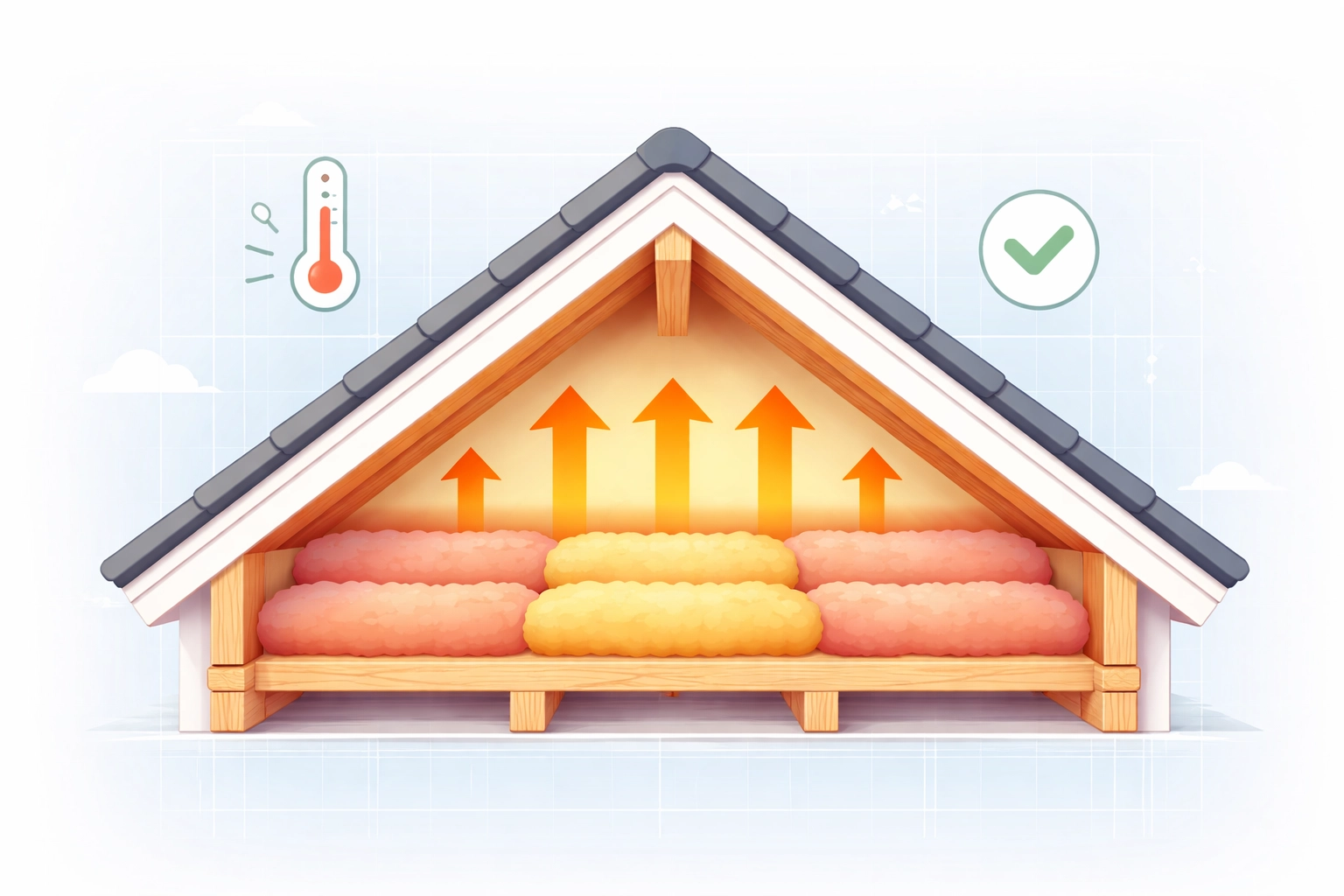
It is the approximate depth of mineral wool insulation needed to hit that 0.16 U-value target. Different materials have different thermal properties. Some need more depth. Some need less.
Why 270mm Became the Industry Standard
Mineral wool (including Rockwool insulation) is the most common material used in UK lofts. It is affordable. Widely available. Easy to install.
At a thermal conductivity of around 0.044 W/mK, mineral wool needs roughly 270mm of depth to achieve compliance.
That is why the number stuck.
But here is the key point. The regulation cares about performance. Not thickness.
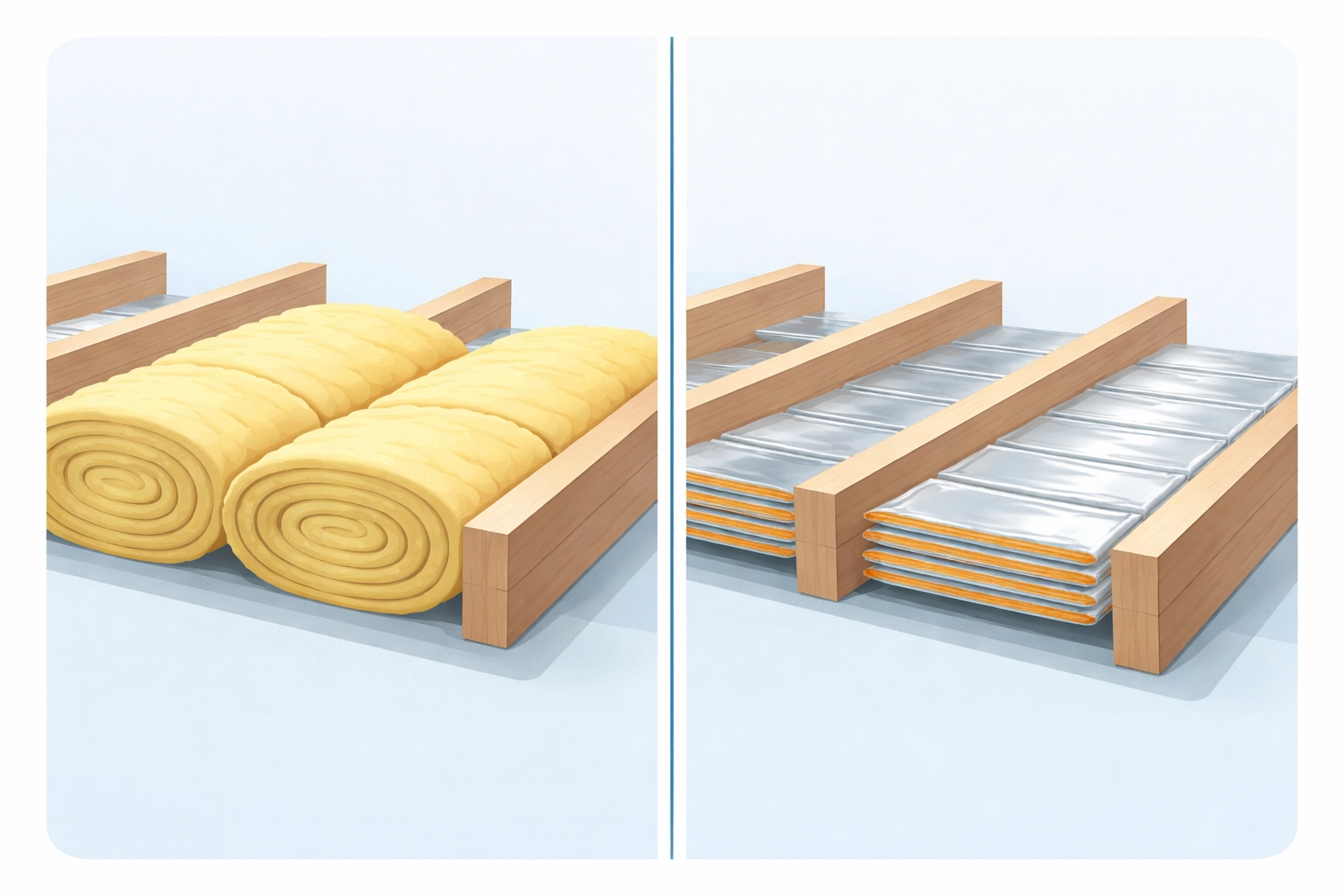
If you use a material with better thermal properties, you may need less depth. Multifoil loft insulation, for example, achieves similar performance in a fraction of the space.
The 270mm figure is a guideline. Not a law carved in stone.
The Real Benefits of Meeting Loft Insulation Depth Standards
Compliance is not just about following rules. It delivers tangible benefits.
1. Lower Energy Bills
Around 25% of heat loss in an uninsulated home escapes through the roof. Proper loft insulation stops that.
Meeting the 0.16 U-value standard could save you £200 to £400 per year on heating costs. Over a decade, that adds up.
2. Improved EPC Rating
Energy Performance Certificates matter more than ever. From 2025, rental properties need a minimum EPC rating of C.
Upgrading your loft insulation is one of the fastest ways to boost your rating. It is often the difference between a D and a C.
3. Higher Property Value
Buyers care about running costs. A well-insulated home with a strong EPC rating commands a premium.
Estate agents report that energy-efficient homes sell faster. They attract more interest. They justify higher asking prices.
4. Future-Proofing Your Home
The 2026 Future Homes Standard is tightening requirements further. Homes built from 2026 must produce 75-80% less carbon emissions than current standards allow.
Getting your loft insulation right now means you are ahead of the curve. No scrambling later.

What Happens If Your Loft Falls Short?
Ignoring loft insulation depth standards is not illegal for existing homeowners. But it does come with consequences.
Higher bills. Heat escapes. Your boiler works harder. You pay more.
Cold spots and condensation. Poor insulation creates temperature differences. That leads to damp. Mould follows.
Difficulty selling. Surveyors flag inadequate insulation. Buyers use it as a negotiation tool. Or walk away entirely.
Rental restrictions. If you let your property, failing to meet EPC requirements could mean you cannot legally rent it out.
The cost of upgrading is almost always less than the cost of doing nothing.
How to Check Your Current Loft Insulation
Not sure what you are working with? Here is a quick assessment.
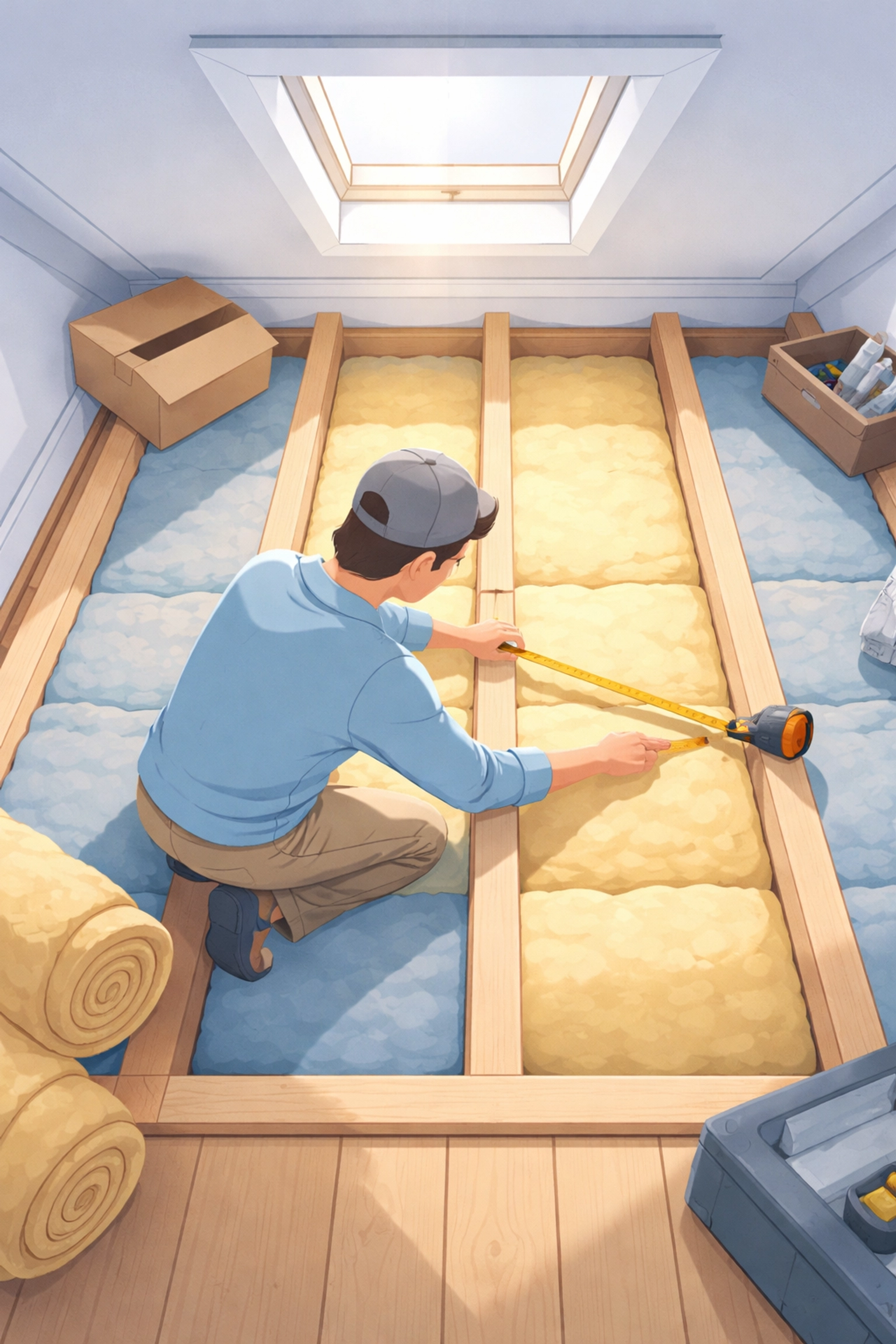
Step 1: Measure the depth. Use a ruler or tape measure. If your insulation sits below the joists (usually 100mm), you are well under the recommended standard.
Step 2: Identify the material. Fluffy yellow or pink material is likely fibreglass. Grey or brown batts are usually mineral wool. Rigid boards or foil layers suggest alternative materials.
Step 3: Check the condition. Compressed, damp, or patchy insulation performs poorly. Even if the depth looks right, degraded material loses effectiveness.
Step 4: Book a professional survey. A proper assessment considers U-values, ventilation, and any existing issues like condensation or pest damage.
At ComfySeal Ltd, we offer a free professional loft survey. No obligation. Just clarity on where you stand.
Your Options for Achieving Compliance
You have choices. The right solution depends on your loft, your budget, and how you use the space.
Mineral Wool Top-Up
If you already have some insulation, a top-up to 270mm is often the simplest route. We lay additional rolls between and over the joists.
This is cost-effective. Quick to install. Ideal for cold lofts used purely for storage access.
Explore our Rockwool and mineral wool top-up services
Multifoil Insulation
Short on headroom? Need to maintain usable loft space?
Multifoil loft insulation reflects radiant heat while taking up far less depth. It also acts as a vapour barrier, reducing condensation risk.
Perfect for loft conversions or homes where every centimetre counts.
Learn more about multifoil insulation
Full Loft Insulation Installation
Starting from scratch? We install complete systems tailored to your property. That includes proper ventilation, loft legs for storage, and materials matched to your needs.
See our full loft insulation services
Why Homeowners Choose ComfySeal Ltd
Meeting Part L building regulations requires precision. Guesswork leads to problems.
Here is what sets us apart:
- Free professional survey. We assess your loft properly before recommending anything.
- 10-year workmanship guarantee. We stand behind every installation.
- Fully insured. Complete peace of mind throughout the project.
- Certified teams. Our installers know the regulations inside out.
We do not push unnecessary work. We give you honest advice and deliver quality results.
Part L in 2026: What Is Changing?
The regulations are evolving. The 2026 Future Homes Standard brings stricter requirements for new builds.
Key changes include:
- Lower U-value targets for roofs (0.11 W/m²K for new builds)
- Mandatory air permeability testing (maximum 8 m³/h·m² at 50 Pa)
- Enhanced ventilation requirements, including mechanical ventilation with heat recovery (MVHR)
For existing homes, the current 0.16 U-value standard remains the benchmark. But pressure to improve efficiency will only increase.
Acting now makes sense. Prices rise. Demand for installers grows. Waiting costs more.
Final Thoughts
Is 270mm necessary? Not exactly.
What matters is meeting the U-value target set by Part L building regulations. For most homes using mineral wool, that means around 270mm of depth.
But you have options. Different materials. Different approaches. The goal is thermal performance, not a specific number on a tape measure.
Getting your loft insulation depth standards right saves money. Protects your home. Adds value.
Ready to find out where your loft stands?