Category: Spray Foam & Mortgage Issues
Spray foam insulation has been heavily marketed to UK homeowners for years. It promises incredible thermal performance and airtight seals. But there's a growing problem.
More and more homeowners are discovering that spray foam comes with serious drawbacks. Mortgage rejections. Roof damage. Condensation nightmares.
So is spray foam insulation actually bad? The answer isn't black and white. But you need to understand the risks before making a decision you might regret.
The Mortgage Problem Nobody Warned You About
Here's the reality that catches most homeowners off guard. Many UK mortgage lenders now refuse to finance properties with spray foam insulation.
That's not a minor inconvenience. It's a potential dealbreaker when selling or remortgaging your home.
The Royal Institute of Chartered Surveyors (RICS) may reduce your property's value if spray foam is detected. They often request specialist reports before proceeding. This creates delays, extra costs, and uncertainty.

Think about it. You installed spray foam to improve your home. Now it's making your property harder to sell.
We've covered this issue in detail in our guide on why mortgage lenders reject spray foam insulation. If you're already in this situation, removal might be your best path forward.
How Spray Foam Can Damage Your Roof
Spray foam doesn't just insulate. Closed-cell spray foam creates an extremely tight seal. That sounds good in theory. In practice, it causes problems.
Heat Gets Trapped
Your roof timbers naturally expand and contract with temperature changes. When spray foam traps heat against them, this cycle intensifies. Over time, gaps can form. Structural integrity gets compromised.
Older Roofs Are Especially Vulnerable
Homes built before the 1990s often lack proper underfelt or adequate ventilation. Spray foam on these roofs is particularly risky. The lack of airflow means moisture has nowhere to go.
Surveyors Can't Inspect Properly
Here's something installers don't mention. Spray foam covers your roof timbers completely. That means surveyors can't assess their condition. They can't check for rot, woodworm, or structural issues. This uncertainty makes lenders nervous.
Condensation and Moisture: A Hidden Danger
Every home produces moisture. Cooking. Showering. Breathing. That moisture needs to escape.
Spray foam prevents air circulation in your loft space. Moisture gets trapped. The result? Condensation builds up. Damp sets in. Timber starts to decay.
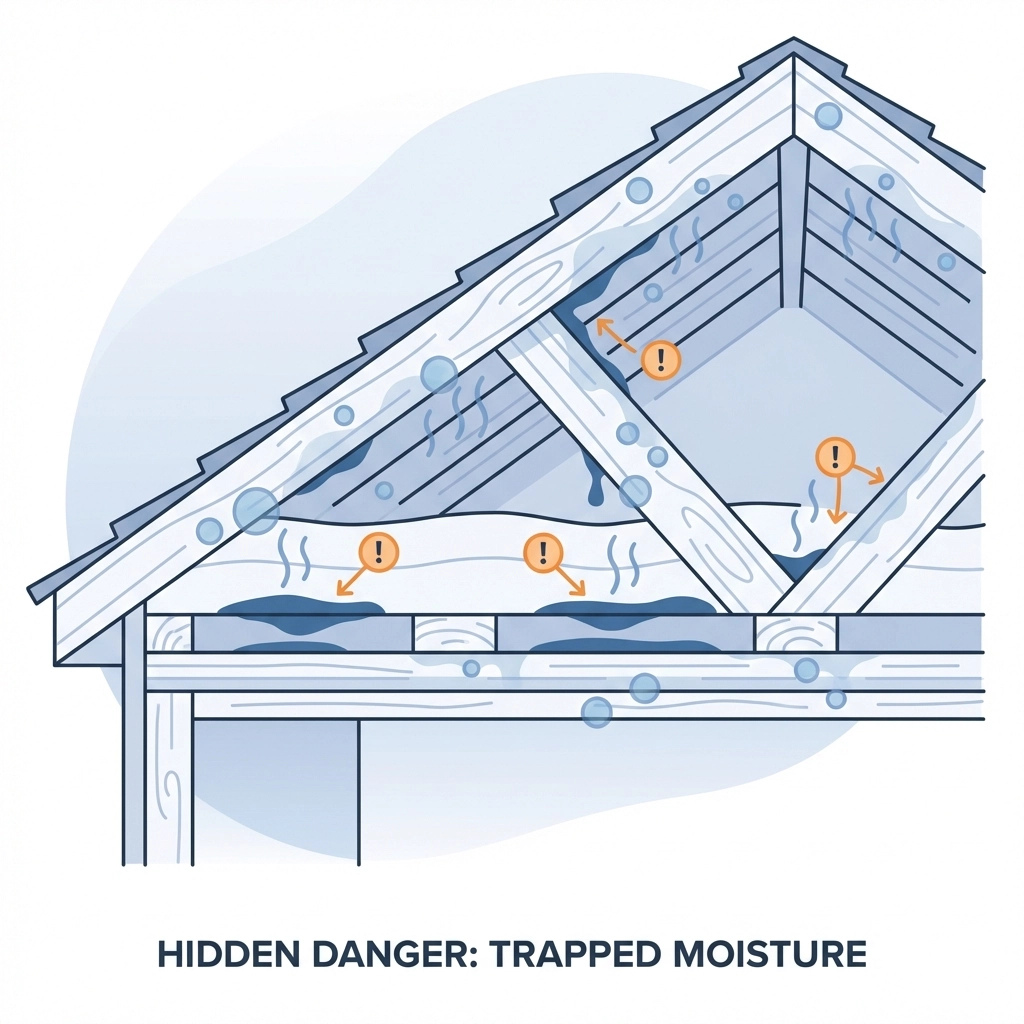
This is particularly problematic for homes with timber roofs. The very structure holding up your roof can begin rotting from the inside. By the time you notice, significant damage may have occurred.
Some installers claim ventilation systems solve this. Trickle vents and mechanical ventilation can help. But they add cost and complexity. And they don't eliminate the risk entirely.
Health Concerns During Installation
Spray foam contains isocyanates and other chemicals. During installation, these release harmful fumes.
You must vacate your home for at least 24 hours after installation. That's not optional. Exposure to these chemicals can cause:
- Asthma and respiratory problems
- Lung damage
- Skin and eye irritation
For most people, this isn't a long-term health risk. Once cured, spray foam is generally stable. But the installation process requires serious precautions.
If you have family members with respiratory conditions, this matters even more.
The Environmental Question
Spray foam manufacturers have improved their formulations. Older products used CFCs and HCFCs: serious greenhouse gases. Modern versions are better.
But most spray foam is still made from non-sustainable materials. If environmental impact matters to you, there are greener alternatives. Mineral wool and multifoil insulation offer effective thermal performance with smaller carbon footprints.
When Spray Foam Might Work
Let's be fair. Spray foam isn't always the wrong choice. It has genuine benefits in specific situations.
Potential Advantages
- Excellent thermal performance – Spray foam offers high R-values per inch of thickness
- Air sealing – It eliminates drafts and air leakage effectively
- Space efficiency – Useful where headroom is extremely limited
- Irregular surfaces – It conforms to awkward shapes and gaps
Where It Can Succeed
Spray foam can work well on newer builds with proper ventilation systems already in place. Commercial properties with different survey requirements may face fewer issues. Extensions and conversions sometimes benefit from spray foam's space-saving properties.
The critical factor is installation quality. Many problems stem from improper application rather than the product itself. The Insulation Manufacturers Association maintains that spray foam can be beneficial when properly installed.
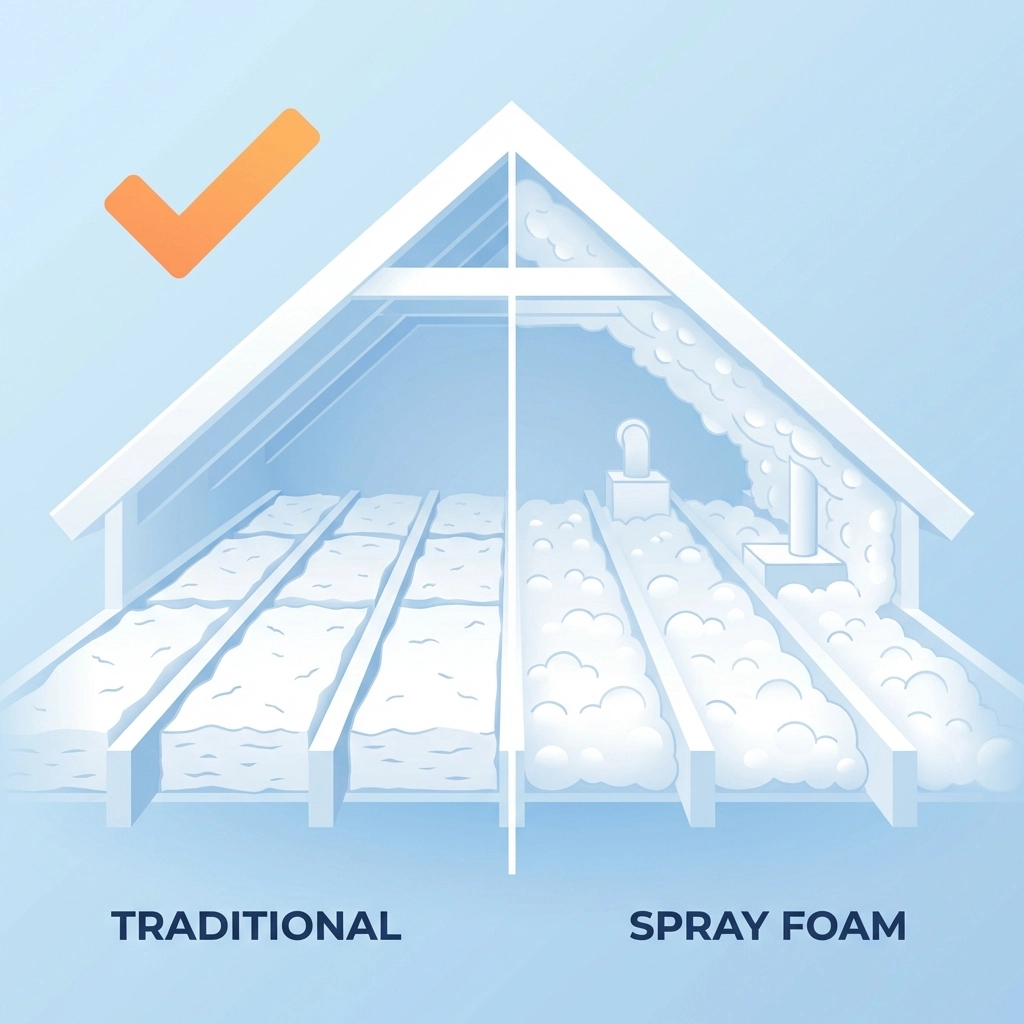
But here's the catch. You're gambling on installation quality. And even perfect installation doesn't solve the mortgage lender problem.
The Cost Comparison
Spray foam costs between £20 and £70 per square metre. That's roughly three times more expensive than fibreglass or mineral wool alternatives.
The Residential Property Surveyors Association has a useful perspective. They suggest that 300mm of fibre insulation on your loft floor provides equivalent thermal performance. At a fraction of the cost. With minimal damage risk.
That's worth considering before committing to spray foam.
Better Alternatives for Most Homes
If you want effective loft insulation without the headaches, you have options.
Mineral Wool Top-Ups
Rockwool and mineral wool remain the industry standard for good reason. They're proven, affordable, and surveyor-friendly. Topping up existing insulation to 270-300mm meets current building regulations.
Multifoil Insulation
For loft conversions or rooms in the roof, multifoil insulation offers excellent performance in limited space. Lightweight, reflective, and extremely efficient. It doesn't create the same survey complications as spray foam.
Traditional Blanket Insulation
Sometimes the simplest solution is the best. Quality blanket insulation laid between and over joists works perfectly for most lofts. It's easy to inspect, easy to top up, and creates zero mortgage concerns.
Questions to Ask Before Choosing Spray Foam
If you're still considering spray foam, protect yourself with these questions:
- Will my mortgage lender accept it? Check before installation: not after
- How old is my roof? Older roofs face higher risks
- Does my loft have adequate ventilation? Essential for managing moisture
- Can I get a guarantee from the installer? And will that guarantee transfer to future owners?
- Have I compared costs with alternatives? You might achieve the same results for less
What If You Already Have Spray Foam?
Don't panic. You have options.
Professional removal is possible. It's not cheap, but it restores your home to a mortgage-friendly state. Some homeowners choose partial removal, keeping spray foam in less problematic areas.
The first step is getting a proper survey. Understand exactly what you're dealing with. Then you can make an informed decision about next steps.
We help homeowners navigate this situation regularly. Get in touch if you need advice specific to your property.
Final Thoughts
Spray foam insulation isn't inherently evil. But for most UK homeowners in 2026, the risks outweigh the benefits.
Mortgage complications alone make it a gamble. Add potential roof damage, moisture problems, and higher costs: and the case for alternatives becomes strong.
Traditional insulation methods work. They're proven, affordable, and keep your options open. For most homes, that's the smarter choice.