Category: Spray Foam & Mortgage Issues
You thought spray foam insulation was a smart investment. It promised lower energy bills and a warmer home. Now you're trying to sell or remortgage, and your lender has declined.
Welcome to the spray foam mortgage trap.
Thousands of UK homeowners find themselves stuck in this exact situation every year. The good news? It's fixable. But you need to understand why lenders are saying no before you can move forward.
Why Mortgage Lenders Reject Spray Foam Insulation
Lenders don't reject spray foam because they're being difficult. They reject it because it creates genuine risks they can't assess.
Here's what concerns them:
Structural visibility is blocked. When surveyors inspect a property, they need to see the roof timbers and structure. Spray foam covers everything. The surveyor literally cannot tell if there's rot, damage, or structural weakness hiding underneath.
Condensation and moisture problems. Spray foam restricts natural airflow in your roof space. Without proper ventilation, moisture gets trapped. Over time, this breeds condensation that can cause roof timbers to rot from the inside out.
Potential structural stress. Closed-cell spray foam sets extremely hard. In some cases, it places pressure on supporting timbers and can even distort the roof structure itself.
Removal is complicated. Because spray foam is applied as a liquid, it seeps into every gap, crevice, and corner. Getting it out isn't straightforward, and lenders know this.
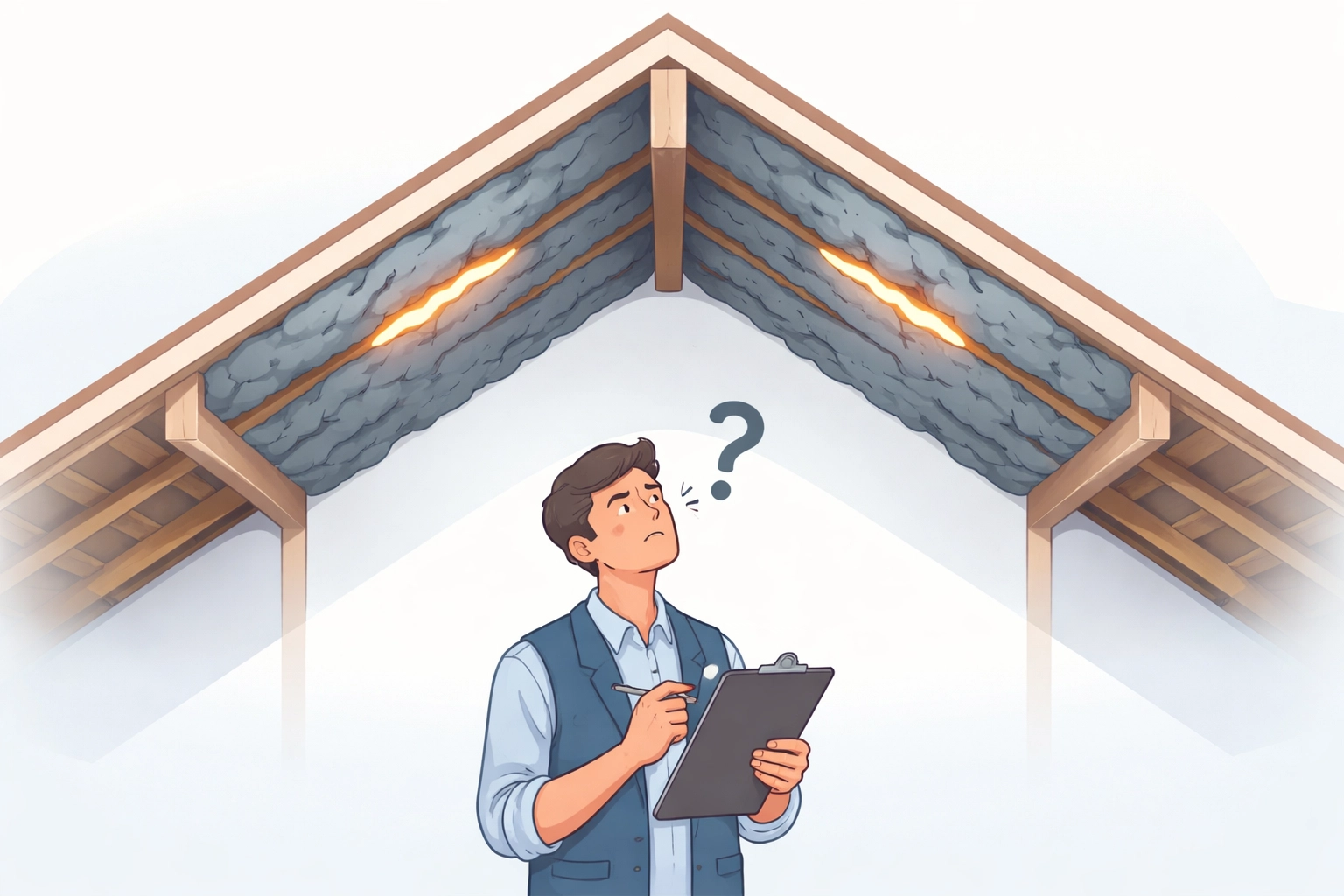
From a lender's perspective, a property with spray foam is an unknown quantity. They're being asked to lend hundreds of thousands of pounds against something they can't properly evaluate.
So they say no.
The Spray Foam "Mortgage Trap" Explained
Here's how homeowners typically end up stuck:
- You had spray foam installed years ago, often by a company that's since disappeared
- You decide to sell your home or remortgage for better rates
- The buyer's surveyor flags the spray foam as a concern
- The buyer's lender refuses to approve the mortgage
- Your sale falls through
This isn't a rare occurrence. It's happening across the UK every single day.
The trap becomes even more painful when you realise:
- You can't sell to most buyers because their lenders won't approve
- Cash buyers know you're stuck and offer well below market value
- Your remortgage options vanish leaving you on expensive rates
- Equity release providers won't touch it under any circumstances
Some homeowners discover the spray foam was installed directly onto roof tiles or battens. In these cases, the problem is even more severe.
Open-Cell vs Closed-Cell: Does the Type Matter?
There are two main types of spray foam insulation. Understanding which you have helps determine your options.
Open-Cell Spray Foam
This is the spongier, more flexible type. It's slightly easier to remove and causes less structural stress.
Some specialist lenders may consider properties with open-cell foam, but these options are extremely limited. You'll need a specialist broker, extensive documentation, and often higher interest rates.
Closed-Cell Spray Foam
This sets rock-hard. It's the type that causes the most concern for lenders and surveyors.
Closed-cell foam can place significant stress on roof structures. It's also much harder to remove without causing damage.
The reality? Most mainstream lenders won't touch either type. The distinction matters less than you'd hope.
How to Fix the Problem
You have three main options. Let's be honest about each one.
Option 1: Find a Specialist Lender
Some specialist mortgage providers will consider properties with spray foam. However:
- Interest rates are typically higher
- Deposit requirements are larger
- You'll need extensive documentation (installation records, warranties, BBA approval)
- Options are severely limited
This might work for remortgaging. It rarely helps when selling to a buyer who wants a standard mortgage.
Option 2: Accept a Lower Cash Offer
Cash buyers don't need mortgage approval. But they know you're in a weak position.
Expect offers 15-30% below market value. Sometimes more.
For many homeowners, this feels like the only option. It shouldn't be.
Option 3: Remove the Spray Foam Professionally
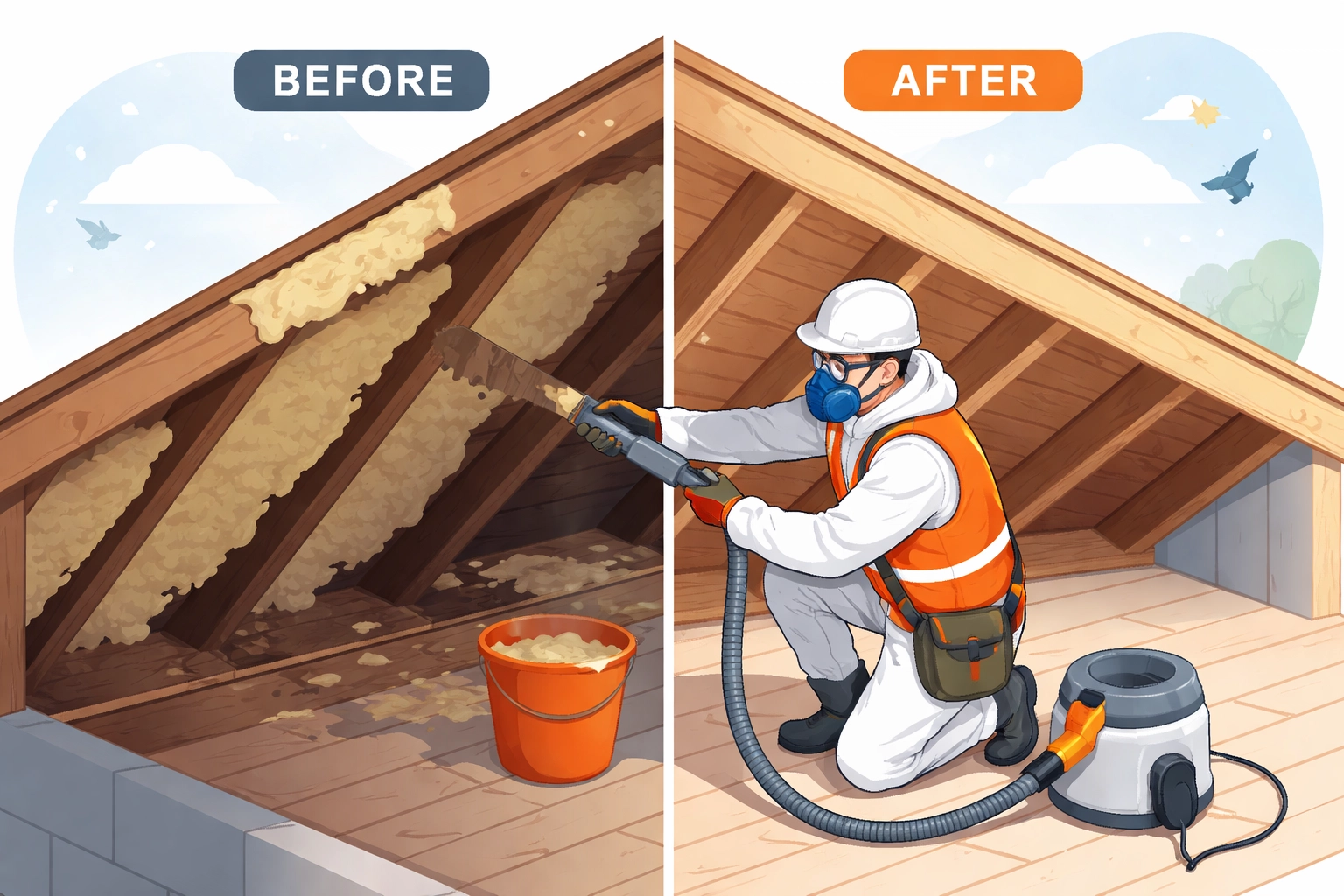
This is the only solution that truly fixes the problem. Once the spray foam is gone, your home becomes mortgageable again.
Professional removal restores your property to its original condition. Surveyors can inspect the roof structure properly. Lenders have no reason to decline.

How Professional Spray Foam Removal Works
Spray foam removal isn't a DIY job. The foam has bonded to your roof structure, and improper removal can cause serious damage.
Here's how we approach it at ComfySeal:
Step 1: Free Survey and Assessment
We inspect your roof space and identify exactly what type of spray foam you have. We check how it was applied and assess the condition of your roof structure underneath.
This survey is completely free with no obligation.
Step 2: Careful Extraction
Our trained technicians remove the spray foam section by section. The key is protecting your roof timbers, tiles, and battens throughout the process.
We use specialist techniques to strip the foam without damaging the underlying structure. This is crucial, damaged timbers could create new problems with lenders.
Step 3: Structure Inspection
Once the foam is removed, we inspect your roof structure thoroughly. Any issues caused by trapped moisture or condensation are identified and addressed.
Step 4: Proper Insulation Replacement
Your loft still needs insulation. We replace the spray foam with mortgage-friendly alternatives like mineral wool or multifoil insulation.
These materials provide excellent thermal performance without creating lender concerns. They also allow proper roof ventilation and future inspections.
Want to learn more about effective alternatives? Check out our guide on multifoil loft insulation.
Step 5: Documentation
You receive full documentation of the removal and replacement. This gives future surveyors and lenders complete confidence in your property.
What Happens After Removal?
Once spray foam is professionally removed and replaced with appropriate insulation:
- Standard mortgage lenders will consider the property as normal
- Your home sells at full market value to any buyer
- Remortgaging becomes straightforward again
- Equity release becomes possible if needed in future
- Your roof can breathe properly preventing future moisture issues
The removal process typically costs less than the discount you'd accept from a cash buyer. And you keep your home's full value.
UK-Wide Coverage
ComfySeal provides spray foam removal services across the entire UK. Whether you're in Scotland, Wales, Northern Ireland, or anywhere in England, we can help.
Our teams are experienced in all types of spray foam removal. We've helped hundreds of homeowners escape the mortgage trap and sell their properties successfully.
Book Your Free Survey
Not sure if removal is right for your situation? Start with a free, no-obligation survey.
We'll assess your spray foam, inspect your roof structure, and give you honest advice on your options. If removal makes sense, we'll provide a clear quote with no hidden costs.
If removal isn't the right solution for you, we'll tell you that too.
Get your free survey here or contact us to discuss your situation.
Final Thoughts
The spray foam mortgage trap catches thousands of UK homeowners off guard every year. But it doesn't have to be permanent.
Professional removal restores your property's mortgageability. It protects your home's value. And it gives you back control over your biggest asset.
If your lender said no, that's not the end of the story. It's just the problem that needs solving.