Category: Regulations & Building Standards
If you're a landlord in the UK, you've probably heard the buzz about EPC ratings. The government is tightening the rules. And your rental property needs to keep up.
But here's something many landlords get wrong. The EPC C requirement doesn't kick in until 1 October 2030. Not 2026.
That said, waiting until the last minute is a risky game. Loft insulation is one of the most cost-effective ways to boost your EPC rating. And understanding what's coming gives you time to prepare properly.
Let's break down exactly what you need to know.
What Is the EPC C Requirement?
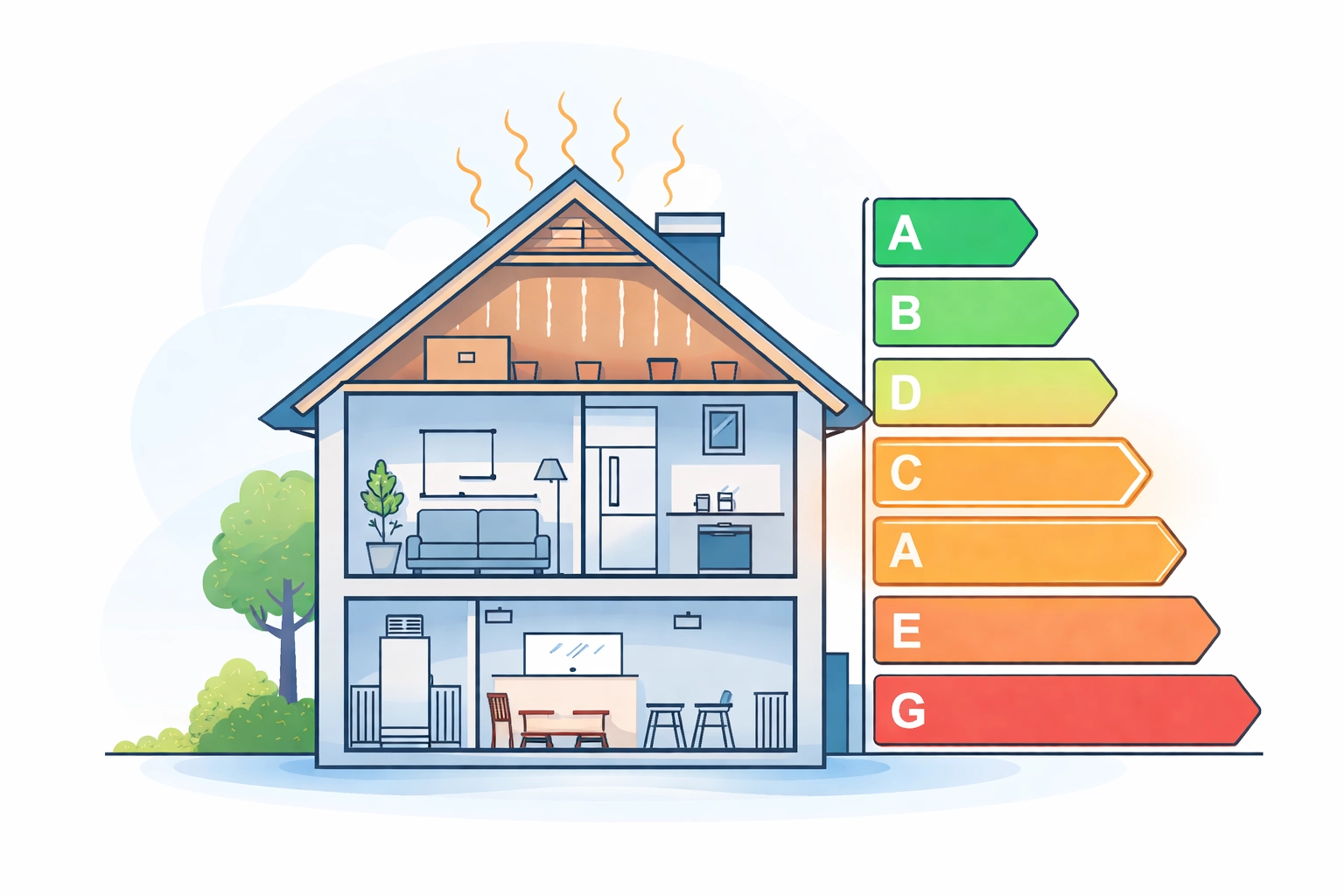
An Energy Performance Certificate (EPC) rates your property's energy efficiency. It runs from A (most efficient) to G (least efficient).
Right now, rental properties in England and Wales must have a minimum EPC rating of E. That's been the law since 2020.
But change is coming.
From 1 October 2030, all rental properties will need to achieve at least an EPC C rating. This applies to new tenancies first, with existing tenancies following shortly after.
The goal? Reduce carbon emissions from the UK's housing stock. Homes account for around 14% of the country's total emissions. Poorly insulated properties are a big part of the problem.
Why Loft Insulation Matters for Your EPC Rating
When an EPC assessor visits your property, they check several things. Wall insulation. Window glazing. Heating systems. And crucially, loft insulation.
Loft insulation falls under the Fabric Performance Metric. This measures how well your building retains heat. A well-insulated loft can make a significant difference to your overall score.
Here's the thing. Heat rises. Without proper loft insulation, up to 25% of your home's heat escapes through the roof. That's money literally floating away.
The current UK recommendation is 270mm of loft insulation. If your property has less than this, you're losing heat. And losing EPC points.
What Depth Do You Currently Have?
Many older properties have just 100mm of insulation. Some have even less. A quick visual check in your loft can tell you where you stand.
- Less than 100mm – Significant heat loss. Major improvement needed.
- 100mm to 200mm – Below recommended levels. Top-up required.
- 270mm or more – You're meeting current best practice.
If you're under 270mm, upgrading your loft insulation is one of the fastest ways to improve your EPC rating.
The Dual Metric Standard: Why Insulation Alone Isn't Enough
Here's where it gets a bit more complex.
To achieve EPC C by 2030, you'll need to meet a dual metric standard. Loft insulation alone won't get you there.
Metric One: Fabric Performance
This covers the physical structure of your property. Think insulation, windows, and draught-proofing.
Getting your loft insulation to 270mm helps tick this box. But you'll also need to consider:
- Cavity wall insulation – Filling empty wall cavities reduces heat loss.
- Floor insulation – Especially important for properties with suspended timber floors.
- Double or triple glazing – Single glazing seriously hurts your score.
Metric Two: Heating or Smart Readiness
Here's the second requirement. You'll need to meet either the Heating System Metric or the Smart Readiness Metric.
Heating System Metric typically means installing a heat pump. Air source or ground source. These are low-carbon alternatives to gas boilers.
Smart Readiness Metric involves renewable energy systems. Solar panels. Smart metering. Battery storage.
So while loft insulation is essential, it's just one piece of the puzzle.

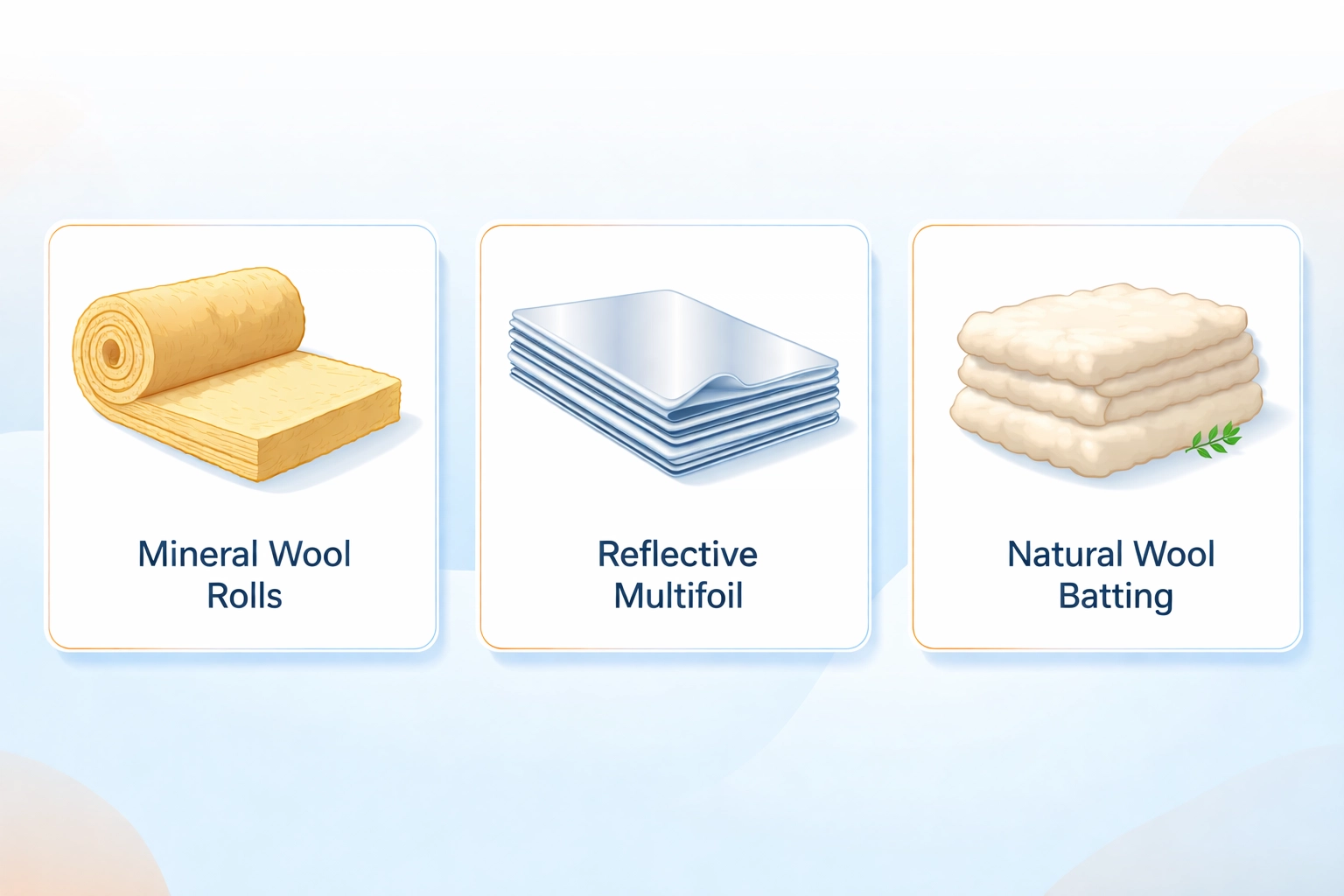
Types of Loft Insulation That Boost Your EPC
Not all insulation is created equal. Different materials offer different benefits. Here's a quick rundown of your main options.
1. Mineral Wool (Rockwool)
The most common choice for loft insulation. It's affordable, effective, and A1 fire-rated.
Mineral wool is laid between and over your ceiling joists. It's excellent for achieving that 270mm depth. And it's what most EPC assessors expect to see.
Check out our Rockwool mineral wool top-ups for more details.
2. Multifoil Insulation
Perfect if you're short on space. Multifoil insulation is thin, reflective, and highly efficient.
It works by reflecting radiant heat back into your home. A 40mm multifoil can perform like 100mm+ of traditional insulation.
This is ideal for loft conversions or properties where headroom is limited. Learn more about multifoil loft insulation on our website.
3. Sheep's Wool
A natural, sustainable option. Sheep's wool is breathable, moisture-regulating, and chemical-free.
It's popular with eco-conscious homeowners. But it typically costs more than mineral wool.
4. Spray Foam
Once popular, now problematic. Many mortgage lenders now reject properties with spray foam insulation.
If your property has spray foam, you may need to consider removal before selling. Read our guide on why mortgage lenders reject spray foam.
Can You Get Free Loft Insulation?
Yes. Government grants can cover the full cost of upgrading your loft insulation.
Two main schemes are currently available:
Great British Insulation Scheme
This scheme targets homes with poor energy efficiency. If your property has 100mm or less of loft insulation, you may qualify.
Eligibility depends on factors like location, council tax band, and household income.
ECO4 Scheme
The Energy Company Obligation (ECO4) helps low-income households and those receiving certain benefits.
Landlords can access these grants for rental properties. But only if tenants meet the eligibility criteria.
Important: Use Certified Installers
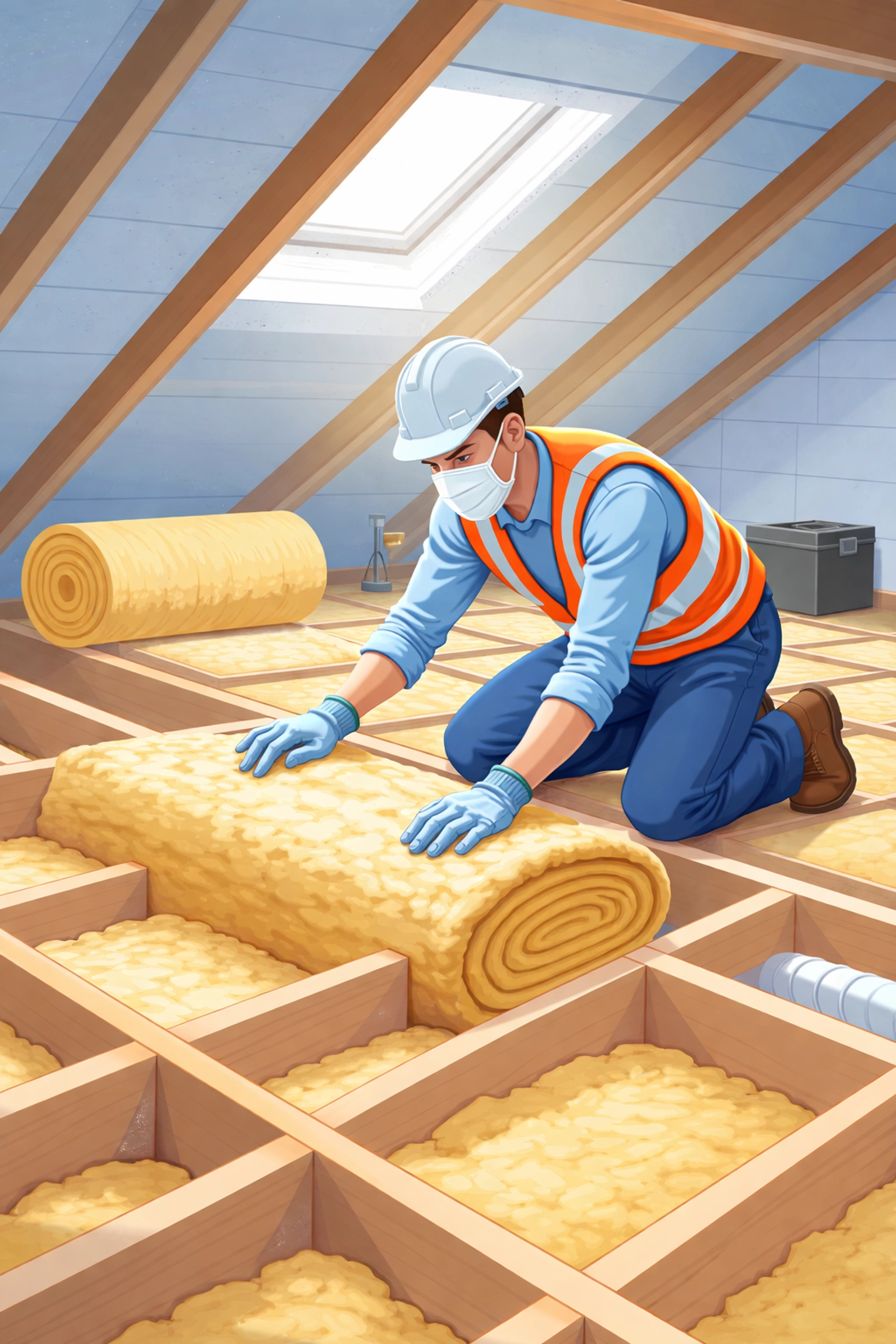
Here's a crucial point. DIY loft insulation doesn't qualify for government grants.
All grant-funded work must be completed by PAS 2030-2035 certified installers. This ensures the work meets quality standards and building regulations.
At ComfySeal, we're fully certified. We can help you navigate the grant process and ensure your installation qualifies.
How to Check Your Current EPC Rating
Every rental property should already have a valid EPC. You can check yours on the government's EPC register.
Your certificate shows:
- Your current rating (A to G)
- Your potential rating with improvements
- Recommended upgrades to boost your score
If loft insulation appears on your recommendations list, that's a clear signal. Upgrading could push you closer to that EPC C target.
Timeline: When Should You Act?
The 2030 deadline might seem far away. But here's why acting now makes sense.
1. Beat the Rush
As 2030 approaches, demand for insulation services will spike. Installer availability will drop. Prices may rise.
Getting ahead of the curve means better availability and potentially lower costs.
2. Immediate Savings
Better insulation means lower energy bills. Your tenants benefit from a warmer home. And a more efficient property is easier to let.
3. Grant Availability
Government schemes don't last forever. Eligibility criteria can change. Funding can run out.
If you qualify for free insulation now, take advantage while you can.
4. Property Value
A higher EPC rating increases your property's value. Buyers and tenants increasingly prioritise energy efficiency.
What to Do Next
Start with a simple assessment. Check your loft. Measure your current insulation depth.
If you're below 270mm, it's time to act.
Here's a quick action plan:
- Check your current EPC – Know your starting point.
- Inspect your loft – Measure existing insulation depth.
- Explore grant eligibility – Could you qualify for free upgrades?
- Get a professional quote – Understand your options and costs.
- Book installation – Choose certified installers for quality work.
Final Thoughts
The EPC C requirement is coming. While 2030 might feel distant, smart landlords are preparing now.
Loft insulation is one of the most effective ways to improve your rating. It's affordable. It's proven. And grants may cover the cost entirely.
Don't wait for the deadline to catch you out. Get your loft assessed, explore your options, and take control of your property's energy performance.
Ready to upgrade your loft insulation? Get a quote from ComfySeal today.