TL;DR – Executive Summary
Over 80% of major UK lenders now flag spray foam insulation as a mortgage risk. The core issue: spray foam prevents RICS surveyors from inspecting roof timbers, hides moisture damage, and creates uncertainty around structural integrity. In 2026, approximately 25% of lenders maintain blanket refusal policies, while others assess case-by-case with specialist documentation. Professional spray foam removal is often the most reliable path to mortgage approval. ComfySeal Ltd provides specialist spray foam removal services with a 10-year workmanship guarantee across England, Wales, and Scotland.
Why Do Mortgage Lenders Refuse Properties with Spray Foam?
Lenders reject spray foam for three fundamental reasons.
1. Hidden Structural Damage
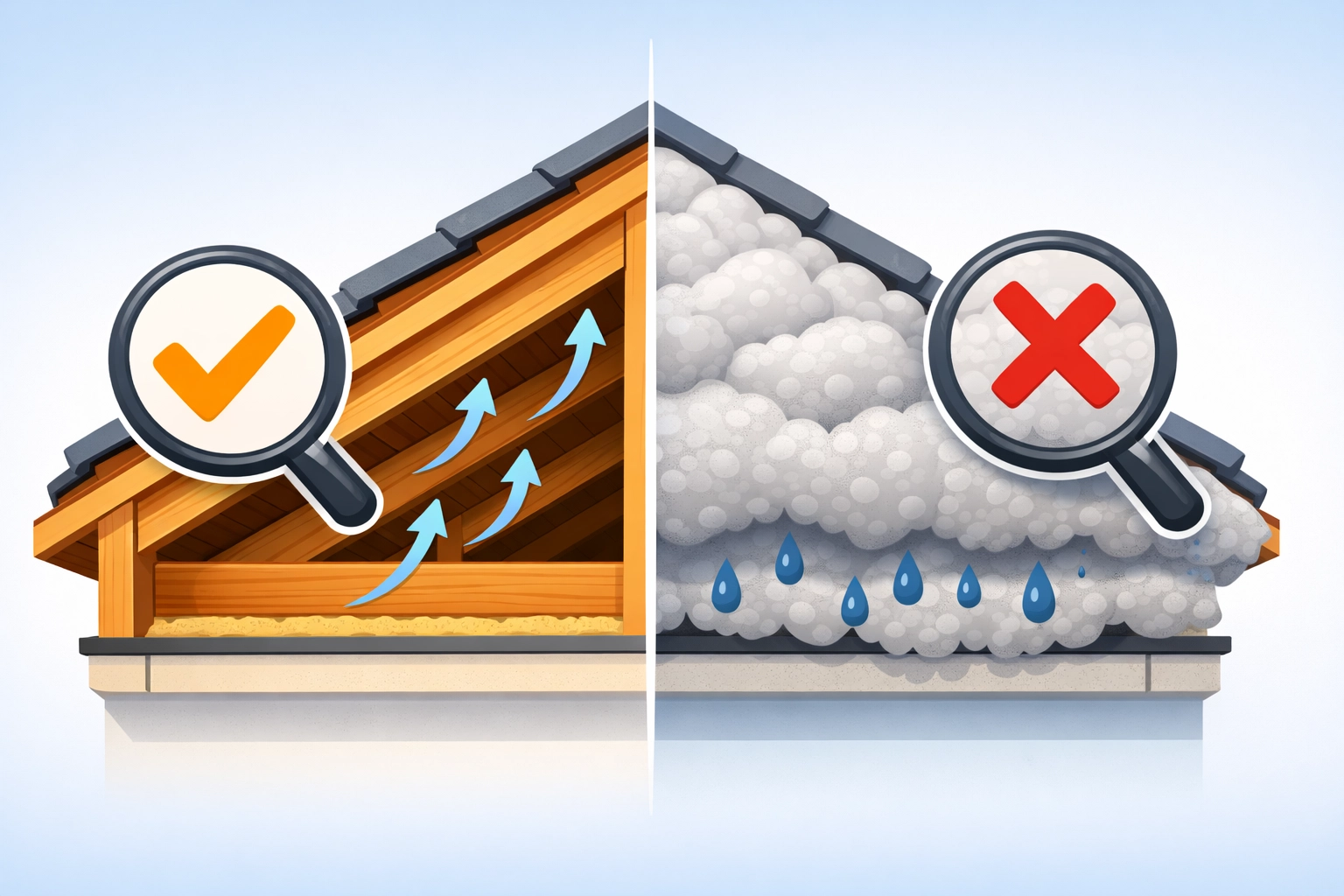
Closed-cell spray foam seals roof timbers completely. Surveyors cannot see rot, damp, woodworm, or timber decay beneath the foam layer. This creates unacceptable risk for lenders financing six-figure loans.
2. Moisture Trapping
Poorly installed spray foam blocks natural ventilation paths. Moisture becomes trapped against timbers. Over time, this accelerates rot and weakens the roof structure, exactly what lenders fear most.
3. Valuation Uncertainty
If a surveyor cannot confirm structural integrity, they cannot provide an accurate valuation. Without a reliable valuation, lenders will not approve the mortgage.
Which Lenders Reject Spray Foam in 2026?
Different lenders have different policies. Here's what you need to know.
Blanket Refusal Policies
These lenders typically refuse mortgages on properties with spray foam roof insulation:
- TSB Bank
- Co-operative Bank
- Principality Building Society
- Skipton Building Society
- Aviva
- Metro Bank
- Yorkshire Building Society
Case-by-Case Assessment
These lenders may approve applications with proper documentation:
- Nationwide (requires professional installation proof + specialist survey)
- HSBC (accepts RICS specialist surveyor reports)
- Halifax (reviews documentation case-by-case)
- Santander (considers applications with evidence)
What Documentation Do Lenders Accept?
Lenders who assess applications individually typically require:
- Original installation certificates from qualified installers
- RICS-regulated specialist surveyor reports confirming roof condition
- Proof that ventilation paths remain functional
- Evidence of Building Regulations compliance
- Moisture readings and timber condition assessments
Is Spray Foam Removal Necessary for a Mortgage?
Short answer: often, yes.
Long answer: it depends on your lender and your documentation.
When Removal Is Required
- Blanket-refusal lenders won't budge without removal
- Foam installed without proper certification or ventilation
- Visible signs of moisture damage or rot
- Buyer's surveyor flags structural concerns
- Remortgage applications where existing lender changes policy
When Documentation Might Work
- Original installation certificates exist
- Foam installed by certified professionals with Building Regulations compliance
- Specialist RICS surveyor can access and inspect timbers
- No visible moisture or structural concerns
- Lender accepts case-by-case applications
Reality check: even with documentation, removal often provides the clearest path to mortgage approval.

Spray Foam Mortgage Impact: 2026 Scenarios
| Scenario | Impact | Solution |
|---|---|---|
| Buying a Property | Lenders may refuse mortgage outright; sale could collapse | Negotiate removal before completion or choose cash buyers |
| Selling Your Home | Smaller buyer pool; longer time on market | Proactive removal before listing improves saleability |
| Remortgaging | Existing lender may refuse renewal; forced to find alternative | Removal or specialist surveyor report; broker assistance |
| Equity Release | Most providers refuse; LiveMore changed policy in early 2025 | Professional removal required for most equity release products |
What Makes Spray Foam Removal Complex?
Removal isn't simple. Here's why.
Labour Intensity
Spray foam bonds aggressively to timbers. Manual scraping is the only safe method. This takes time: typically 3-5 days for an average residential loft.
Timber Damage Risk
Aggressive removal can splinter or damage roof timbers. Experienced teams use controlled techniques to preserve structural integrity.
Debris Volume
Removed foam creates significant waste. Proper disposal follows environmental regulations and adds to project costs.
Hidden Discoveries
Once foam is removed, surveyors often find pre-existing rot, damp, or structural issues that were hidden. These require additional remedial work before a mortgage can proceed.
RICS Surveyor Requirements for Spray Foam Properties
RICS surveyors follow strict protocols when assessing spray-foamed roofs.
Visual Inspection Standards
Surveyors must visually confirm:
- Timber condition (no rot or decay)
- Ventilation path functionality
- Moisture levels within acceptable ranges
- No signs of condensation or mould
- Structural integrity of rafters and purlins
When Spray Foam Blocks Inspection
If foam prevents visual access, surveyors typically:
- Flag the roof as "unable to inspect"
- Recommend specialist investigation or removal
- Note potential hidden defects in valuation reports
- Reduce property valuation or refuse to value
Specialist RICS Surveys
Some RICS-qualified specialists can provide targeted spray foam assessments. These reports may satisfy certain lenders but cost £500-£1,200 and don't guarantee mortgage approval.

Professional Spray Foam Removal: What to Expect
ComfySeal Ltd provides specialist removal services following industry best practices.
Step 1: Pre-Removal Survey
We assess foam type, coverage area, and roof condition. You receive a clear scope of work and transparent pricing before we start.
Step 2: Safe Removal Process
Our DBS-checked teams manually remove foam using controlled scraping techniques. We protect timbers throughout the process and maintain ventilation paths.
Step 3: Structural Assessment
Once foam is removed, we identify any underlying issues: rot, damp, or timber damage: and provide remedial recommendations.
Step 4: Documentation Package
You receive photographic evidence, disposal certificates, and completion reports. This documentation supports your mortgage application.
Step 5: 10-Year Workmanship Guarantee
All removal work is backed by our 10-year workmanship guarantee. This provides lenders with confidence in the remedial work.
Loft Insulation Standards 2026: What Replaces Spray Foam?
After removal, your loft needs compliant insulation.
Mineral Wool (270mm)
The industry standard for pitched roofs. Breathable, cost-effective, and mortgage-compliant. Allows natural ventilation and easy inspection access.
Rockwool
Similar to mineral wool but with superior fire resistance. Ideal for properties near high-risk areas or where additional fire safety matters.
Multifoil (Low Headroom Solutions)
For lofts with limited space, multifoil provides thermal performance without excessive depth. Correctly installed, it maintains ventilation and inspection access.
See our detailed material comparison guide for cost-payback analysis.

Mortgage Compliance Checklist for Spray Foam Properties
Use this checklist to assess your situation:
- Identify your current or potential lender's spray foam policy
- Locate original installation certificates (if they exist)
- Assess whether a specialist RICS survey could satisfy lender requirements
- Obtain removal quotes from certified contractors
- Budget for potential remedial work (timber repairs, ventilation restoration)
- Consult a mortgage broker experienced with spray foam cases
- Consider timing: removal before listing speeds up sales significantly
Need Help Assessing Your Loft?
Book a free loft survey with ComfySeal. We'll assess your spray foam situation and provide clear next steps.
Cost Reality: Removal vs. Lost Sale
Average Spray Foam Removal Costs (2026)
- Small loft (50-75m²): £2,500-£4,000
- Medium loft (75-100m²): £4,000-£6,500
- Large loft (100m²+): £6,500-£10,000
Financial Impact of Sale Collapse
If your sale falls through due to spray foam:
- Re-listing fees and extended mortgage offers
- Potential price reduction to attract cash buyers (typically 5-15%)
- Ongoing mortgage payments on two properties
- Lost onward purchase if you're in a chain
In most cases, proactive removal costs less than sale collapse or forced price reductions.
Expert FAQ: Spray Foam and Mortgage Compliance
Can I remortgage if my loft has spray foam?
It depends on your lender. Many remortgage applications now face rejection or require specialist surveys. Contact your lender early to understand their current policy: some have tightened requirements in 2025-2026.
Will my mortgage be rejected if I disclose spray foam?
Disclosure is legally required on property information forms. Non-disclosure can void insurance and mortgage agreements. Approximately 25% of lenders maintain blanket refusal policies, but others assess case-by-case.
How long does professional spray foam removal take?
Most residential lofts take 3-5 days for complete removal, plus additional time if remedial timber work is needed. Access constraints or complex roof structures can extend timelines.
Is spray foam always a problem for mortgages?
Not always. Properties with professional installation certificates, maintained ventilation, and RICS specialist survey reports may secure approval from flexible lenders. However, removal provides the most certain path to mortgage compliance.
Do all surveyors reject spray foam properties?
RICS surveyors must report what they can and cannot inspect. If spray foam prevents visual assessment of timbers, they will flag this as a limitation. Some specialist surveyors can provide targeted spray foam reports, but these don't guarantee lender acceptance.
What happens if I remove spray foam and find rot?
Timber repairs become necessary before mortgage approval. ComfySeal identifies structural issues during removal and can recommend certified timber specialists for remedial work. Most lenders accept properties with professionally repaired and documented timber work.
Does spray foam affect property value?
Yes. Properties with spray foam typically sell for 5-15% less than comparable properties without it, and take significantly longer to sell due to limited buyer financing options.
Can I get insurance with spray foam insulation?
Some insurers refuse coverage or charge higher premiums. Always disclose spray foam to your insurer: non-disclosure can void claims.
Final Thoughts
Spray foam insulation creates mortgage complications that won't disappear on their own.
Lender policies have tightened significantly between 2024 and 2026. What might have been acceptable two years ago now triggers refusals.
If you're selling, remortgaging, or buying a spray-foamed property, you need clear information and professional guidance.
ComfySeal Ltd covers England, Wales, and Scotland (up to the Greenock-Perth-Dundee line). Our teams are DBS-checked, fully insured, and every removal comes with a 10-year workmanship guarantee.
Ready to Move Forward?
Book your free loft survey or request a detailed quote for spray foam removal and compliant replacement insulation.
For additional guidance, explore our spray foam and mortgage issues resource centre or contact our team directly.