TL;DR: What You Need to Know About UK Loft Insulation in 2026
The UK government recommends 270mm of loft insulation to meet current energy efficiency standards (U-value of 0.16 W/m²K or lower). Costs for a typical 3-bedroom semi-detached home range from £400–£1,200 depending on material and whether you're topping up or starting fresh. All loft insulation work must comply with Building Regulations Part L (Conservation of Fuel and Power). Low-income households may qualify for free or subsidised insulation through ECO4 or the Great British Insulation Scheme (ending March 2026). ComfySeal provides professional loft insulation across England, Wales, and Scotland (up to the Greenock–Perth–Dundee line) with a 10-year workmanship guarantee and DBS-checked teams.
What Is the Required Depth for Loft Insulation in the UK in 2026?
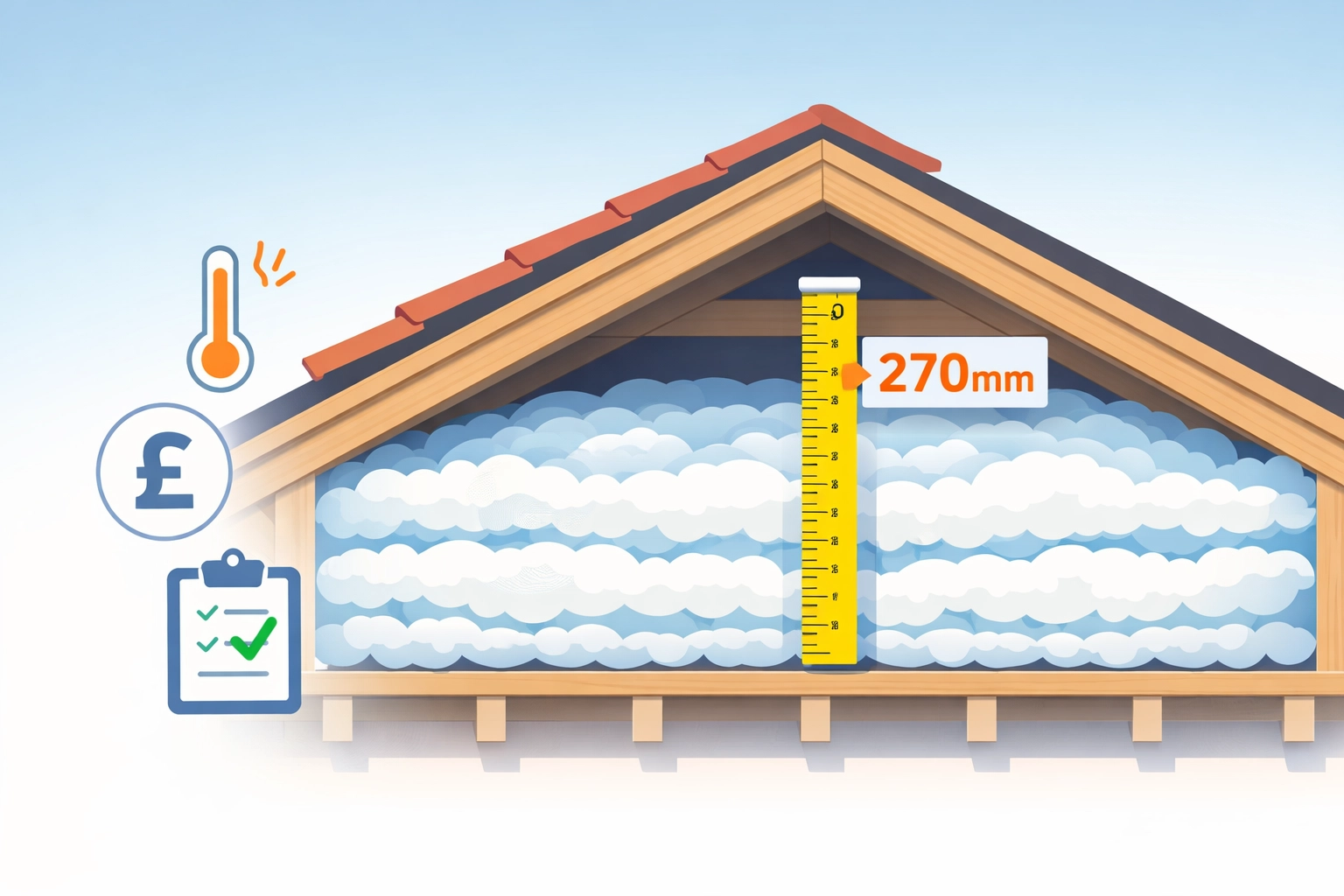
The current recommendation is 270mm of loft insulation. This standard applies to most UK homes and ensures thermal performance that meets Part L of the Building Regulations.
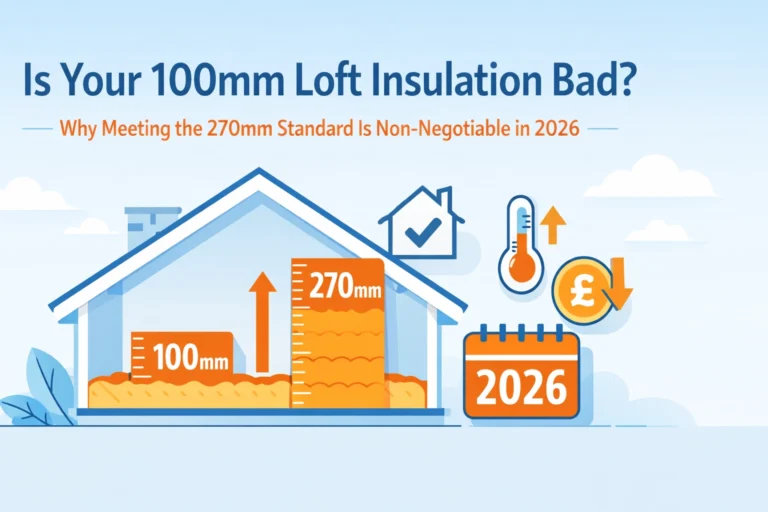
If your home was built before 2003, it likely has only 100mm of insulation. That was acceptable then. It's not now. Modern building standards demand better thermal performance to reduce heat loss and lower energy bills.
You don't always need to rip out old insulation. If the existing material is dry, intact, and not compressed, you can top it up to reach 270mm. This saves time and money.
Why Is 270mm the Recommended Standard?
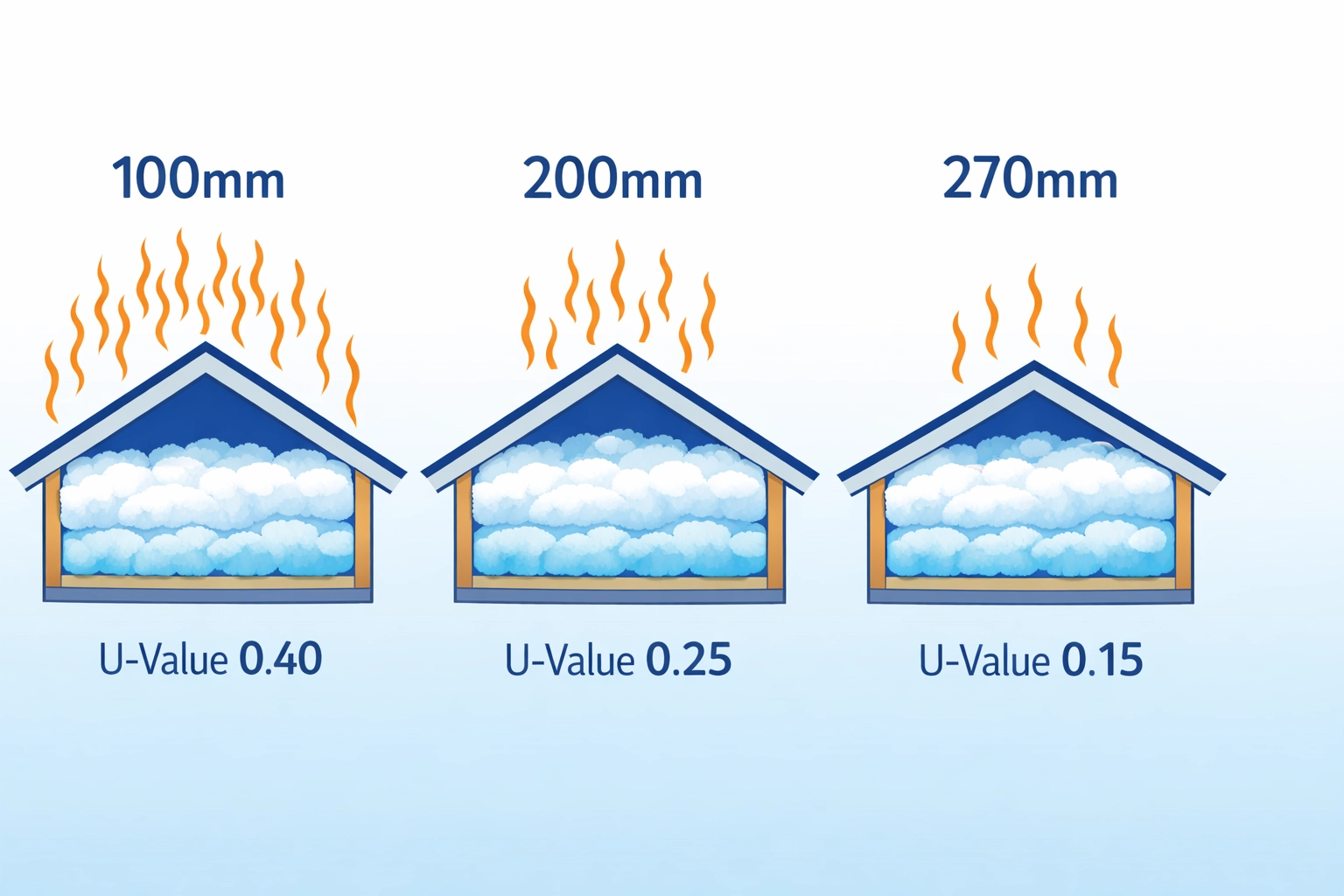
Heat rises. Without adequate loft insulation, up to 25% of your home's heat escapes through the roof. That's wasted energy and wasted money.
The 270mm depth provides a U-value of approximately 0.16 W/m²K. This measures how well the insulation resists heat flow. Lower numbers mean better performance.
For comparison:
- 100mm = U-value of 0.35 W/m²K
- 200mm = U-value of 0.20 W/m²K
- 270mm = U-value of 0.16 W/m²K (current standard)
Meeting this standard improves comfort, reduces condensation risk, and supports broader energy efficiency upgrades like heat pumps or solar panels.
How Much Does Loft Insulation Cost in 2026?
Cost depends on property size, material choice, and whether you're starting from scratch or topping up.
| Property Type | Top-Up Cost (Existing Insulation) | Full Installation Cost |
|---|---|---|
| 2-Bedroom Terrace | £350–£600 | £500–£900 |
| 3-Bedroom Semi-Detached | £400–£750 | £600–£1,200 |
| 4-Bedroom Detached | £600–£1,000 | £900–£1,500 |
These are typical costs for mineral wool or glass wool blanket insulation. Premium materials like multifoil cost more but may be necessary for low-headroom lofts.
Always get a free loft survey before committing. A professional assessment identifies what's already there, checks for damp or ventilation issues, and recommends the most cost-effective approach.
Book your free loft survey here.
Material Comparison: Mineral Wool vs Rockwool vs Multifoil
Choosing the right material depends on your loft space, budget, and performance priorities.
| Material | Thermal Conductivity (W/mK) | Typical Depth Required | Fire Rating | Cost per m² | Best For |
|---|---|---|---|---|---|
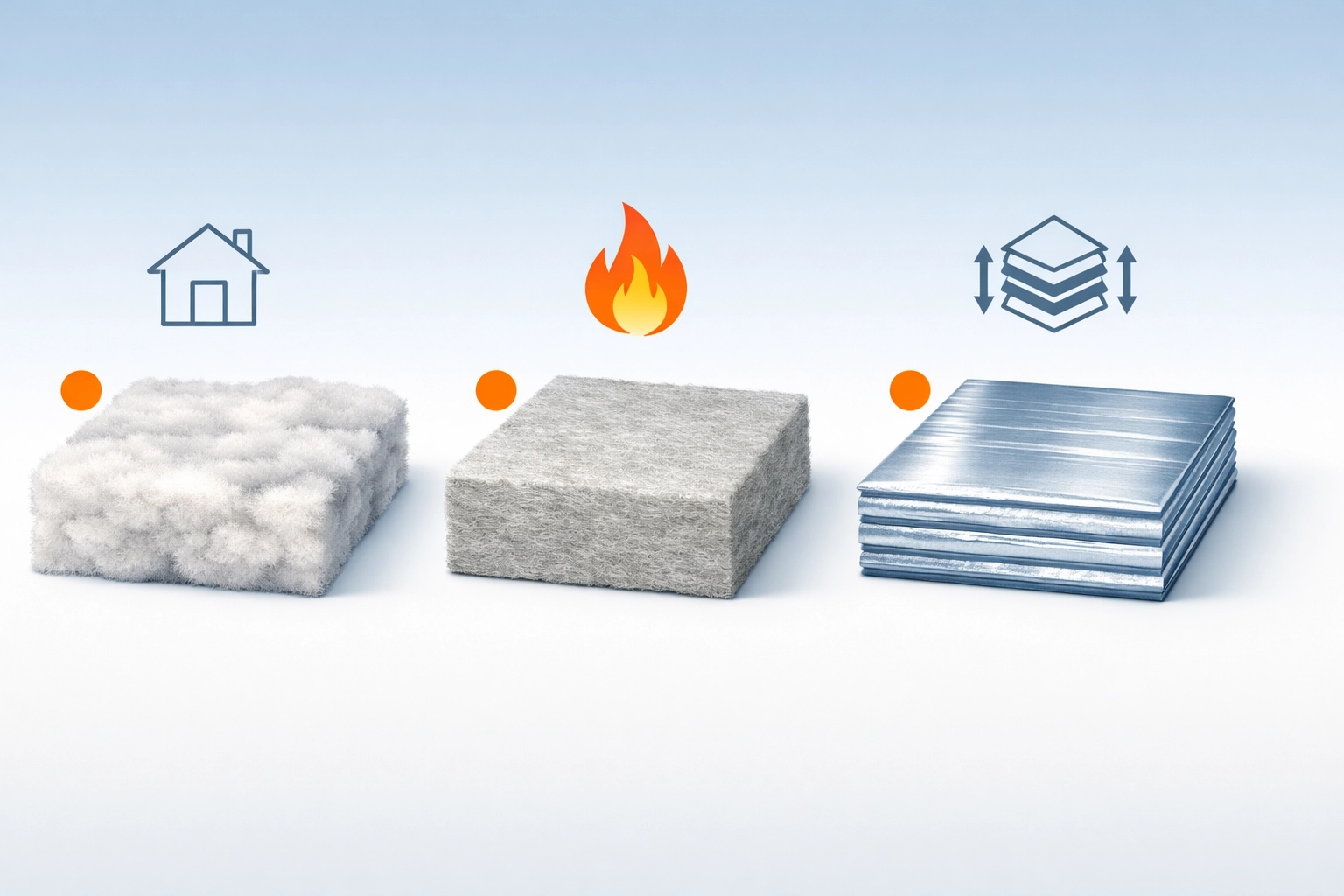
| Mineral Wool (Glass Wool) | 0.035–0.044 | 270mm | Non-combustible (A1) | £5–£8 | Standard lofts, budget-friendly |
| Rockwool (Stone Wool) | 0.034–0.040 | 270mm | Non-combustible (A1) | £6–£10 | Better acoustic insulation, fire safety |
| Multifoil (e.g., SuperQuilt) | 0.018–0.025 | 40–60mm | Class B/C | £12–£18 | Low headroom, space-restricted lofts |
Mineral wool and rockwool are the most common choices. They're affordable, effective, and easy to install. Rockwool offers slightly better fire resistance and sound insulation.
Multifoil works well in tight spaces where thick insulation isn't practical. It reflects radiant heat rather than trapping air. Proper installation is critical, air gaps and detailing matter.
For a detailed material comparison, read our Rockwool vs Multifoil vs Spray Foam guide.
Building Regulations: Part L Compliance Explained
All loft insulation work must comply with Part L of the Building Regulations 2010 (as amended). This section governs the conservation of fuel and power in buildings.
What Does Part L Require?
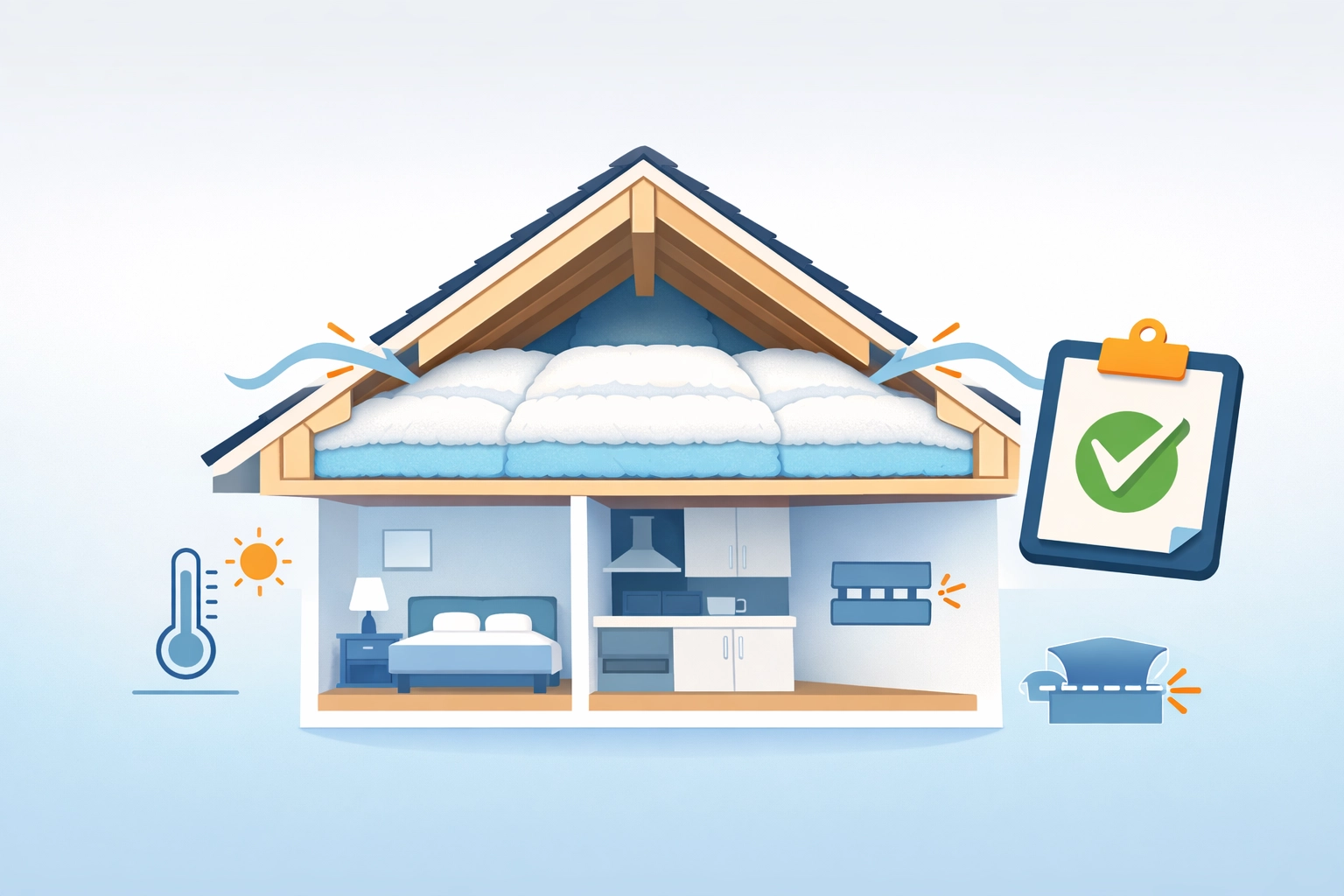
- Thermal performance: Insulation must achieve a U-value of 0.16 W/m²K or better.
- Air tightness: Gaps around the loft hatch, eaves, and service penetrations must be sealed.
- Ventilation protection: Airflow routes at the eaves must remain clear to prevent condensation.
Part L applies to:
- New builds
- Extensions and loft conversions
- Replacement insulation (where more than 50% of the thermal element is being upgraded)
Top-ups to existing insulation usually don't trigger Building Control approval if you're not altering the structure. But if you're boarding the loft, adding new services, or converting the space, you'll need approval.
Learn more about Part L regulations here.

Do I Need Building Control Approval for Loft Insulation?
It depends on the scope of work.
You DON'T need approval if:
- You're topping up existing insulation to 270mm
- No structural changes are being made
- You're not converting the loft into a habitable room
You DO need approval if:
- You're converting the loft (adding stairs, windows, or living space)
- You're installing spray foam insulation (this often requires structural assessment)
- You're altering load-bearing timbers or roof structure
- You're adding floor insulation or soundproofing as part of a conversion
Local authorities conduct inspections to verify compliance. Non-compliance can result in fines, legal complications, and issues when selling your home.
If you're unsure, a professional installer like ComfySeal can advise whether Building Control notification is required.
Which Insulation Material Is Best for My Loft?
There's no universal "best" material. The right choice depends on your loft conditions.
Choose mineral wool or rockwool if:
- You have standard headroom (at least 1.2 metres)
- You want a cost-effective, long-lasting solution
- Fire safety is a priority
Choose multifoil if:
- Headroom is limited (terrace houses, older properties)
- You need to maintain loft storage or access
- You're working around pipework or awkward spaces
Avoid spray foam if:
- You plan to sell or remortgage soon (it can complicate surveys)
- Roof timbers need to remain inspectable
- You're unsure about ventilation management
For mortgage and survey concerns around spray foam, read our spray foam removal guide.
Are There Government Grants for Loft Insulation in 2026?
Yes, but eligibility is income-based.
ECO4 (Energy Company Obligation)
Funded by energy companies. Available to low-income households, those on qualifying benefits, or living in properties with an EPC rating of D–G.
Free or heavily subsidised loft insulation is available if you meet the criteria.
Great British Insulation Scheme (GBIS)
Offers support for low-income and fuel-poor households. This scheme ends on 31 March 2026, so applications must be submitted soon.
How to Check Eligibility
Most installers (including ComfySeal) can check your eligibility as part of a free loft survey. If you don't qualify for grants, standard pricing applies.
Learn more about GBIS and ECO4 eligibility.
Expert FAQ: UK Loft Insulation in 2026
How long does loft insulation last?
Mineral wool and rockwool typically last 40+ years if kept dry and undisturbed. Multifoil lasts 20–30 years depending on installation quality.
Can I walk on loft insulation?
No. Walking directly on insulation compresses it and reduces thermal performance. Use raised boarding if you need storage or access.
Will loft insulation cause condensation?
Not if installed correctly. Ventilation paths at the eaves must remain clear. Blocked airflow is the primary cause of loft condensation.
Do I need to insulate the loft hatch?
Yes. An uninsulated hatch is a significant heat-loss point. ComfySeal includes hatch insulation and draught-proofing as standard.
What if I have pipes or cables in the loft?
Insulation should go over water pipes to protect them from freezing. Electrical cables should remain visible and accessible. A professional installer will manage these details safely.
Can I install loft insulation myself?
Technically, yes. But professional installation ensures compliance with Building Regulations, protects ventilation routes, and avoids common mistakes like compression or gaps.
ComfySeal offers a 10-year workmanship guarantee and uses DBS-checked teams. DIY installations have no such protection.
Why Choose ComfySeal for Loft Insulation?
ComfySeal operates across England, Wales, and Scotland (up to the Greenock–Perth–Dundee line). We provide:
- Free loft surveys with no-pressure advice
- 10-year workmanship guarantee
- DBS-checked, fully insured teams
- Compliance with Part L Building Regulations
- Clear pricing with no hidden costs
We don't cut corners. Ventilation stays clear. Access is protected. The finish is tidy.
Book your free loft survey today.
Final Thoughts
Loft insulation is one of the simplest, most cost-effective home improvements you can make in 2026. Meeting the 270mm standard reduces heat loss, stabilises indoor temperatures, and supports future energy upgrades.
Whether you're topping up existing insulation or starting fresh, the key is getting it done properly. That means the right material, correct depth, and ventilation protection.
If you're preparing to sell, remortgage, or improve comfort, start with a professional assessment. ComfySeal provides free loft surveys and straightforward recommendations.