Category: Costs & Grants
The UK government just announced £15 billion in funding for home energy upgrades.
That's the biggest retrofit programme in a generation. Millions of homes need insulation, ventilation fixes, and heat pump installations.
But here's the catch: only certified installers can bid for the work.
If your business isn't accredited under the right schemes, you're locked out. No quotes. No contracts. No access to the largest pool of domestic retrofit work in UK history.
Let's break down exactly what you need: and why getting certified now puts you ahead of the competition.
Why Certification Matters Under the Warm Homes Plan
Government-funded schemes don't work like private jobs.
You can't just turn up with tools and a good reputation. Every installer must be independently vetted, audited, and registered with approved bodies.
This protects homeowners. It also raises industry standards.

For your business, certification does three things:
1. Opens the Door to Grant-Funded Work
Without accreditation, you can't invoice local authorities or energy companies for ECO4, GBIS, or Warm Homes Plan jobs. You're invisible to the system.
2. Signals Quality to Private Clients
Even homeowners paying out of pocket now expect TrustMark logos. It's become the baseline for trust.
3. Future-Proofs Your Business
As regulations tighten, uncertified installers will be phased out entirely. Getting ahead now keeps you competitive for years.
The Non-Negotiables: TrustMark Registration
TrustMark is the government-endorsed quality scheme for tradespeople.
It's mandatory for all Warm Homes Plan contractors. No TrustMark, no eligibility.
Here's what TrustMark actually checks:
- Customer service standards and complaints handling
- Financial stability and insurance
- Trading history and references
- Compliance with consumer protection laws
You don't just register once and forget it. TrustMark conducts annual surveillance audits. Random site inspections. Customer feedback reviews.
It's rigorous. But that's the point.
Cost: Expect £600–£1,200 annually, depending on your trade scope.
Timeline: Initial registration takes 6–12 weeks if your paperwork is in order.
Start now. The scheme launches in phases from late 2026, but approved installer lists are being compiled earlier.

PAS 2030:2019 – The Technical Standard You Must Meet
TrustMark is the badge. PAS 2030 is the technical backbone.
PAS 2030:2019 is the British Standard for installing energy efficiency measures in domestic properties. It covers everything from loft insulation to wall cavity fills.
If you're doing retrofit work under government schemes, you must be PAS 2030 certified.
What PAS 2030 Requires
This isn't just about how you install insulation. It's about the process around it:
- Conducting pre-installation surveys (heat loss, ventilation, condensation risk)
- Designing measures tailored to the property
- Installing to manufacturer specs and Building Regs
- Providing homeowners with clear handover documentation
- Offering guarantees and warranty-backed workmanship
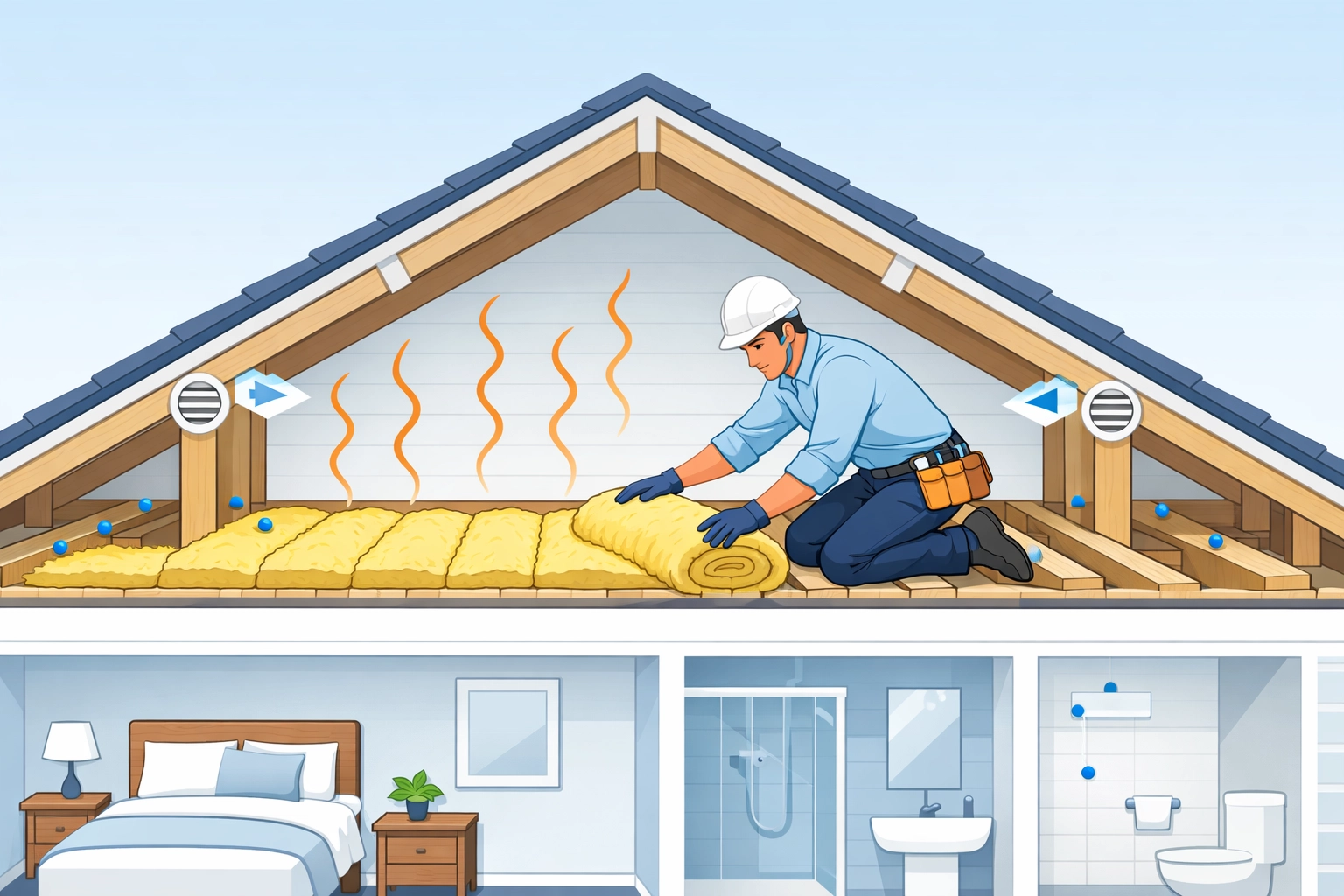
PAS 2030 also mandates retrofit coordination. You can't just throw insulation in a loft and walk away. You need to assess the whole building as a system.
Does adding loft insulation create condensation risk? Will it affect ventilation? What about existing damp issues?
PAS 2030 forces you to think holistically. That's good for homeowners: and it protects you from comeback claims.
The 2035 Transition
PAS 2030:2019 is being replaced by PAS 2030:2035 from late 2026 onwards.
The updated standard brings stricter quality controls and better alignment with net-zero targets. If you're certifying now, you'll need to transition within 12 months of the new standard's release.
Pro tip: Get certified under 2019 now. You'll be grandfathered into early training for 2035, giving you a head start over installers who wait.
MCS Certification: For Heat Pumps, Solar, and Hybrid Installs
If your business installs heat pumps, solar panels, or battery storage, you need MCS (Microgeneration Certification Scheme).
MCS is separate from PAS 2030, but increasingly overlaps. The Warm Homes Plan prioritises "fabric first + low carbon heating" retrofits. That means loft insulation paired with air source heat pumps.
If you can offer both, you're in a stronger position.
What MCS Covers
MCS certifies businesses to install:
- Air source heat pumps (ASHP)
- Ground source heat pumps (GSHP)
- Solar photovoltaic (PV) panels
- Solar thermal systems
- Battery energy storage
To qualify, you need:
- MCS-approved training for each technology
- Qualified designers and installers on staff
- Compliance with MCS installation standards
- Annual audits and performance monitoring
Cost: £1,500–£3,000 for initial certification, plus renewal fees.
Timeline: 8–16 weeks, depending on how fast you complete training.
MCS is non-negotiable for accessing the Boiler Upgrade Scheme (BUS) grants. If the Warm Homes Plan expands BUS funding (widely expected), MCS installers will dominate that market.
Other Certifications Worth Having
TrustMark, PAS 2030, and MCS are the big three. But smaller accreditations strengthen your position:
Cavity Insulation Guarantee Agency (CIGA)
Offers 25-year guarantees for cavity wall insulation. Required by many local authorities.
Competent Person Schemes
- NICEIC or NAPIT for electrical work
- Gas Safe Register if you're touching boilers or heating systems
Health & Safety
- CHAS or Constructionline accreditation
- Public and employer's liability insurance (minimum £5 million)
These aren't always mandatory. But they make you more competitive when bidding for council frameworks or housing association contracts.

What Happens If You're Not Certified?
Simple: you're excluded.
Grant funding flows through Obligated Energy Suppliers (British Gas, E.ON, Octopus, etc.). They only contract with certified installers.
Local authorities running Warm Homes Plan schemes will publish approved installer lists. If you're not on them, homeowners can't choose you: even if they want to.
You'll be left competing for the shrinking pool of fully private work. And even private clients increasingly demand TrustMark as standard.
How to Get Certified: Action Plan
Here's your step-by-step:
1. Register for TrustMark (Start now – 6–12 weeks)
Visit the TrustMark website and choose your trade category. Prepare financial records, insurance certificates, and customer references.
2. Achieve PAS 2030:2019 Certification (8–12 weeks)
Book training through an accredited provider. Complete the assessment. You'll need at least one PAS-qualified retrofit coordinator on staff.
3. Add MCS If Relevant (8–16 weeks)
If you install heat pumps or renewables, get MCS-certified in parallel. Don't wait: MCS courses fill up fast.
4. Join Retrofit Frameworks (Ongoing)
Apply to be listed on council and housing association frameworks. These open bidding opportunities for large-scale projects.
5. Market Your Certifications
Update your website, van signage, and quotes. Display TrustMark and PAS 2030 logos prominently. Homeowners trust what they recognise.

The Business Case: Why Act Now
Certification costs money. Training takes time. So why move now instead of waiting to see how the scheme unfolds?
Three reasons:
First, installer lists are being compiled in early 2026. Late applicants risk missing the first wave of contracts.
Second, training providers are already oversubscribed. As the March 2026 GBIS deadline approaches and the Warm Homes Plan ramps up, course availability will tighten further.
Third, early movers capture market share. Homeowners will choose certified installers they find first. Being on official lists from day one gives you visibility competitors can't match.
Think of it as positioning, not cost. You're investing in access to £15 billion of work.
Final Thoughts
The Warm Homes Plan is the biggest opportunity in UK retrofit since the Green Homes Grant.
But it's not open to everyone. Only certified, audited, and compliant businesses can compete.
TrustMark, PAS 2030, and MCS aren't optional extras. They're the entry ticket.
Start your applications now. Get your team trained. Update your insurance and systems.
Because when the funding opens in 2026, the businesses already certified will be first in line.
And the ones still figuring it out? They'll be watching from the sidelines.
Need help navigating the certification process? At ComfySeal Ltd, we're fully TrustMark registered and PAS 2030 certified. We understand what it takes to meet the standards: and we're here if you need advice on positioning your business for the Warm Homes Plan. Get in touch to discuss how we can support your growth.