If you've been putting off upgrading your home's insulation or installing solar panels because of the cost, January 2026 just changed the game.
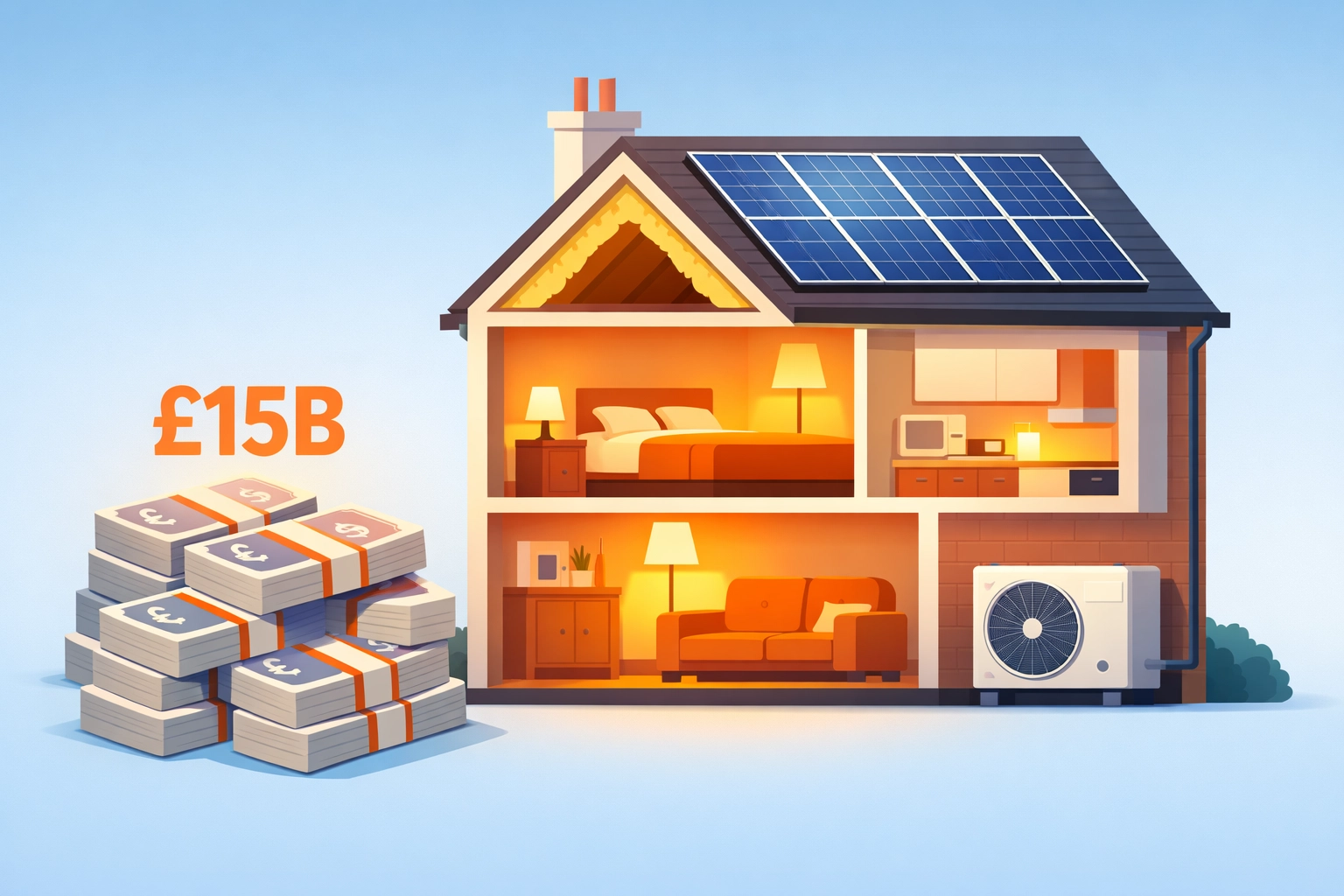
The UK government launched the Warm Homes Plan: a £15 billion investment programme designed to upgrade up to 5 million homes over the next five years. This isn't just another grant scheme. It's the biggest home energy programme the UK has seen in decades.
Here's what you need to know, whether you're a low-income household looking for fully funded upgrades or a homeowner ready to access low-interest loans for loft insulation, heat pumps, and solar panels.
What Is the Warm Homes Plan?
The Warm Homes Plan is a five-year government programme targeting energy efficiency upgrades across England, Scotland, and Wales.
The goal? Lift 1 million families out of fuel poverty by 2030 while slashing household energy bills and reducing reliance on imported fossil fuels.
The programme covers four main technologies:
- Loft and wall insulation
- Solar panels
- Home battery storage
- Heat pumps
A typical household combining all four upgrades could save around £1,000 per year compared to a standard dual-fuel home on a typical tariff.
That's serious money back in your pocket: every single year.
The Three Pillars of the Warm Homes Plan
The programme is structured around three core support mechanisms. Each one targets a different group of homeowners.
1. Fully Funded Upgrades for Low-Income Households
£5 billion of the total budget is ring-fenced for low-income and fuel-poor families.
If you qualify, you could receive:
- Fully funded loft insulation (currently valued at £500–£1,200)
- Free solar panel and battery installation (valued at £9,000–£12,000)
- Heat pump upgrades at no cost to you
Zero upfront cost. Zero loans. Zero repayments.
This is a massive expansion of existing schemes like ECO4 and GBIS. If you've been turned away from those programmes before, it's worth checking your eligibility again under the Warm Homes Plan.
Income thresholds and eligibility criteria are being finalised by the new Warm Homes Agency throughout 2026, but early indications suggest most households on means-tested benefits will qualify automatically.
2. Universal Low-Interest Loans for All Homeowners
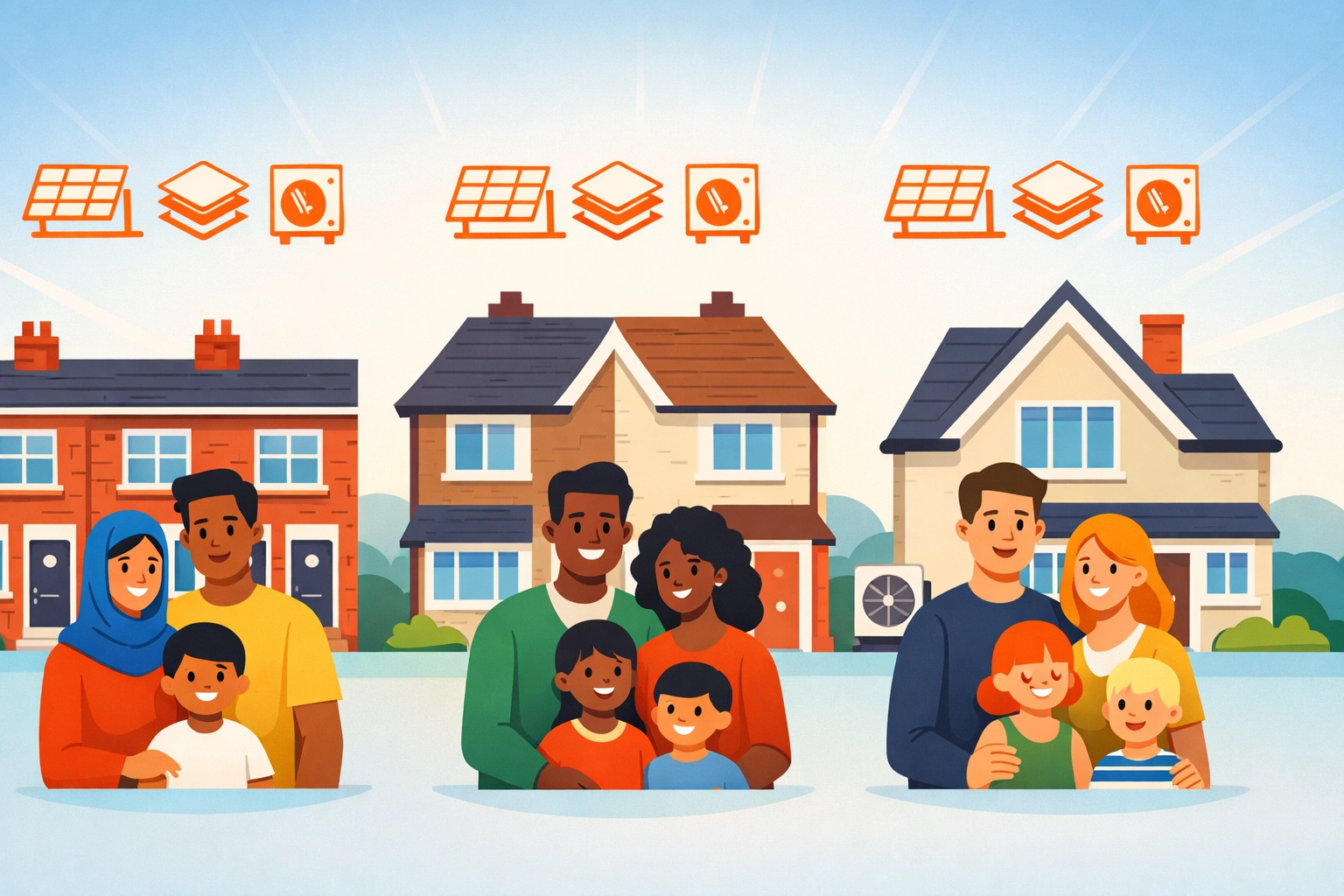
Not eligible for free support? You can still access the programme through government-backed loans.
These loans are designed to be affordable for the average homeowner:
- Zero or low interest rates (exact terms being finalised in 2026)
- Flexible repayment periods
- Available for solar panels, batteries, heat pumps, and energy-saving upgrades for lofts
This is huge for homeowners who've been priced out of solar or heat pump installations. A £10,000 loan at 0–2% interest over 10 years is far more manageable than paying upfront or using a standard personal loan at 8–12% APR.
The government is also working with accredited installers to ensure no cowboy contractors slip through the cracks. More on that below.
3. Enhanced Standards for Rentals and New Builds
Landlords and developers, listen up.
The Warm Homes Plan introduces stricter energy efficiency requirements for rental properties. While exact EPC targets are still being debated, the direction is clear: EPC 'C' by 2028 remains the likely minimum for private landlords.
New builds will be required to include solar panels as standard from 2027 onward. This shifts the cost burden away from homeowners and onto developers: where it should have been all along.
If you're a landlord struggling to hit EPC targets, now's the time to upgrade loft insulation and other measures before the 2028 deadline. Check our guide on the EPC 'C' roadmap for actionable steps.
How Does Loft Insulation Fit into the Plan?
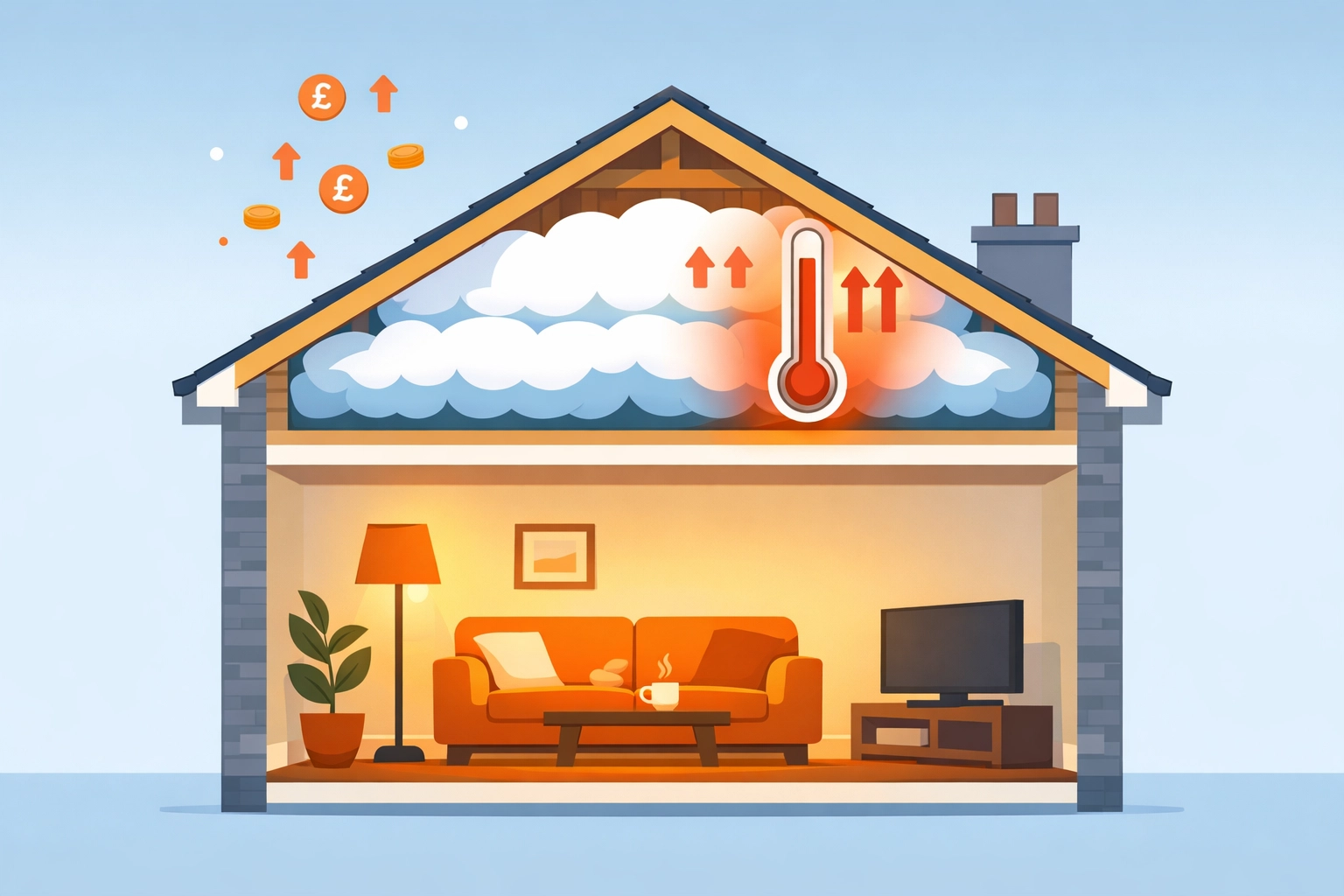
Loft insulation might not be as flashy as solar panels, but it's one of the most cost-effective upgrades you can make under the Warm Homes Plan.
Here's why it matters:
It's fast. A professional loft insulation installation takes 4–6 hours for an average semi-detached home. Solar panels and heat pumps take days or weeks.
It's affordable. Even if you're paying out-of-pocket, loft insulation costs £500–£1,200 depending on your loft size and the material used. Compare that to £10,000+ for a heat pump.
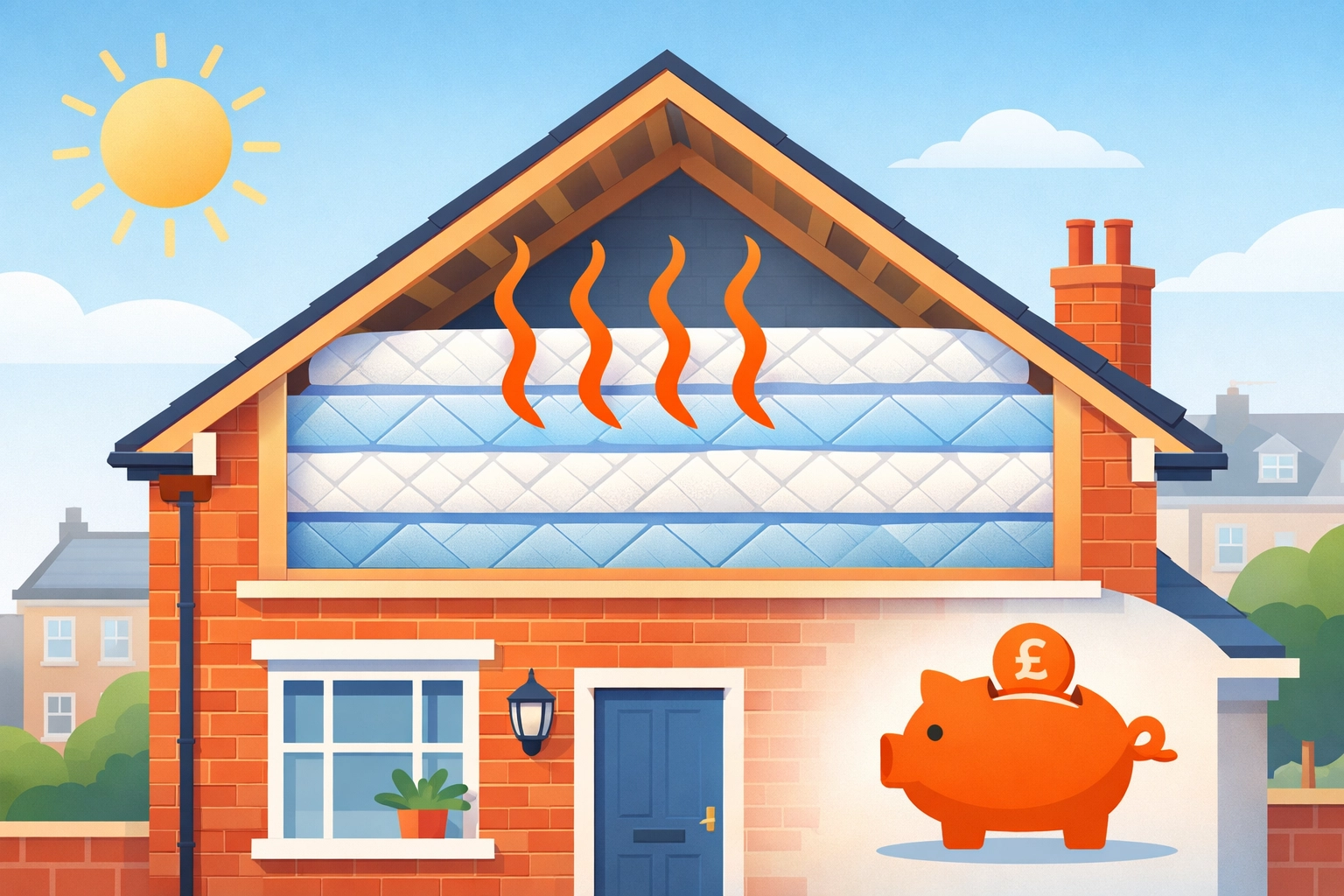
It unlocks bigger savings. Insulating your loft properly reduces heat loss by up to 25%. That means your heating system: and any future heat pump: works less hard and saves you more money.
If you're accessing the Warm Homes Plan for solar or a heat pump, you'll likely be required to meet minimum insulation standards first. That's where services like ours come in. Book a free loft survey to see if your current insulation meets 2026 Part L standards.
Who Qualifies for Free Loft Insulation UK Support?
The short answer: it depends on your household income and circumstances.
The Warm Homes Agency is still finalising eligibility criteria, but here's what we know so far:
Likely to qualify:
- Households on Universal Credit, Pension Credit, or other means-tested benefits
- Families in fuel poverty (spending more than 10% of income on energy)
- Homes with an EPC rating of D, E, F, or G
- Owner-occupiers and private renters (with landlord permission)
Less likely to qualify:
- Households with combined income above £40,000–£50,000 (estimated threshold)
- Properties already rated EPC A, B, or C
- Social housing tenants (separate programmes apply)
If you're not eligible for fully funded support, you can still access the low-interest loan scheme or apply for existing grants like ECO4 and GBIS. Read our full breakdown of ECO4 vs. GBIS here.
What About the £150 Energy Bill Discount?
Alongside the Warm Homes Plan, the government is providing immediate financial support to help families through the 2026 energy crunch:
- £150 off energy bills for all households from April 2026
- £150 Warm Home Discount for around 6 million low-income households
That's £300 total support for eligible families: on top of any grants or loans you access through the Warm Homes Plan.
These aren't credits you need to apply for. They'll be applied automatically to your energy account if you qualify.
When Can You Apply?
The Warm Homes Plan officially launched in January 2026, but the rollout is phased:
Q1 2026 (Now): Warm Homes Agency sets up regional hubs and accredited installer networks.
Q2 2026 (April–June): First wave of fully funded upgrades begins for low-income households.
Q3 2026 (July–September): Universal loan scheme opens to all homeowners.
2027 onward: Mandatory solar panels on new builds; enhanced rental property standards come into force.
If you're eager to get started, don't wait for the official application portal. Get a free loft survey from ComfySeal now to identify what upgrades your home needs. When funding opens, you'll be ready to apply immediately.
How to Prepare for Your Warm Homes Upgrade
Here's what you can do right now to get ahead of the queue:
1. Check your current EPC rating. You can find this on the government's EPC register. If you're rated D or below, you're a strong candidate for support.
2. Book a professional loft survey. Before any grant or loan is approved, you'll need proof that your home needs insulation. A professional survey gives you that documentation: and identifies any damp, ventilation, or structural issues that need fixing first.
3. Gather income documentation. If you're applying for fully funded support, you'll need to prove your household income and benefit status. Start collecting payslips, benefit letters, and tax returns now.
4. Research accredited installers. The Warm Homes Agency will maintain a register of approved contractors. Stick to accredited installers to avoid scams and ensure your work qualifies for funding. ComfySeal is fully accredited and ready to support Warm Homes Plan applications.
Final Thoughts
The Warm Homes Plan is a game-changer for UK homeowners: especially if you've been struggling with high energy bills or putting off essential upgrades because of cost.
Whether you qualify for fully funded free loft insulation UK support or access low-interest loans, the opportunity to upgrade your home has never been better.
But programmes like this don't last forever. Five million homes over five years sounds like a lot: until you realise there are 29 million households in the UK.
Get your loft surveyed. Check your eligibility. Be ready to apply when your region's funding opens.
Book your free ComfySeal loft survey today and take the first step toward a warmer, cheaper-to-run home in 2026.