Your surveyor just flagged your loft. Now what?
It happens more than you think. A routine inspection uncovers issues that could delay your sale or tank your mortgage approval.
But here’s the good news. Most loft red flags are fixable.
This guide breaks down exactly what surveyors look for in 2026. You’ll learn how to spot problems early and fix them before they cost you.
Why Surveyors Pay Extra Attention to Lofts
Lofts reveal a lot about a property’s health.
They show signs of water damage, poor insulation, and structural wear. A quick look up there tells surveyors if corners were cut.
In 2026, loft inspections are stricter than ever. Energy efficiency rules have tightened. Mortgage lenders are more cautious.
Your loft needs to meet current standards. Otherwise, expect notes on that survey report.
The Top Red Flags Surveyors Look For
Not all issues carry the same weight. Some are minor observations. Others stop sales dead.
Here are the biggest concerns surveyors flag in loft spaces.
1. Spray Foam Insulation
This is the number one problem in 2026.
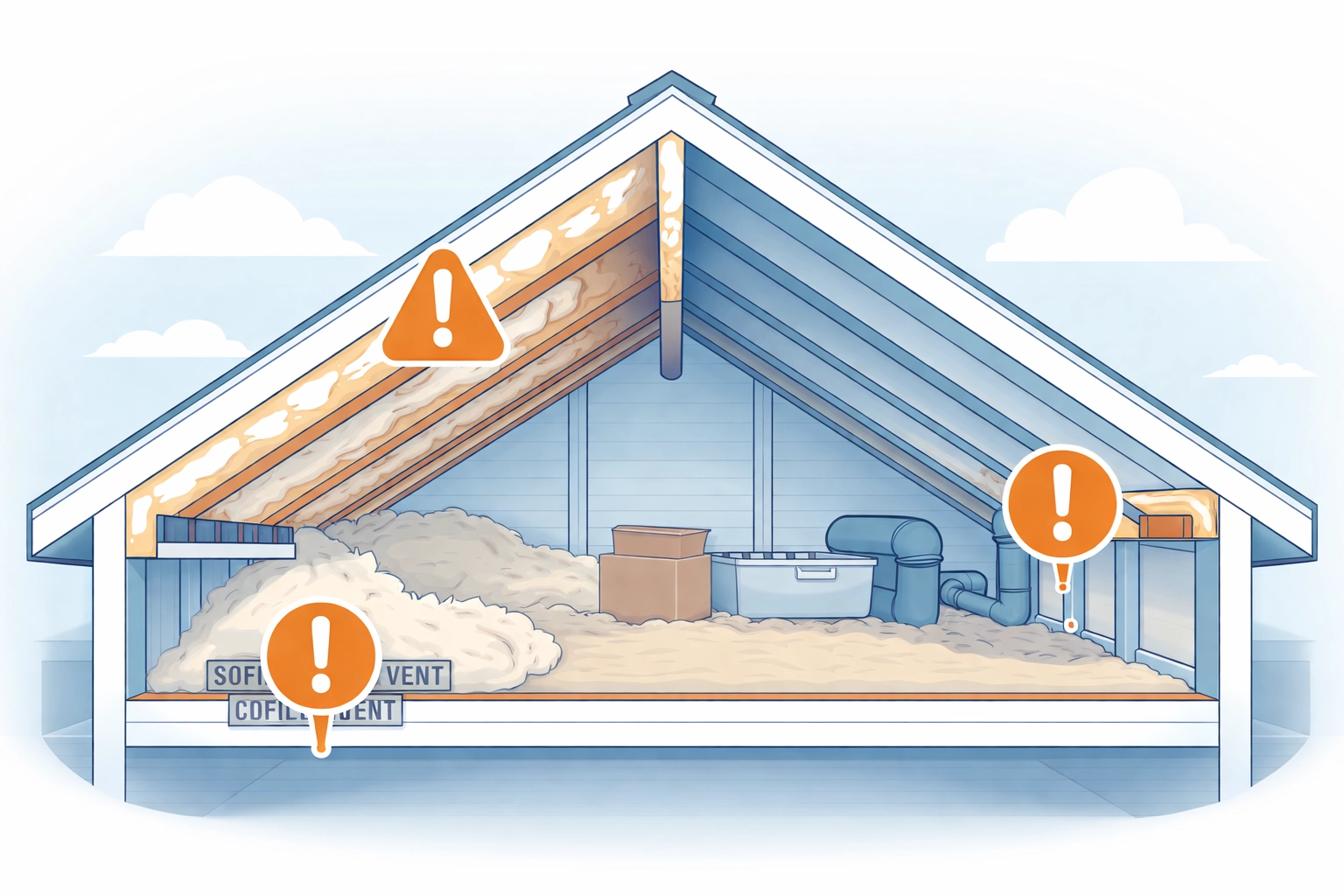
Spray foam applied directly to rafters causes major headaches. It traps moisture. It hides timber defects. It makes future inspections nearly impossible.
Most mortgage lenders now reject properties with spray foam. They see it as too risky.
If your loft has spray foam, removal is often the only solution. Learn more about why mortgage lenders reject spray foam and what to do about it.
2. Poor Ventilation
Your loft needs to breathe.
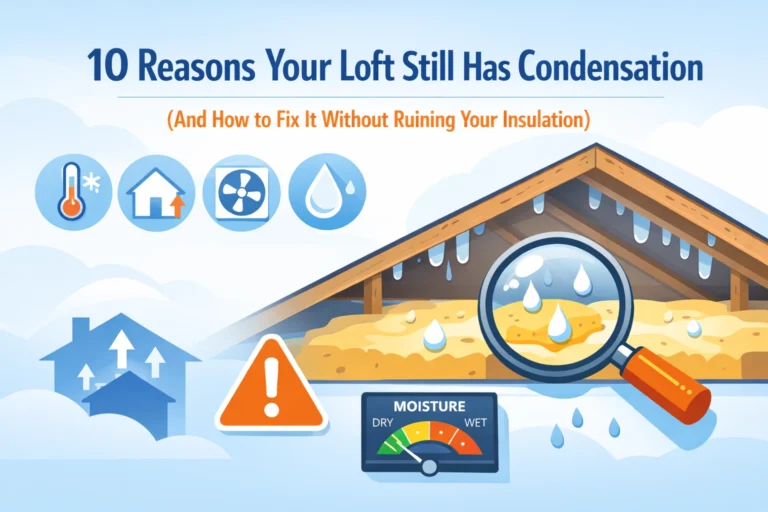
Without proper airflow, condensation builds up. This leads to damp, mould, and rotting timbers.
Surveyors check for soffit vents and ridge vents. Blocked or missing ventilation gets flagged immediately.
3. Inadequate Insulation
Too little insulation affects your EPC rating.
In 2026, energy performance matters more than ever. Buyers want efficient homes. Lenders require minimum standards.
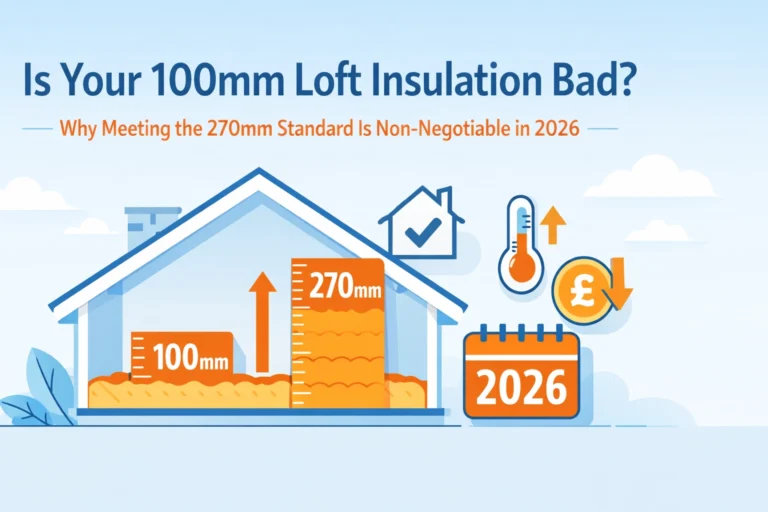
Surveyors measure insulation depth. They note the type and condition. Anything below 270mm of mineral wool (or equivalent) raises concerns.
4. Signs of Water Ingress
Stains on timbers are a warning sign.
Surveyors look for water marks, damp patches, and damaged felt. These suggest roof leaks or failed flashings.
Even old, dried stains get noted. They indicate past problems that may return.
5. Timber Defects
Rafters and joists must be structurally sound.
Surveyors check for woodworm holes, wet rot, and sagging timbers. Any weakness affects the roof’s integrity.
Spray foam makes this inspection difficult. Covered timbers can’t be assessed properly.
How These Issues Affect Your Sale
A flagged loft doesn’t always kill a deal. But it complicates things.
Mortgage lenders may refuse to lend. They see certain issues as too risky.
Buyers may renegotiate. They’ll want the price reduced or repairs completed first.
Solicitors may request specialist reports. This adds weeks to the process.
The worst outcome? Your sale falls through entirely.
It’s far better to fix problems before listing your property.
The 2026 Loft Inspection Checklist
Want to pass your inspection? Use this checklist before the surveyor arrives.
Ventilation
- Soffit vents clear and unblocked
- Ridge vent present and functional
- No condensation on timbers or underlay
Insulation
- Minimum 270mm depth (or equivalent performance)
- No gaps or compression
- Insulation not blocking eaves ventilation
Roof Structure
- Timbers visible and accessible
- No signs of rot, woodworm, or damage
- No sagging or bowing rafters
Waterproofing
- Underlay intact with no tears
- No staining or damp patches
- Flashings secure around pipes and vents
Previous Work
- No spray foam on rafters
- Any modifications properly completed
- Building regulations certificates available

What To Do If Your Loft Has Problems
Found an issue? Don’t panic.
Most problems have straightforward solutions. Here’s how to address the common ones.
Removing Spray Foam
This is specialist work. The foam must be carefully stripped without damaging timbers.
Once removed, the loft needs proper inspection. Then you can install compliant insulation that keeps lenders happy.
We handle spray foam removal regularly. Book a free consultation to discuss your options.
Improving Ventilation
Sometimes it’s as simple as clearing blocked vents.
Other times, new vents need installing. Proper airflow prevents the condensation that causes so many issues.
Upgrading Insulation
Old or thin insulation can be topped up.
We recommend multifoil insulation for lofts with limited headroom. It’s thin but highly effective. Read more about multifoil loft insulation and whether it suits your space.
For standard lofts, mineral wool remains a solid choice. The key is reaching the required depth without blocking ventilation.
Treating Timber Issues
Woodworm and rot need professional treatment.
Once treated, affected timbers may need reinforcing. Get this done before your survey to avoid delays.
Why Pre-Sale Loft Assessments Make Sense
Smart sellers get ahead of problems.
A pre-sale loft assessment identifies issues before buyers find them. You control the narrative. You fix things on your terms.
This approach has several benefits:
- Faster sales – No surprises to slow things down
- Stronger offers – Buyers have confidence in the property
- Smoother mortgages – Lenders approve without complications
- Less stress – You know exactly where you stand
Think of it as insurance against survey surprises.

How ComfySeal Helps You Pass Inspection
We’ve seen every loft problem imaginable.
Our team assesses your space and identifies potential red flags. Then we fix them properly, with documentation that satisfies surveyors and lenders.
Our services include:
- Spray foam removal and replacement
- Ventilation improvements
- Insulation upgrades to current standards
- Pre-sale loft assessments
- Documentation for mortgage applications
Every job meets building regulations. Every installation comes with the paperwork you need.
Ready to get your loft survey-ready? Get a quote or book your free consultation today.
Common Questions About Loft Inspections
Will my surveyor definitely check the loft?
Yes. Loft access is standard for most survey types. Level 2 and Level 3 surveys always include loft inspection.
What if I can’t access my loft easily?
Surveyors note restricted access as a limitation. This isn’t ideal. They may recommend further investigation, which delays things.
Do I need to clear my loft before the survey?
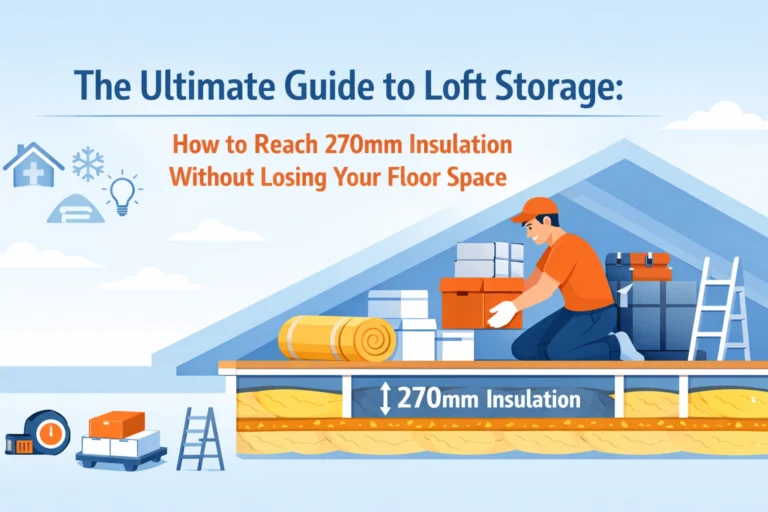
It helps. Surveyors need to see timbers and check insulation. Boxes blocking their view mean less thorough reports.
How long do loft repairs take?
Depends on the issue. Insulation upgrades take a day or two. Spray foam removal may take longer. We’ll give you accurate timescales upfront.
Final Thoughts
Surveyors flag lofts for good reasons. The issues they find are real.
But most red flags have solutions. Spray foam, poor ventilation, inadequate insulation – all fixable with the right approach.
The smart move is addressing problems before they appear on a survey report. This keeps your sale on track and your buyers confident.
Your loft doesn’t have to be a liability. With proper preparation, it becomes a selling point.
Book your free loft assessment and get ahead of 2026’s stricter inspections.