You've just had your loft insulated. The house feels warmer. Your energy bills are dropping. Job done, right?
Well, almost.
Here's the thing. Insulation works brilliantly when conditions stay right. But lofts are tricky spaces. Temperatures swing wildly. Moisture levels fluctuate. And problems like damp can creep in silently.
That's where smart sensors come in. They're one of the smartest energy saving upgrades for lofts you can make. They monitor what's happening up there so you don't have to climb a ladder every week to check.
Let's explore how integrating sensors into your newly insulated loft can protect your investment and keep your home running efficiently.
Why Your Insulated Loft Needs Monitoring
Insulation doesn't just "set and forget." It performs best when your loft maintains the right balance of temperature, humidity, and airflow.
Without monitoring, you're flying blind.
Condensation can build up without you noticing. Timber can start absorbing moisture. By the time you spot a problem, it's often progressed further than you'd like.
Smart sensors act as an early warning system. They catch issues before they become expensive repairs.

The Key Sensors for Your Smart Loft
Not all sensors are created equal. For a loft environment, you need devices that can handle temperature extremes and communicate reliably through walls and ceilings.
Here are the main types worth considering:
1. Temperature Sensors
Lofts experience massive temperature swings. Freezing in winter. Roasting in summer. Standard home sensors often can't cope.
Look for extended-range sensors like the Homeseer HSM200 (handles -4°F to 176°F) or the Aeotec Multisensor 6. These are built for challenging environments.
Pro tip: If your sensor's electronics can't survive loft extremes, place the main unit inside your home and run an extended probe into the loft space.
2. Humidity Sensors
This is the big one for insulated lofts.
Humidity sensors track moisture levels in the air. When humidity creeps too high, you get condensation. Condensation leads to damp. Damp leads to mould and timber damage.
A good humidity sensor alerts you before visible problems appear. You can then improve ventilation or investigate the cause.
3. Motion Sensors
Motion sensors might seem odd for a loft. But they're useful for:
- Security – detecting unexpected movement
- Automation – triggering lights when you enter the space
- Energy efficiency – ensuring heating or cooling only activates when needed
The Hue Motion Sensor is a popular choice, combining motion detection with light-level sensing.
4. Lux (Light) Sensors
If your loft has windows or skylights, lux sensors measure light levels. They can trigger blinds or adjust lighting automatically.
Small detail, but it adds up to energy savings.

How Smart Sensors Prevent Damp Problems
Let's dig into the damp issue. It's the number one concern after loft insulation.
Here's what typically happens:
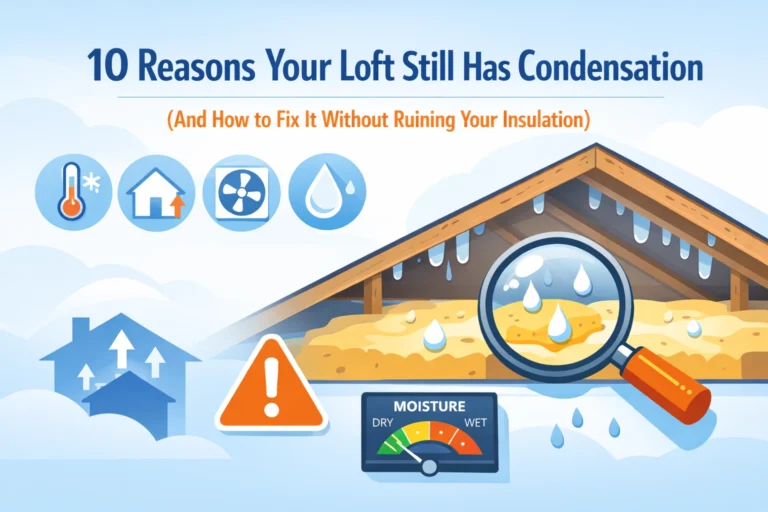
- Warm, moist air from your home rises into the loft
- It meets cold surfaces (roof tiles, rafters, etc.)
- Moisture condenses
- Over time, this creates damp patches, mould, or rotting timber
Insulation alone doesn't cause this. Poor ventilation does. But insulation can change airflow patterns, making existing ventilation inadequate.
Smart humidity sensors spot rising moisture levels early. You get an alert on your phone. You investigate. Maybe you need to improve loft ventilation, check for blocked vents, or address a leak.
Early detection saves thousands in repair costs.
At ComfySeal, we always assess ventilation as part of our loft surveys. But having ongoing monitoring gives you peace of mind between professional inspections.
Choosing the Right Integration Platform
Sensors need something to talk to. That's where smart home hubs come in.
The two main wireless protocols are:
- Zigbee 3.0 – low power, reliable, works well through walls
- Z-Wave – excellent range, popular with home automation enthusiasts
Multiprotocol hubs like SmartThings or Hubitat Elevation let different devices work together. A Zigbee temperature sensor can trigger a Z-Wave fan. A humidity reading can send you a notification via your phone.
You don't need to be a tech wizard. Most systems use simple apps with drag-and-drop automation rules.

Voice Control Options
Want to check your loft temperature without opening an app? Voice assistants like Alexa or Google Home integrate with most sensor networks.
"Hey Google, what's the humidity in the loft?"
Simple.
Practical Energy Saving Upgrades for Lofts
Sensors aren't just about problem prevention. They're genuine energy saving upgrades for lofts that can reduce your bills further.
Here's how:
1. Smart Heating Control
Temperature sensors in your loft feed data to your smart thermostat. If your loft is warmer than expected, your heating system responds. No energy wasted heating a space that's already warm enough.
2. Automated Ventilation
Pair humidity sensors with smart extractor fans or vent openers. When moisture levels rise, ventilation kicks in automatically. When levels drop, it stops. Perfect balance, zero effort.
3. Lighting Automation
Motion-activated loft lighting means you never leave lights on accidentally. Small savings, but they add up over a year.
4. Leak Detection
Water sensors placed near potential problem areas (around pipes, near the roof edge) alert you to leaks instantly. Catching a leak early can prevent massive damage to your insulation and ceiling below.
Installation: DIY or Professional?
Most smart sensors are designed for DIY installation. They're wireless, battery-powered, and connect via an app.
If you're comfortable with basic tech, you can set up a sensor network in an afternoon.
However, if you want a fully integrated system with professional-grade sensors, hiring a smart home installer makes sense. They'll ensure everything works together seamlessly and configure automations properly.
For the sensors themselves, budget around £20-£50 per device. A basic loft monitoring setup might include:
- 1 temperature/humidity sensor – £30-£40
- 1 motion sensor – £25-£35
- 1 water leak sensor – £20-£30
- Smart hub (if needed) – £80-£150
Total: approximately £150-£250 for a comprehensive setup.
That's a small price for protecting your insulation investment and catching problems early.

Getting Started: A Simple Action Plan
Ready to make your loft smarter? Here's a straightforward approach:
-
Assess your needs – Is damp your main concern? Security? Energy efficiency? Start with sensors that address your priority.
-
Choose a hub – If you don't already have a smart home system, pick a multiprotocol hub like SmartThings. It keeps your options open.
-
Start small – One temperature/humidity sensor in the loft is a great starting point. Add more sensors over time.
-
Set up alerts – Configure notifications for unusual readings. High humidity, temperature extremes, or unexpected motion.
-
Review regularly – Check your sensor data monthly. Look for patterns. Spot potential issues before they escalate.
Combining Sensors with Proper Insulation
Smart sensors work best when your insulation is installed correctly in the first place.
If you're planning a loft insulation project, or want an expert to assess your current setup, book a free survey with ComfySeal. We'll check your ventilation, recommend the right materials, and make sure your loft is ready for smart monitoring.
Already insulated but curious about grants that might help with upgrades? Check out our guide on GBIS and ECO4 grants to see what's available.
Final Thoughts
Smart sensors transform your loft from a forgotten space into a monitored asset.
They catch damp before it causes damage. They optimise energy use. They give you peace of mind.
Combined with quality insulation, they're one of the best energy saving upgrades for lofts you can make.
The technology is affordable, installation is straightforward, and the benefits are immediate.
Your loft is working hard to keep your home comfortable. Smart sensors help you make sure it keeps working for years to come.