Looking for a greener way to insulate your loft? Sheep's wool insulation UK homeowners are increasingly turning to might just be the answer.
As 2026 brings tighter building regulations and a sharper focus on sustainability, natural insulation materials are having their moment. And leading the charge? Good old British sheep's wool.
This guide covers everything you need to know. The benefits. The performance. How it stacks up against synthetic alternatives. And why it's become a top choice for eco-conscious homeowners across the UK.
What Is Sheep's Wool Insulation?
Sheep's wool insulation is exactly what it sounds like. Natural wool fibres processed and treated for use in homes.
It's a sustainable alternative to synthetic materials like mineral wool and expanded polystyrene. The wool comes from what's traditionally considered a waste product in farming. Instead of ending up in landfill, it ends up keeping your home warm.
The material works for lofts, walls, and ceilings. It provides both thermal and acoustic insulation. And unlike many synthetic options, it's fully compostable at the end of its lifespan.

Why Sheep's Wool Is Perfect for UK Homes in 2026
The UK's climate is unpredictable. Damp winters. Humid summers. Temperature swings that can catch any home off guard.
Sheep's wool handles all of this brilliantly. Here's why it's become a standout choice for eco-friendly loft insulation:
1. Natural Breathability
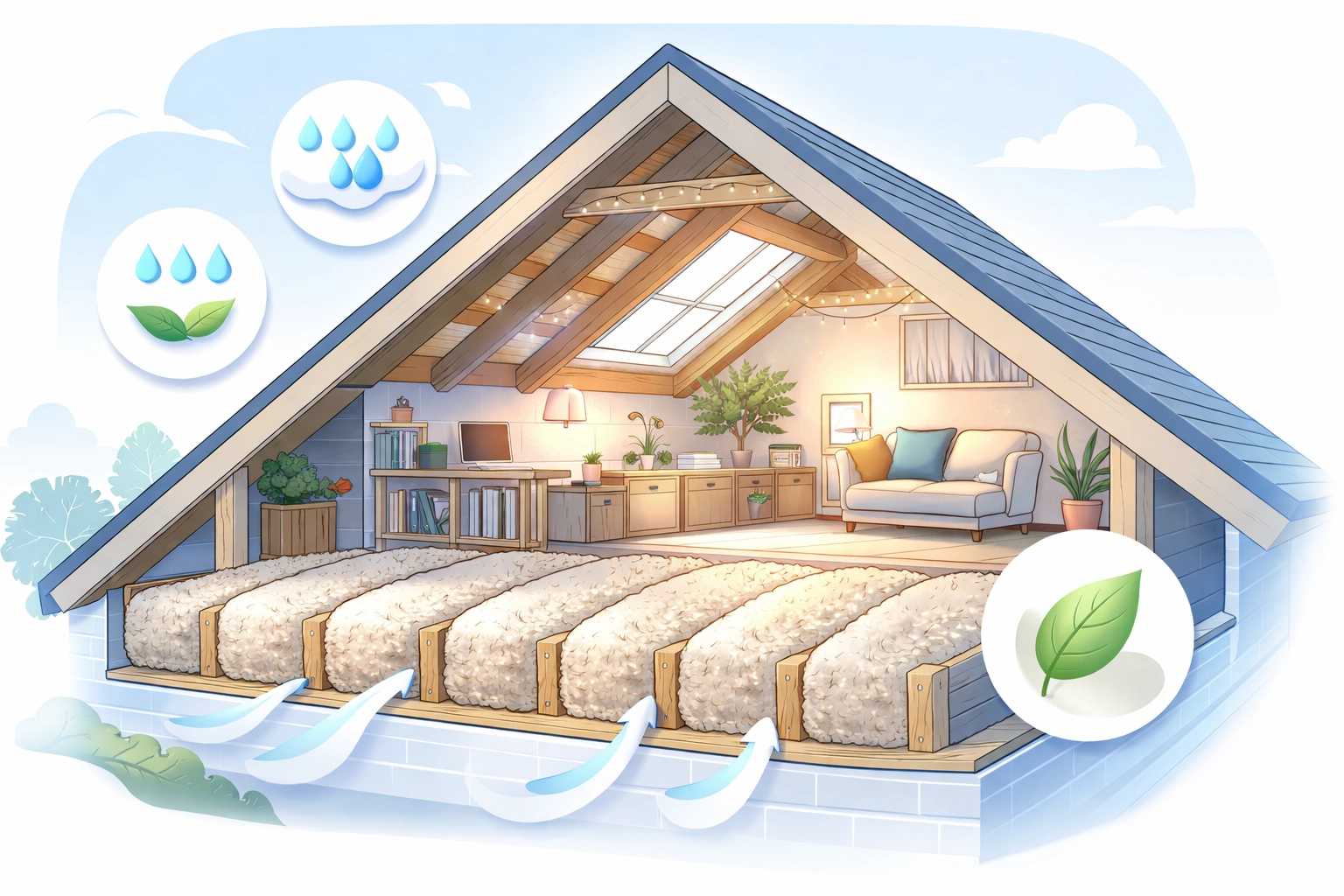
Wool fibres contain millions of tiny air pockets. These allow moisture to pass through without compromising thermal performance.
This is ideal for older UK properties. Many Victorian and Edwardian homes need insulation that works with their existing structure, not against it.
2. Moisture Regulation
Wool is hygroscopic. It absorbs and releases water vapour as humidity levels change.
During absorption, wool actually generates and retains heat. Your loft stays drier. Your home stays warmer. No condensation problems.
3. Genuine Sustainability
This is where sheep's wool really shines.
- Renewable resource from UK farms
- Low embodied carbon compared to synthetic alternatives
- Fully compostable at end of life
- No plastic additives in 100% wool products
Some products, like Truewool®, are manufactured entirely in the UK using 100% British sheep's wool. That's about as local and sustainable as insulation gets.
4. Air Quality Benefits
Here's something most people don't know. Wool fibres can permanently bind volatile organic compounds (VOCs), removing them from your indoor air.
Your insulation isn't just keeping you warm. It's actively purifying your home.
5. Fire Resistance
Wool has a naturally high ignition threshold. Its high water and nitrogen content means it's resistant to fire without needing chemical treatments.
Safe and natural. That's a rare combination.
How Does Sheep's Wool Compare to Standard Insulation?
Let's be practical. You want to know how wool stacks up against the alternatives.
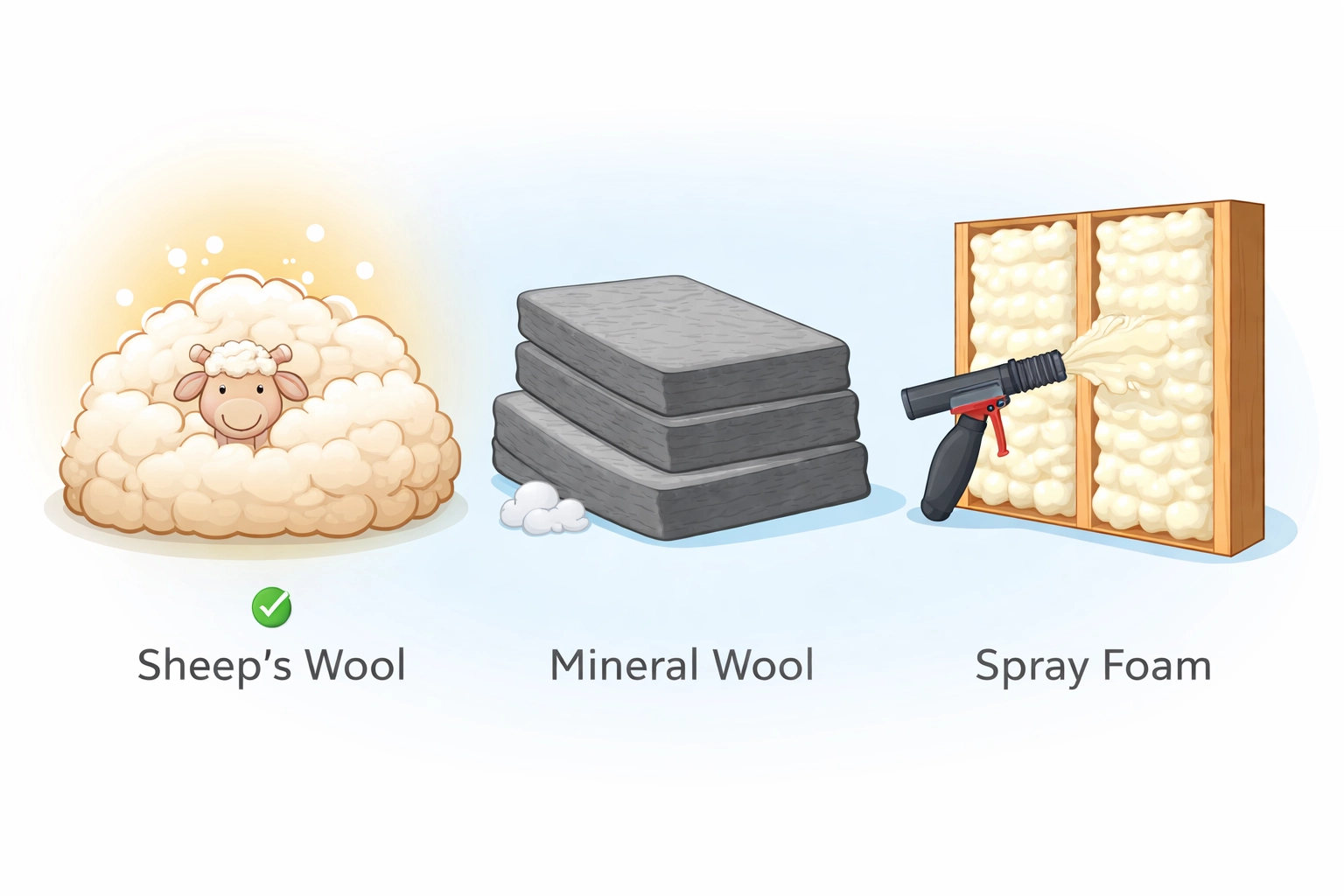
Sheep's Wool vs Mineral Wool
Mineral wool (like Rockwool) is effective and widely used. But it requires protective equipment during installation. The fibres can irritate skin, eyes, and lungs.
Sheep's wool? 100% non-toxic. No special gear needed. Safe to handle with bare hands.
Mineral wool also has higher embodied carbon. It's manufactured using energy-intensive processes. Wool is simply cleaned, treated, and processed.
Sheep's Wool vs Spray Foam
Spray foam offers excellent thermal performance. But it comes with risks.
It can cause mortgage and survey issues. It's difficult to remove. And it's definitely not eco-friendly.
Wool is fully reversible. If you ever need to access your loft space or change your insulation, it's straightforward.
Sheep's Wool vs Fibreglass
Fibreglass is cheap. That's about its main advantage.
It doesn't regulate moisture. It can irritate during installation. And it has a significant environmental footprint.
For eco-conscious homeowners, sheep's wool wins on almost every metric except upfront cost.
Sheep's Wool Insulation Products Available in the UK
The UK market offers several options depending on your needs and budget:
| Product Type | Density | Thermal Conductivity | Best For |
|---|---|---|---|
| Comfort (non-woven) | 14 kg/m³ | 0.042 W/mK | Budget-friendly loft applications |
| Optimal (with support felt) | 18 kg/m³ | 0.0385 W/mK | Versatile loft, ceiling, and wall use |
| Premium (concertina structure) | 20 kg/m³ | 0.0359 W/mK | Maximum performance in limited space |
| UltraWool (wool-polyester blend) | 31 kg/m³ | Enhanced performance | Superior thermal and acoustic needs |
100% plastic-free options are available for purists. Other products combine 75% sheep's wool with 25% recycled polyester for enhanced durability.
All commercial wool products are treated with Ionic Protect® to provide complete moth resistance. No need to worry about pests making a home in your loft.
New for 2026: Rigid Panel Technology
Exciting developments are emerging in rigid sheep wool panels. Following Innovate UK-funded research completed in January 2025, these panels offer:
- External wall insulation capability
- Strong thermal and acoustic performance
- Lifespan of up to 100 years in construction applications
The sector is expanding rapidly to meet growing demand.
Installation: DIY or Professional?
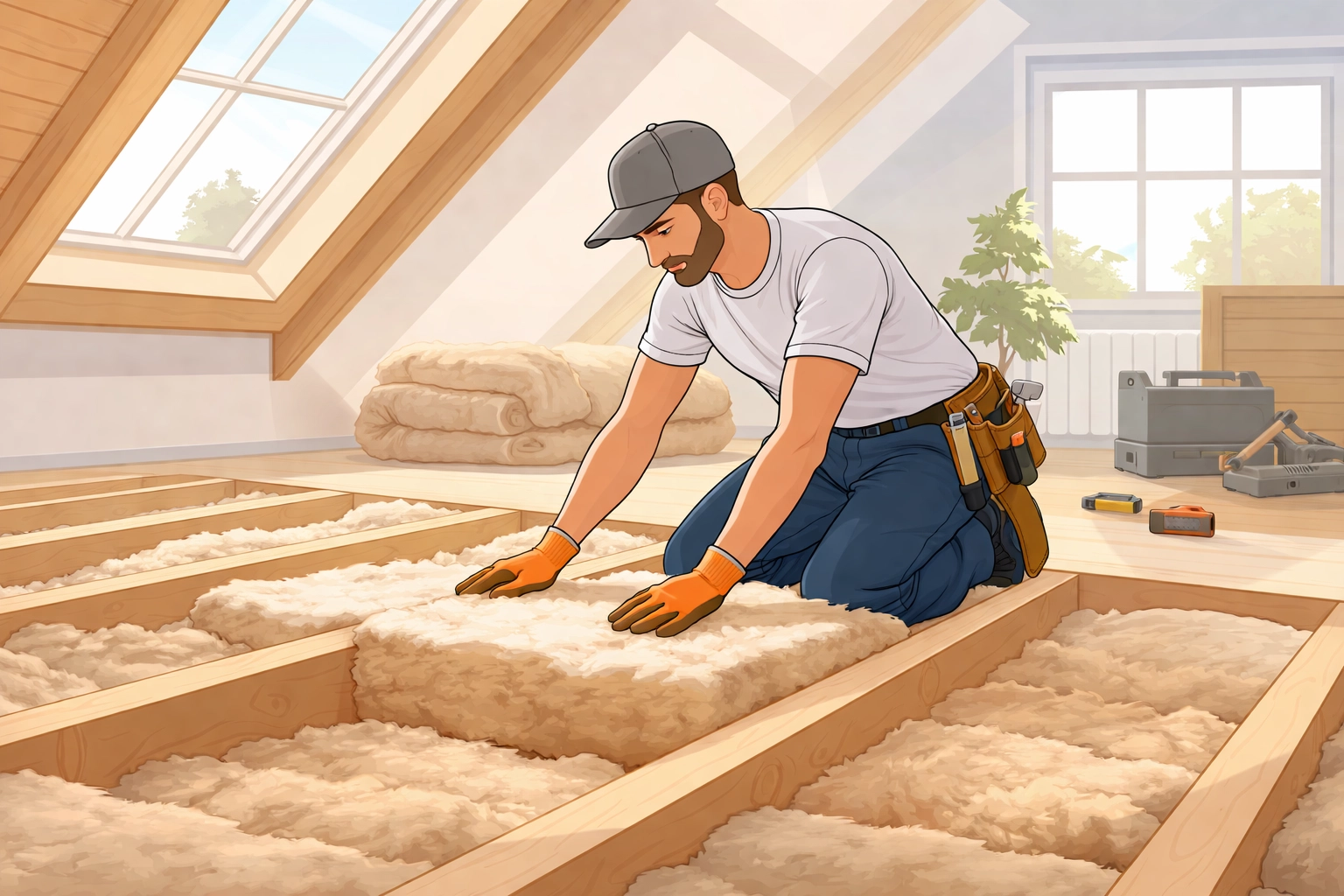
Sheep's wool is easier to handle than synthetic alternatives. No protective equipment needed. No itchy fibres.
But that doesn't mean professional installation isn't worthwhile.
Why choose professional installation:
- Correct depth and coverage to meet Part L regulations
- Proper ventilation maintained in your loft space
- No gaps or compression that reduce effectiveness
- Warranty protection on workmanship
At ComfySeal, we're committed to quality installation that maximises the performance of your chosen insulation. Whether that's sheep's wool or another material suited to your property.
Is Sheep's Wool Insulation Worth the Investment?
Let's address the elephant in the room. Sheep's wool costs more upfront than synthetic alternatives.
But consider the full picture:
- Lower heating bills from excellent thermal performance
- Reduced environmental impact over the product's lifetime
- Healthier indoor air quality for your family
- Support for UK farming and domestic manufacturing
- No removal costs if you sell (unlike spray foam)
For homeowners prioritising sustainability, the value proposition is clear.
You might also qualify for grants that reduce your costs. Check out our guide on GBIS and ECO4 grants to see if you're eligible.
Ready to Go Green with Your Loft Insulation?
Sheep's wool insulation UK homeowners are choosing represents the best of both worlds. Excellent performance and genuine sustainability.
It breathes with your home. Regulates moisture naturally. Purifies your air. And supports British farming while reducing your carbon footprint.
If you're ready to explore eco-friendly loft insulation for your property, we're here to help.
Book your free survey with ComfySeal today. We'll assess your loft, discuss your options, and recommend the best solution for your home and your values.
Final Thoughts
The insulation market is shifting. More homeowners want materials that perform well and align with their environmental values.
Sheep's wool delivers on both fronts. It's natural, effective, and genuinely sustainable. For UK homes in 2026 and beyond, it's one of the smartest green choices you can make.
Your loft. Your comfort. Your planet. All taken care of with one simple, natural material.