Category: Material Guides & Comparisons
Choosing loft insulation used to be simple. Now you have options. Good options.
Two materials dominate conversations among eco-conscious UK homeowners: rockwool insulation and sheep’s wool insulation. Both promise warmth, energy savings, and a smaller carbon footprint.
But which one actually wins?
The answer depends on your priorities. Fire safety? Budget? Sustainability? Each material excels in different areas.
Let’s break it down.
What Is Rockwool (Mineral Wool) Insulation?
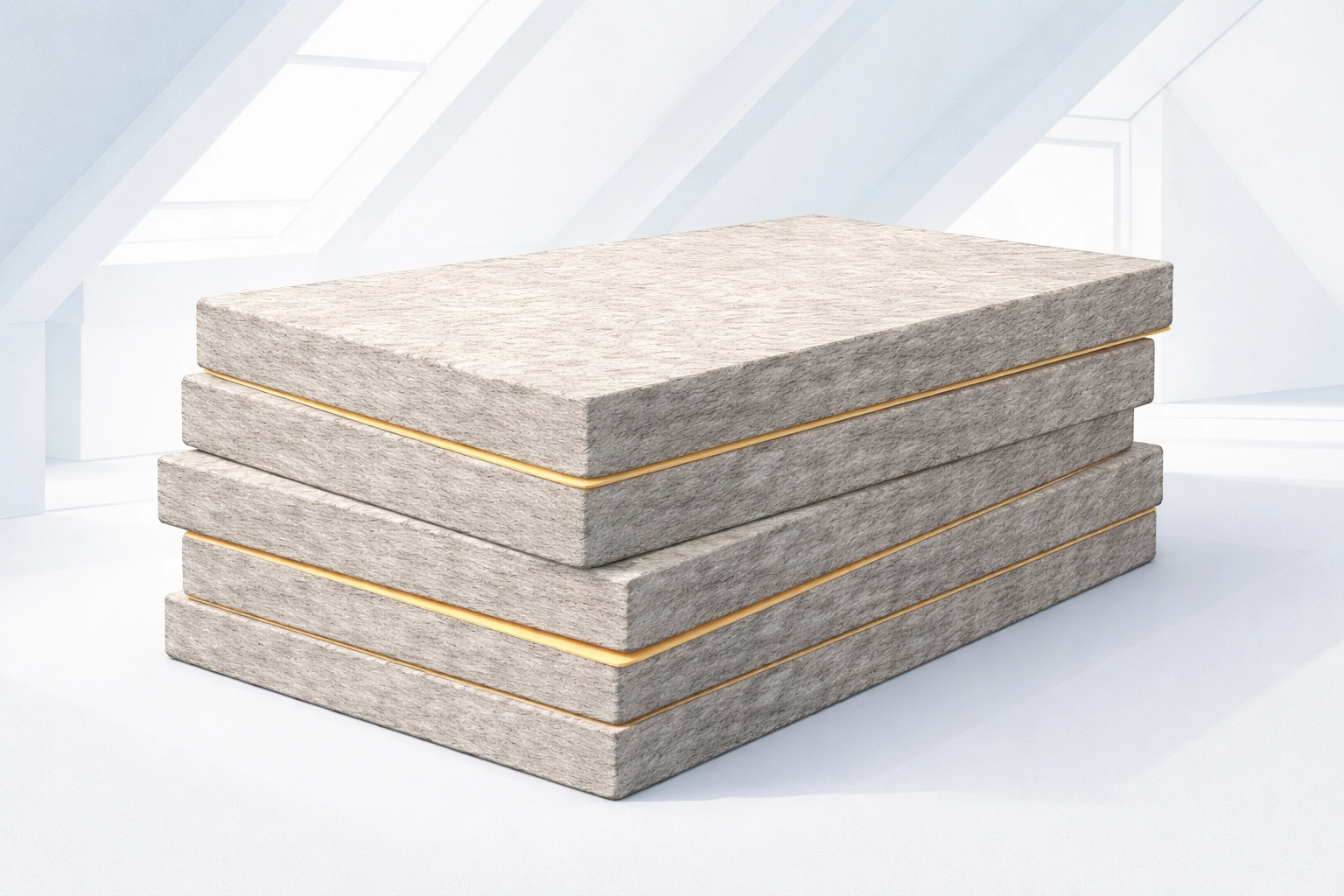
Mineral wool insulation is made from volcanic rock or industrial slag. Manufacturers heat the raw material to around 1,500°C, then spin it into fine fibres.
The result? Dense, durable batts that trap air and slow heat transfer.
Rockwool is technically a brand name. But most people use it interchangeably with “mineral wool” or “stone wool.”
Key characteristics:
- Non-combustible : won’t catch fire
- Excellent sound absorption
- Hydrophobic : repels water
- Long lifespan with minimal degradation
It’s been a trusted choice for UK loft insulation for decades. And it meets current Part L building regulations with ease.
What Is Sheep’s Wool Insulation?
Sheep’s wool insulation UK products use natural fleece from British sheep. The wool is cleaned, treated with borax for fire resistance, and formed into batts or rolls.
It’s about as natural as insulation gets.
Key characteristics:
- Renewable : sheep produce new fleece annually
- Biodegradable : breaks down harmlessly at end-of-life
- Breathable : manages moisture naturally
- Chemical-free installation
For homeowners prioritising sustainability, sheep’s wool ticks every box.
Thermal Performance: How Do They Compare?
Both materials insulate well. But sheep’s wool has a slight edge.
| Material | R-Value (per inch) |
|---|---|
| Sheep’s wool | 3.5–3.8 |
| Rockwool | Up to 3.3 |
Higher R-value means better insulation per inch of thickness.
Sheep’s wool also has superior specific heat capacity. It absorbs more heat before temperatures rise. This keeps your loft cooler in summer and warmer in winter.
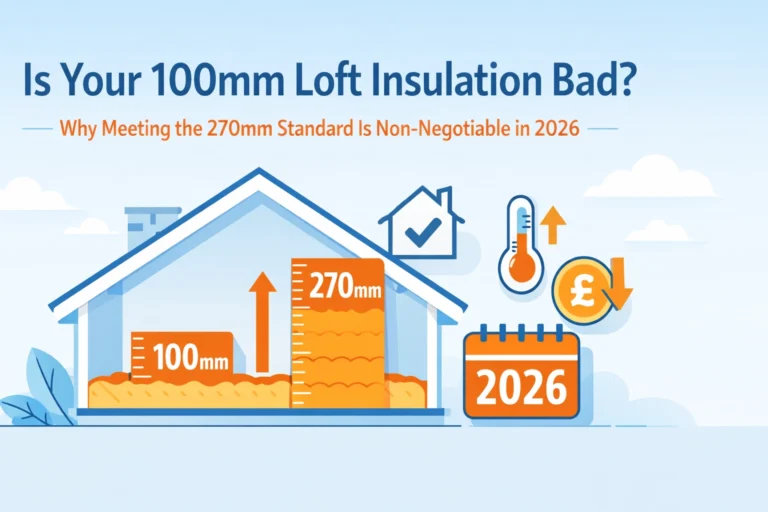
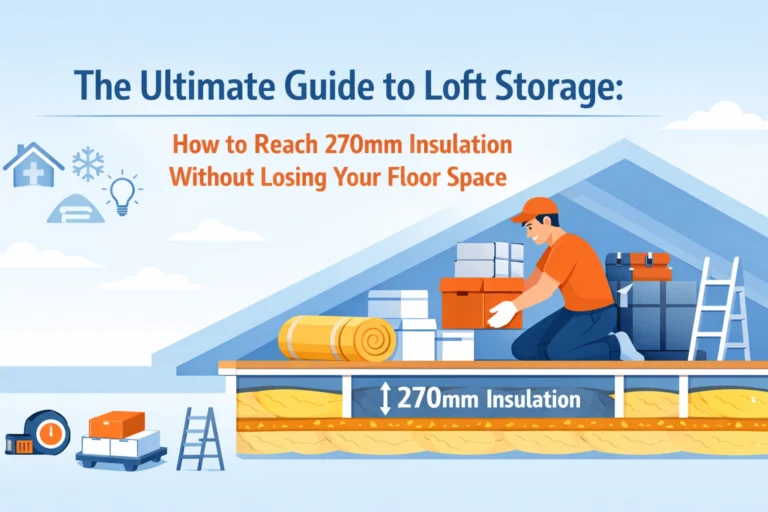
To meet the recommended 270mm loft insulation depth, both materials work. But you may need slightly less sheep’s wool to achieve the same thermal resistance.
Fire Safety: A Clear Winner
This one isn’t close.
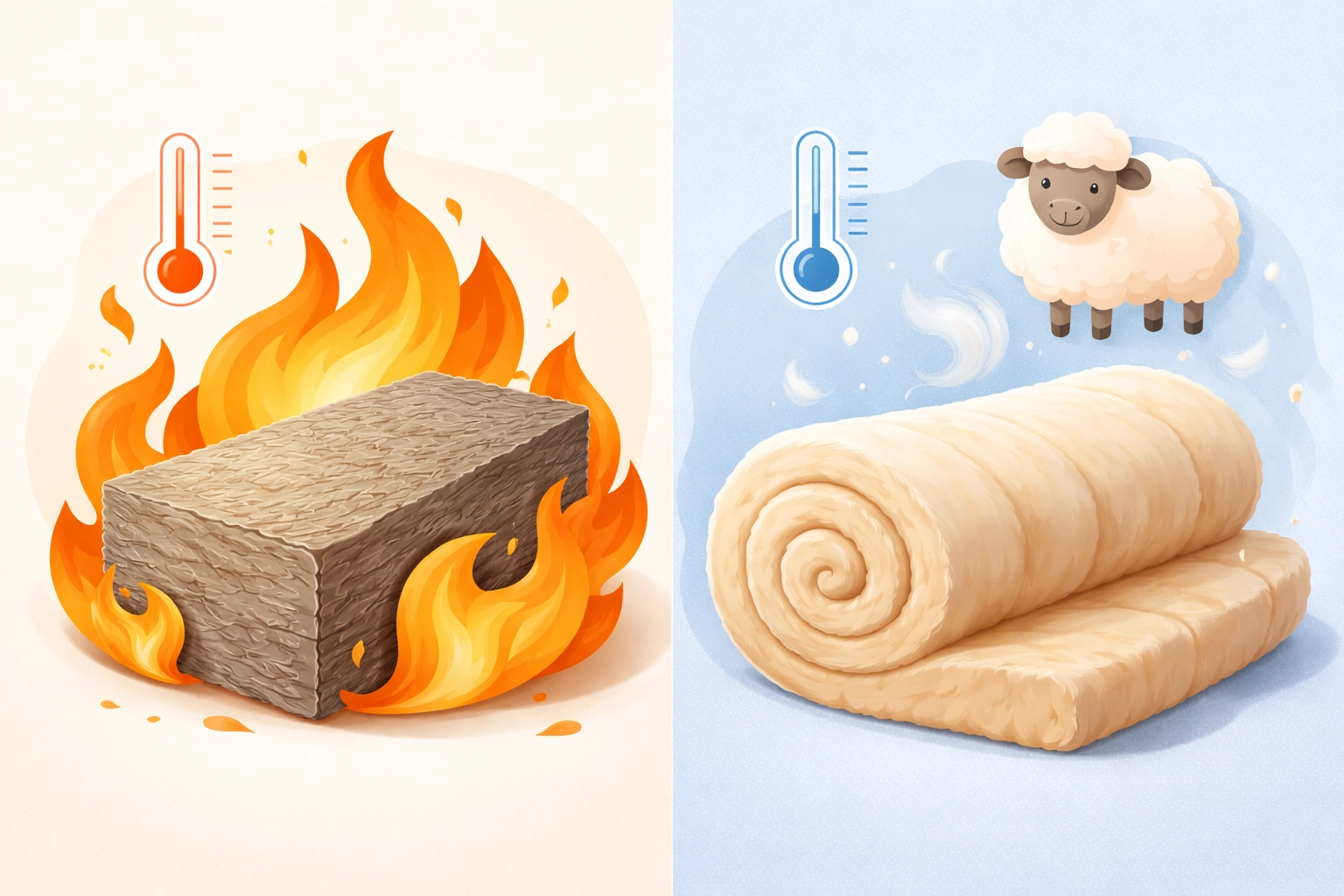
Rockwool insulation withstands temperatures up to 1,177°C without melting. It’s classified as A1 fire rated insulation : the highest non-combustible rating available.
Sheep’s wool is naturally fire-resistant. Its ignition temperature is higher than synthetic alternatives. But it can’t match rockwool’s fireproofing credentials.
If fire safety is your top concern, rockwool wins outright.
This matters especially for:
- Loft conversions near electrical installations
- Properties with open chimneys
- Homes requiring strict building regulation compliance
Environmental Impact: Sustainability Matters
Here’s where sheep’s wool dominates.
Energy to produce:
- Sheep’s wool: 6 MJ/kg
- Glass mineral wool: 26 MJ/kg
- Polyurethane foam: 101 MJ/kg
Sheep’s wool uses a fraction of the energy. It’s harvested through regular shearing : a process that happens anyway. No additional environmental strain.
At end-of-life, sheep’s wool biodegrades naturally. Rockwool doesn’t. It requires specialist disposal and won’t break down in landfill.
For carbon-conscious homeowners, this difference matters.
Rockwool isn’t terrible for the environment. But it’s manufactured, not grown. The energy-intensive process can’t compete with sheep grazing in British fields.
Moisture and Breathability
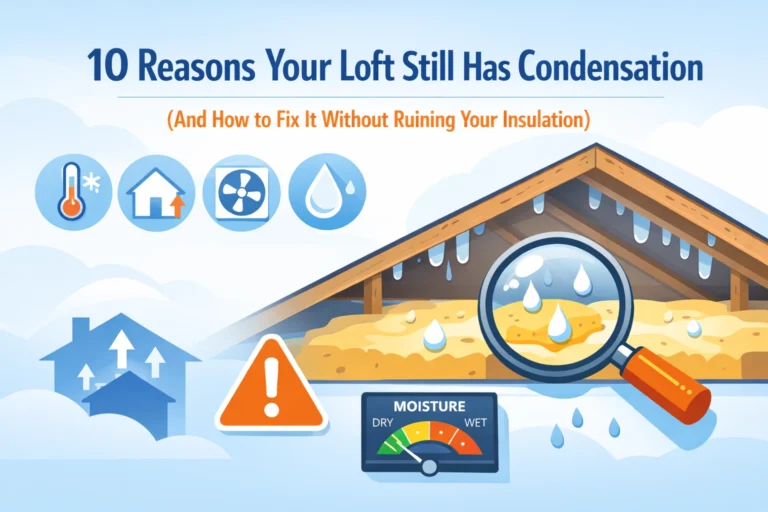
Damp lofts cause problems. Condensation leads to mould, timber rot, and health issues.
Sheep’s wool handles moisture brilliantly. It absorbs and releases water vapour without losing insulation performance. This natural “wicking” prevents condensation buildup.
Rockwool takes a different approach. It’s hydrophobic : water beads off rather than soaking in. This protects the material itself but doesn’t actively manage moisture in your loft space.
For older properties with loft condensation solutions needed, sheep’s wool often performs better. It works with your home’s natural breathability rather than against it.
Modern, well-ventilated lofts? Either material handles moisture adequately.

Cost: Budget-Friendly vs. Premium
Let’s talk money.
Rockwool is significantly cheaper. You’ll typically pay £5–£10 per m² for quality mineral wool batts at standard thickness.
Sheep’s wool costs £18–£25 per m² at 100mm thickness. That’s roughly three times the price.
For a typical UK loft (50m²), the material cost difference could be £500–£750.
However, consider the full picture:
- Sheep’s wool may require less depth for equivalent performance
- Natural materials can add value to eco-focused property sales
- Lower energy bills offset higher upfront costs over time
If budget is tight, rockwool delivers excellent value. If you’re investing long-term in sustainability, sheep’s wool justifies the premium.
Installation and Health Considerations
Nobody enjoys itchy skin. Or coughing fits.
Rockwool installation requires protection. Full-face masks, goggles, gloves, and long sleeves. The fine fibres irritate skin, eyes, and lungs during handling.
Sheep’s wool needs none of that. Unless you have a specific wool allergy, you can handle it bare-handed. It cuts easily and shapes precisely around obstacles.
This matters if you’re considering DIY installation. Sheep’s wool is far more forgiving.
Professional installers handle both materials safely. Our certified teams at ComfySeal use proper protective equipment regardless of material choice.
Sound Insulation: Keeping Things Quiet
Need acoustic benefits? Rockwool excels here.
Its dense, fibrous structure absorbs sound waves effectively. It’s the go-to choice for:
- Walls between rooms
- Floor soundproofing
- Noisy loft conversions
Sheep’s wool provides decent sound absorption. But rockwool’s superior density gives it the edge for serious acoustic applications.
If traffic noise or neighbourhood sounds penetrate your roof, rockwool offers better protection.
Which One Should You Choose?
There’s no universal winner. Your priorities determine the best choice.
Choose rockwool insulation if you need:
- Maximum fire safety : A1 rated, non-combustible protection
- Budget-friendly materials : Lower upfront costs
- Superior soundproofing : Dense fibres absorb noise effectively
- Proven durability : Decades of reliable UK performance
Choose sheep’s wool insulation UK if you prioritise:
- Sustainability : Renewable, biodegradable, low-energy production
- Natural moisture management : Breathable for older properties
- Safer DIY installation : No protective equipment needed
- Chemical-free living : Ideal for allergy-conscious households
Both materials meet Part L building regulations when installed correctly. Both deliver genuine energy savings. Both reduce heat loss through your roof.
The “best” choice depends entirely on what matters most to you.

Getting Professional Advice
Still unsure? That’s completely normal.
Every loft is different. Age, ventilation, existing insulation, and structural quirks all influence which material performs best in your home.
A free professional loft survey removes the guesswork. Our certified assessors examine your specific situation and recommend the right solution.
At ComfySeal, we install both rockwool mineral wool and natural alternatives. We’re not pushing one product : we’re finding what works for your home.
Every installation comes with our 10-year workmanship guarantee. Fully insured teams. No surprises.
Final Thoughts
Rockwool wins on fire safety, soundproofing, and value. Sheep’s wool wins on sustainability, breathability, and eco-credentials.
Neither is wrong. Both insulate effectively.
Your decision comes down to priorities. Budget-conscious homeowners lean toward rockwool. Eco-focused households prefer sheep’s wool.
Ready to find out which suits your loft? Get a free quote and let our team guide you through the options.