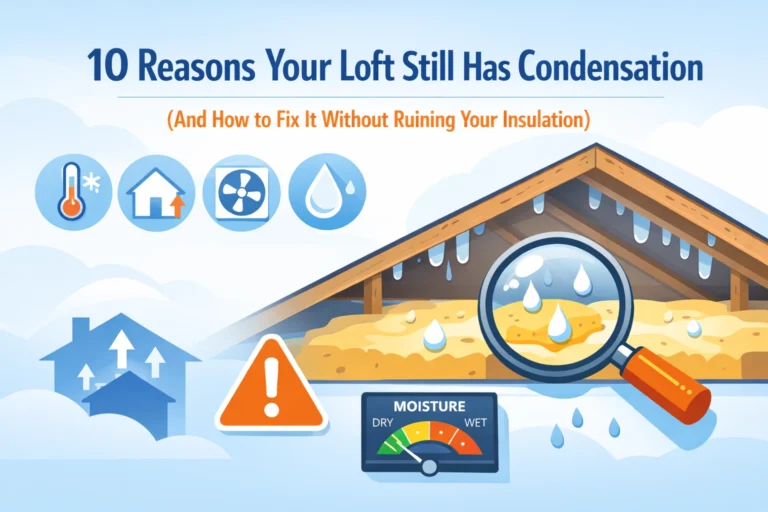
Condensation in your loft is more than a nuisance. Left unchecked, it leads to damp patches, black mould, and rotting timbers. These problems damage your home's structure and affect your family's health.
The good news? Loft condensation solutions exist. And they're simpler than you might think.
In this guide, we'll cover why condensation forms, how Part L building regulations fit into the picture, and practical fixes to keep your loft dry in 2026.
Why Does Loft Condensation Happen?
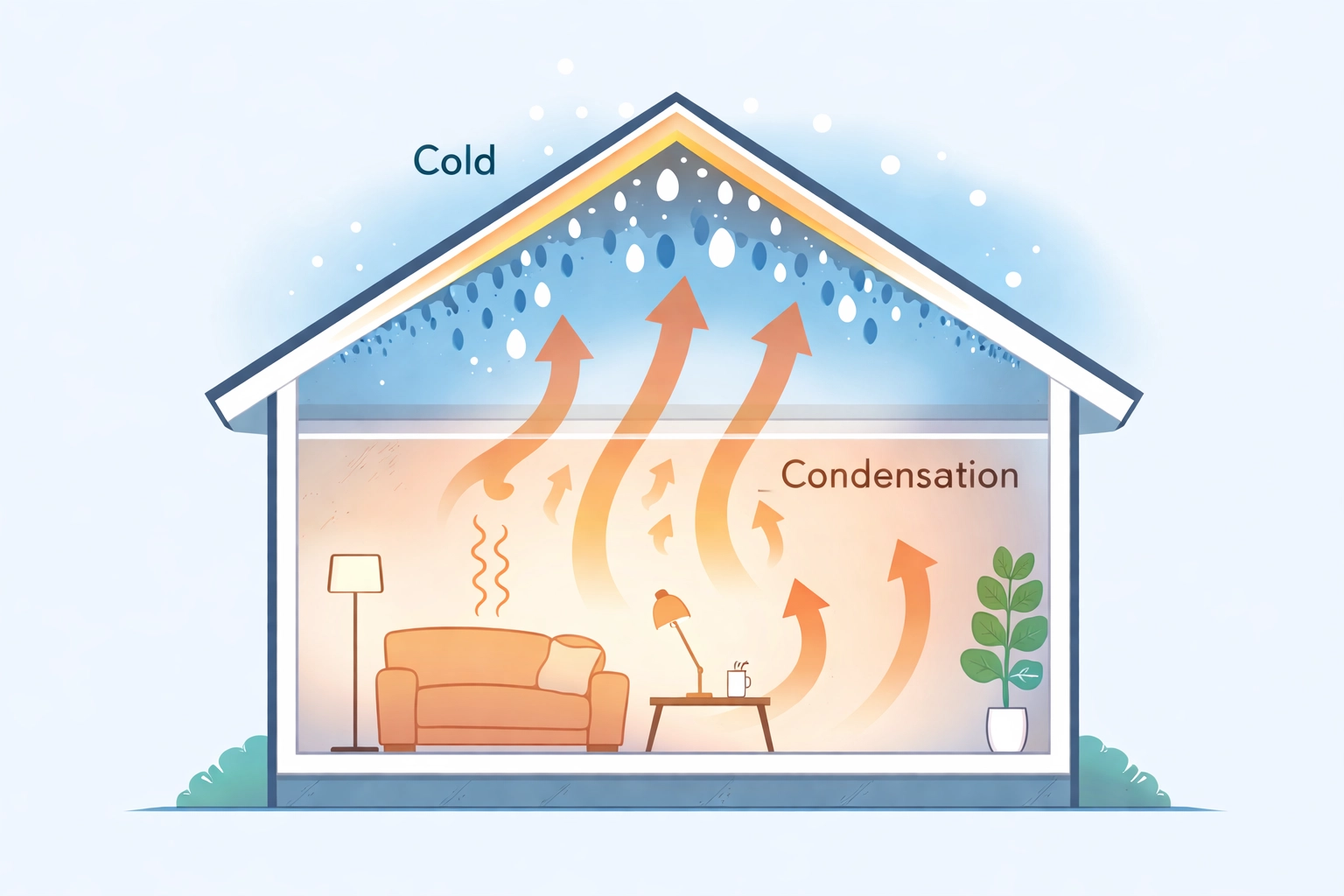
Warm, moist air rises from your living spaces. It travels through gaps around pipes, light fittings, and loft hatches. When this air hits the cold surfaces in your loft, it condenses into water droplets.
Think of it like a cold glass on a summer day. The moisture in the air settles on the cool surface.
In your loft, this moisture lands on roof timbers, insulation, and stored belongings. Over time, it creates the perfect environment for mould growth and wood decay.
The Hidden Danger of Over-Insulating Without Ventilation
Here's something many homeowners don't realise. Adding more insulation can actually make condensation worse.
Why? Because insulation keeps heat in your living areas. Your loft becomes colder. And cold lofts create more surfaces where warm air can condense.
This is especially true when ventilation gets blocked. Insulation pushed into eaves, debris in soffit vents, or sealed-up gaps all restrict airflow. The moisture has nowhere to go.
The result? Damp insulation that loses its effectiveness. Mould spreading across timbers. And potential structural damage that costs thousands to repair.
The solution isn't less insulation. It's combining proper insulation with adequate ventilation. Both work together to create a healthy, efficient loft space.
Part L Building Regulations and Loft Insulation in 2026
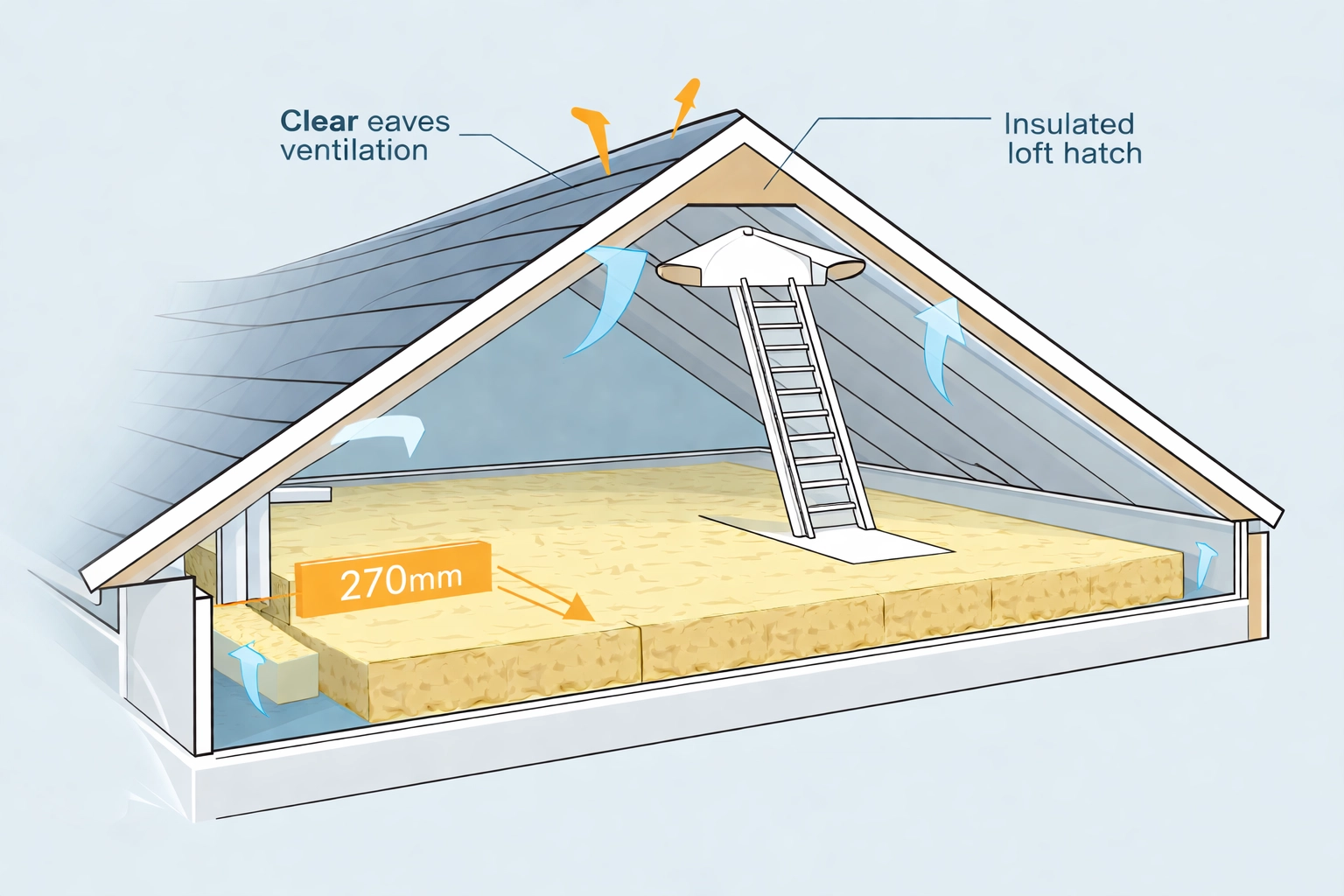
Part L building regulations set minimum standards for energy efficiency in UK homes. For loft insulation, the recommended depth is 270mm of mineral wool or equivalent.
But Part L isn't just about thickness. It also emphasises the importance of maintaining ventilation in cold lofts.
A "cold loft" is one where insulation sits on the loft floor. The space above remains unheated. This is the most common setup in UK homes.
For cold lofts, regulations require:
- A minimum 5mm continuous gap at the eaves for ventilation
- Equivalent ventilation area of 10,000mm² per metre of eaves on opposite sides
- No blocking of existing ventilation paths
Meeting Part L requirements helps you stop heat loss through your roof while preventing moisture problems. It's a balance that protects both your energy bills and your property.
5 Practical Loft Condensation Solutions for 2026
Ready to tackle condensation? Here are proven fixes that work.
1. Install or Unblock Eaves Ventilation
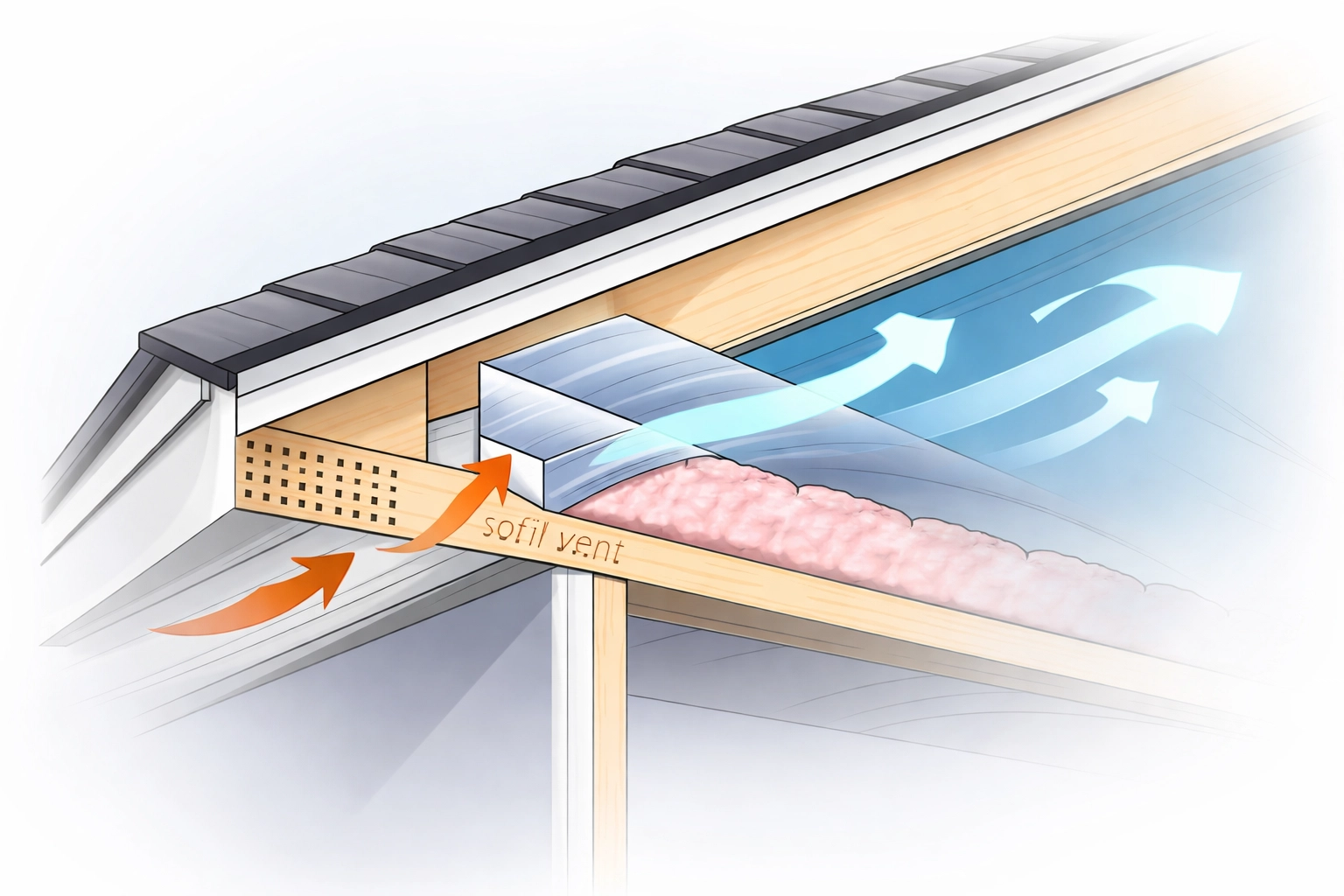
Eaves ventilation is your first line of defence. It allows fresh air to enter at the lowest point of your roof, pushing moist air upward and out.
Check your eaves for blockages. Insulation often gets pushed into this space, cutting off airflow. Pull it back and consider installing ventilation baffles to maintain a clear gap.
If your home lacks eaves ventilation, retrofit vents can be fitted without major disruption.
2. Add Lap Vents or Tile Vents
Sometimes eaves ventilation isn't enough. Lap vents slot between roof tiles to create additional airflow points. They're discreet and effective.
Tile vents work similarly but replace individual tiles. Both options increase cross-ventilation without changing your roof's appearance.
For larger lofts or persistent problems, combining eaves vents with tile vents creates a natural airflow path from bottom to top.
3. Seal Air Leakage Points
Remember that warm air rising from below? Stopping it at the source reduces moisture entering your loft.
Focus on these common leak points:
- Loft hatch: Add draught-proofing strips around the frame
- Pipe penetrations: Seal gaps with expanding foam or caulk
- Light fittings: Use airtight covers over recessed lights
- Electrical cables: Fill holes where cables pass through ceilings
This air sealing also improves your home's energy efficiency. Less warm air escaping means lower heating bills.
4. Upgrade Your Extractor Fans
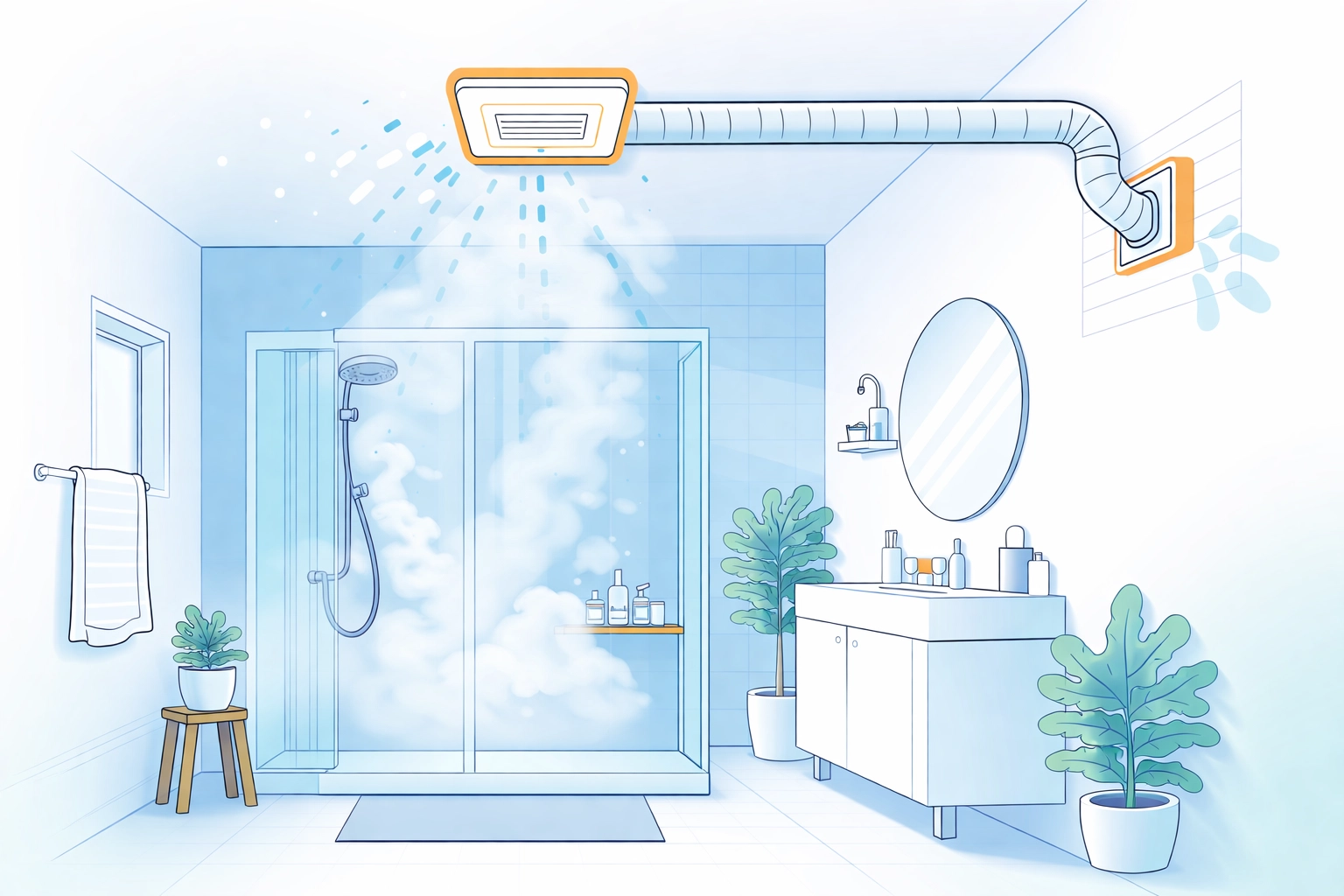
Kitchens and bathrooms produce huge amounts of moisture. Cooking, showering, and boiling kettles all add water vapour to your home.
Extractor fans should vent directly outside. Not into the loft. This is a common installation mistake that pumps moisture straight into the roof space.
Check your existing fans. Ensure ducting runs to external vents, not just into the loft void. Consider upgrading to humidity-sensing fans that activate automatically when moisture levels rise.
5. Consider Mechanical Ventilation
For homes with persistent condensation issues, mechanical ventilation with heat recovery (MVHR) offers a comprehensive solution.
These systems continuously extract moist air from kitchens and bathrooms. They recover heat from the outgoing air and transfer it to fresh incoming air.
The result? Lower humidity throughout your home. Less moisture reaching your loft. And no heat wasted in the process.
Signs Your Loft Has a Condensation Problem
Not sure if condensation is affecting your loft? Look for these warning signs:
- Damp patches on ceiling below the loft
- Black spots on roof timbers or felt
- Musty smell when you enter the loft
- Wet or damp insulation
- Water droplets on roof felt or rafters
- Peeling paint on upstairs ceilings
Catching problems early prevents expensive repairs. If you spot any of these signs, act quickly.
Loft Insulation for Cold Lofts: Getting It Right
Proper loft insulation for cold lofts means insulating the floor, not the rafters. This keeps your living space warm while allowing the loft to ventilate naturally.
For best results:
- Use the correct depth: 270mm of mineral wool meets current standards
- Lay insulation evenly: No gaps, no compressed areas
- Keep eaves clear: Maintain ventilation paths
- Insulate the hatch: This often-forgotten area loses significant heat
- Consider boarding: If you need storage, use raised platforms to avoid compressing insulation
Mineral wool products like Rockwool offer excellent thermal performance and breathability. They allow any moisture to escape rather than trapping it.
When to Call the Professionals
Some condensation problems need expert assessment. Consider professional help if:
- Mould covers large areas of your loft
- Timber shows signs of rot or structural damage
- Previous DIY fixes haven't worked
- You're unsure about the cause of dampness
A proper survey identifies the root cause. It might be condensation. But it could also be a roof leak, rising damp, or penetrating damp. Each requires different solutions.
At ComfySeal Ltd, we offer free surveys across the UK. Our team assesses your loft's ventilation, insulation, and moisture levels. We then recommend the most effective solution for your situation.
All our work comes with a 10-year guarantee. That's peace of mind that your condensation problems are solved for good.
Final Thoughts
Loft condensation doesn't fix itself. Without action, damp spreads, mould grows, and timbers decay.
But the solutions are straightforward. Proper ventilation, correctly installed insulation, and reduced indoor moisture work together to keep your loft dry.
In 2026, with Part L regulations emphasising both energy efficiency and ventilation, there's never been a better time to get your loft right.
Want to stop heat loss through your roof while preventing condensation? Get a free quote from ComfySeal Ltd today. We'll survey your loft and recommend the perfect solution for your home.